News Oct 16, 2026 • Nayda Cattin
You just passed your private pilot checkride, and the next question arrives fast: how long will an IFR rating take? You have a calendar in one hand and your logbook in the other, and you want to pick a checkride month that you can trust.
Our Instrument Rating course at Cirrus Aviation runs from 2 to 4 months. Individual results vary with diligence, flying full-time or part-time, aptitude and weather. Where you land inside that range depends on a few choices you make before day one.
This post walks through the timeline phase by phase, from the paperwork you finish before your first lesson to the week of your checkride. If you want the big picture from discovery flight to CFI first, our flight training timeline covers the whole path.
Finish the paperwork before the clock starts
Waiting on documents is the easiest delay to avoid, so finish them first. Before your first lesson, you want your private pilot certificate, your FAA medical certificate, proof of citizenship or TSA approval, and a logbook you have already totaled.
We keep that list in our pre-enrollment checklist, so we will skip the details here. TSA review and medical questions can take time, which is why they belong before your start date.
Your logbook total also shapes the calendar. Under Part 61, you need 50 hours of cross-country time as pilot in command and 40 hours of instrument time before the checkride. If you are far short on cross-country time, that gap becomes part of your plan. Our IFR hours breakdown shows each line and how to close it.
Start the written early so it never blocks the checkride
The knowledge test (pilots call it the written) can run alongside flight training, or even ahead of it. You first complete ground training with an instructor or a home-study course, and then your instructor endorses you to take the test.
Taking it early is safe because the window is long. Your passed test must fall within the 24 calendar months before the month you finish your checkride. A pilot who passes the written in month one has plenty of room, while a pilot who saves it for last can end up with a finished flight syllabus and nothing to show the examiner.
Under our Part 141 course, the FAA minimum is 30 hours of ground training for an initial instrument rating. When you are ready, you can take the test right here at our airman testing center at KSRQ. Our IFR ground school is a good place to build that knowledge.
Move through our four training phases at the pace of your proficiency
Our course moves in four phases. Each one ends when you can do the work to standard, so two students who start the same Monday can finish months apart.
| Phase | What you build | What has to be true to move on |
|---|---|---|
| Basic attitude instrument flying | Instrument scan, full and partial panel, unusual attitude recovery | You hold altitude, heading and airspeed with your eyes on the panel alone |
| Navigation and systems | VOR and GPS tracking, holds and entries, IFR flight planning, clearance copy | You fly a hold and copy a clearance without falling behind the airplane |
| Approaches | ILS, RNAV (GPS) and VOR approaches, missed approaches, circling | You brief, fly and miss an approach inside the minimums with workload to spare |
| Cross-country and checkride prep | IFR cross-country under ATC, stage checks, mock checkrides | You fly a full IFR trip and pass a mock checkride |
All four phases sit inside our Instrument Rating course. You also run emergency procedure drills on every syllabus flight, so failures stop feeling like surprises long before the final phase.
The basic attitude phase often feels slow, and that is normal. Every later phase depends on a clean scan, and a pilot who rushes it tends to pay the time back during approaches, when the workload is highest.
Holds and approaches are where most students need extra repetitions. Our Part 141 course also includes stage checks, which are progress tests at the end of a phase. They catch a weak spot before you build the next phase on top of it.
Turn minimum hours into calendar weeks
A simple way to estimate your calendar is to divide the training by your weekly flying. Our Part 141 course calls for at least 35 hours of instrument training, and the table shows that minimum at three paces.
| Instrument training flown per week | Weeks to fly the 35-hour minimum |
|---|---|
| About 2 hours | About 18 weeks |
| About 4 hours | About 9 weeks |
| About 6 hours | About 6 weeks |
This table counts minimum flying only. It does not include weather days, extra lessons, ground school or the checkride itself, so treat it as the floor of your plan. Even so, it shows that your weekly hours move the calendar more than any other choice.
Under Part 61, the math changes, because the 40 instrument hours and the 50 cross-country hours can include flights with a safety pilot. Our Part 61 vs Part 141 guide explains how the two paths count training differently.
Know what speeds up your IFR rating and what slows it down
Every instrument student deals with the same few forces, and each one moves the date.
- Lesson frequency. Flying several times a week keeps your scan fresh. After a long gap, the first part of each lesson goes to review, and the calendar stretches.
- Florida weather. Summer afternoon storms on the Gulf Coast cancel flights, so morning lesson blocks and a weather buffer day help. A low gray morning can also become real instrument time with your instructor, and actual instrument time counts toward your 40 hours.
- Simulator use. Rehearsing a hold or an approach in our Alsim the day before means the airplane lesson starts at a higher level. Sim time counts toward your hours only within FAA limits and with an instructor, so we plan how your sessions fit.
- Study habits. Our course requires homework, because regulations and procedures do not stick from flying alone. Pilots who arrive knowing the approach plate spend more of each hour flying it.
- Full-time or part-time. We support both. Full-time students can stack lessons, while part-time students trade speed for a schedule that fits work and family.
Our flight simulator lab is where much of that preparation happens. Our Say It, Sim It, Fly It post shows how a sim session fits a lesson.
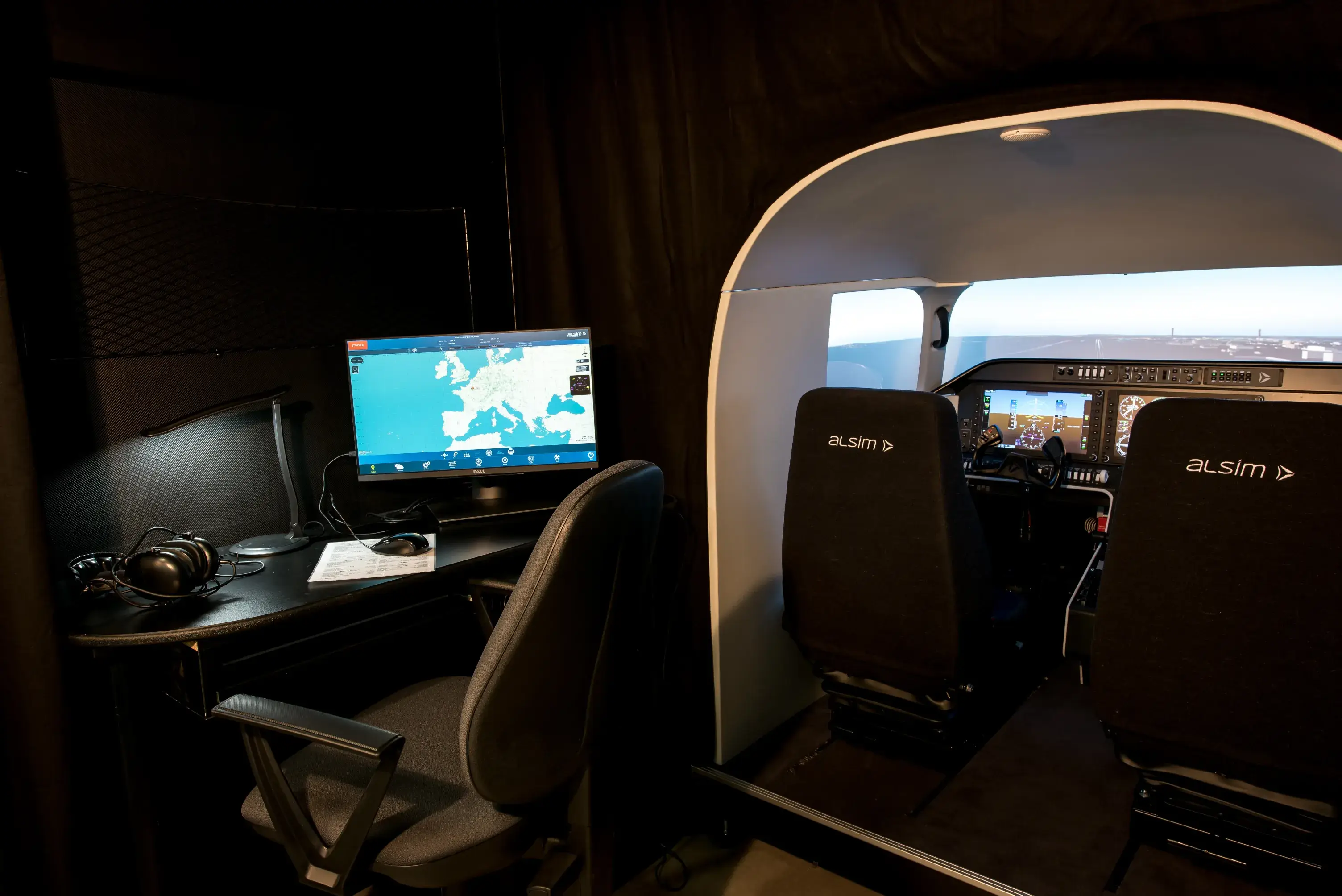
Rehearsing a hold or approach in the Alsim before flying it.
Pick a weekly schedule you can keep
Choose a schedule you can protect through summer storms and busy work weeks. A plan for six lessons a week that collapses after two weeks is slower than a steady plan for three.
Full-time students often aim for the low end of our range. One of our students, Spiral Horn, earned our Top Gun award for finishing IFR through CFII in 6 months and 21 days. We celebrate that as an exceptional pace, well ahead of the usual one.
Part-time students can still finish well when they fly on a fixed pattern, such as the same two or three mornings each week. You fly mostly with one primary instructor, so each lesson picks up where the last one ended. Our post on how often to fly explains why steady weeks beat busy ones, and the same logic holds for instrument training.
If you are building cross-country time under Part 61, our aircraft rental program opens after a one-hour checkout. Plan those flights for weekends so they do not crowd your lesson days.
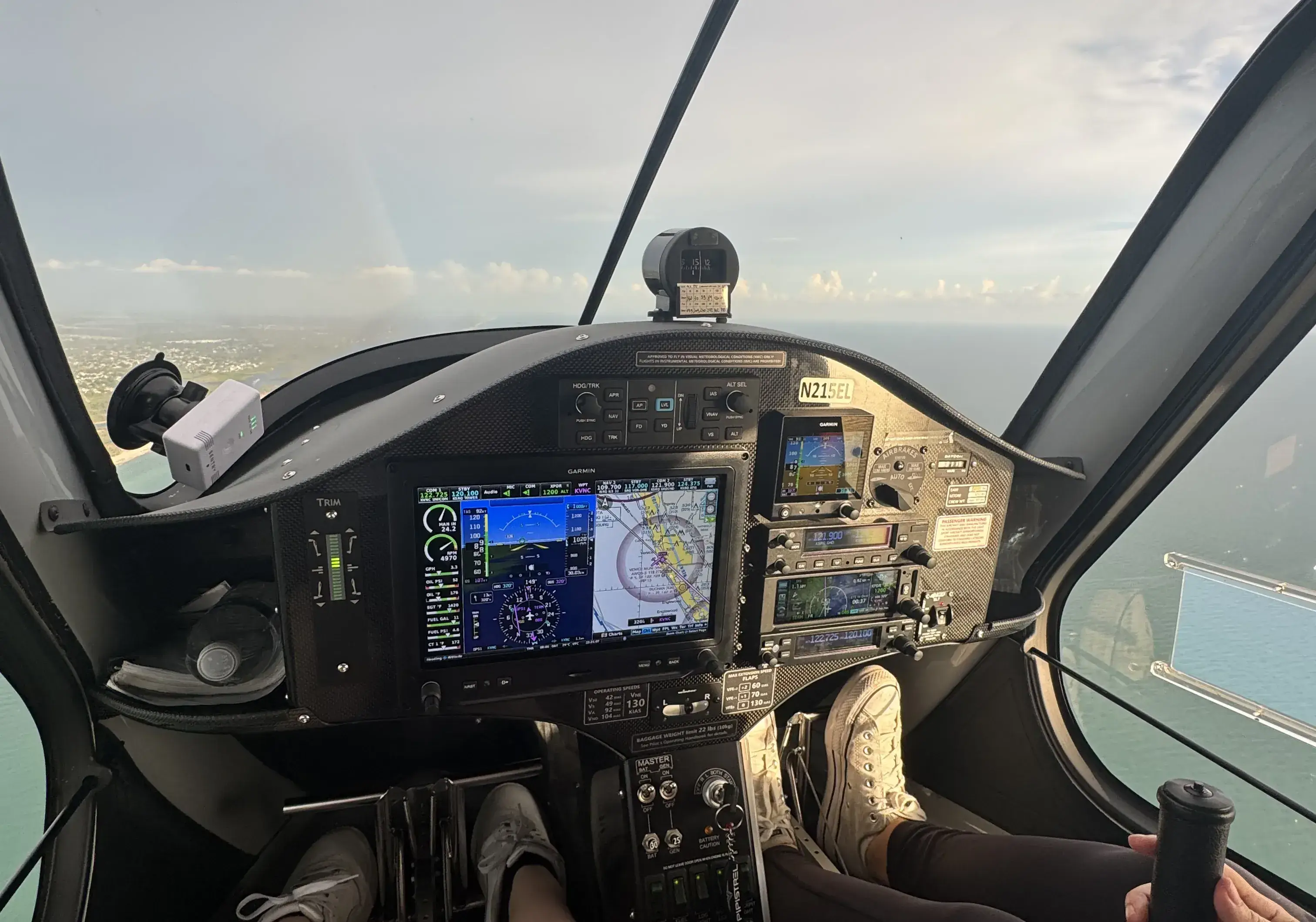
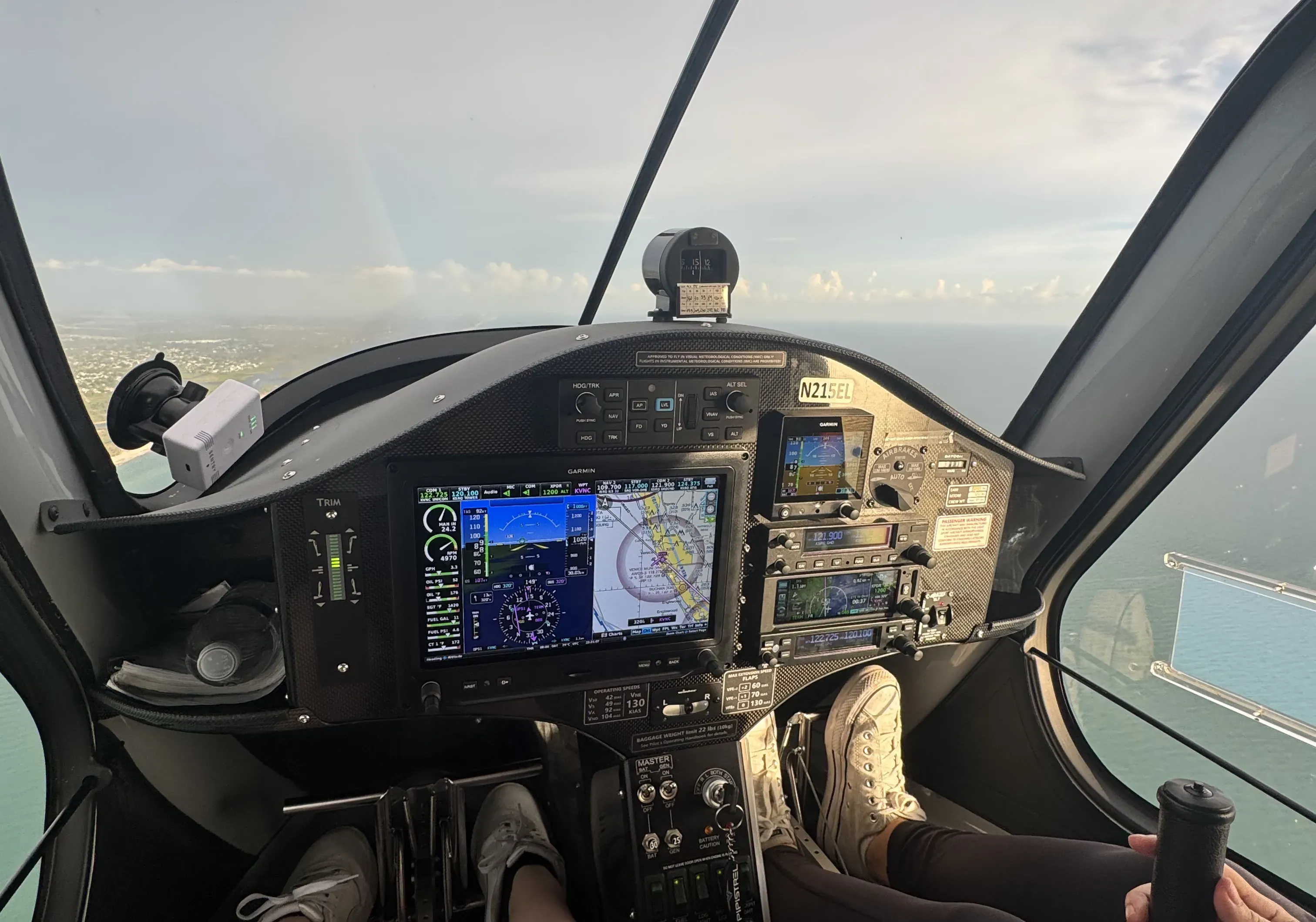
A morning flight along the Gulf Coast before the afternoon clouds build.
Time the final phase around your checkride windows
The last phase has two clocks running. First, you need 3 hours of instrument training in an airplane within the 2 calendar months before your practical test. A long pause near the end can mean flying that training again.
Second, if you train under Part 141, you take your checkride within 60 days of graduation to use your graduation certificate. Plan that date before you finish the course.
The final phase also holds the long IFR cross-country, a full day with an approach at each airport and three different kinds of approaches. Pick a day with a weather buffer behind it. Examiner schedules vary with location, season and demand, so we start coordinating a date early. Our IFR checkride requirements post covers the endorsements and paperwork.
Training at KSRQ helps here too. It is a towered Class C airport with published instrument approaches, so copying clearances and talking to approach control are part of normal lessons long before checkride day.
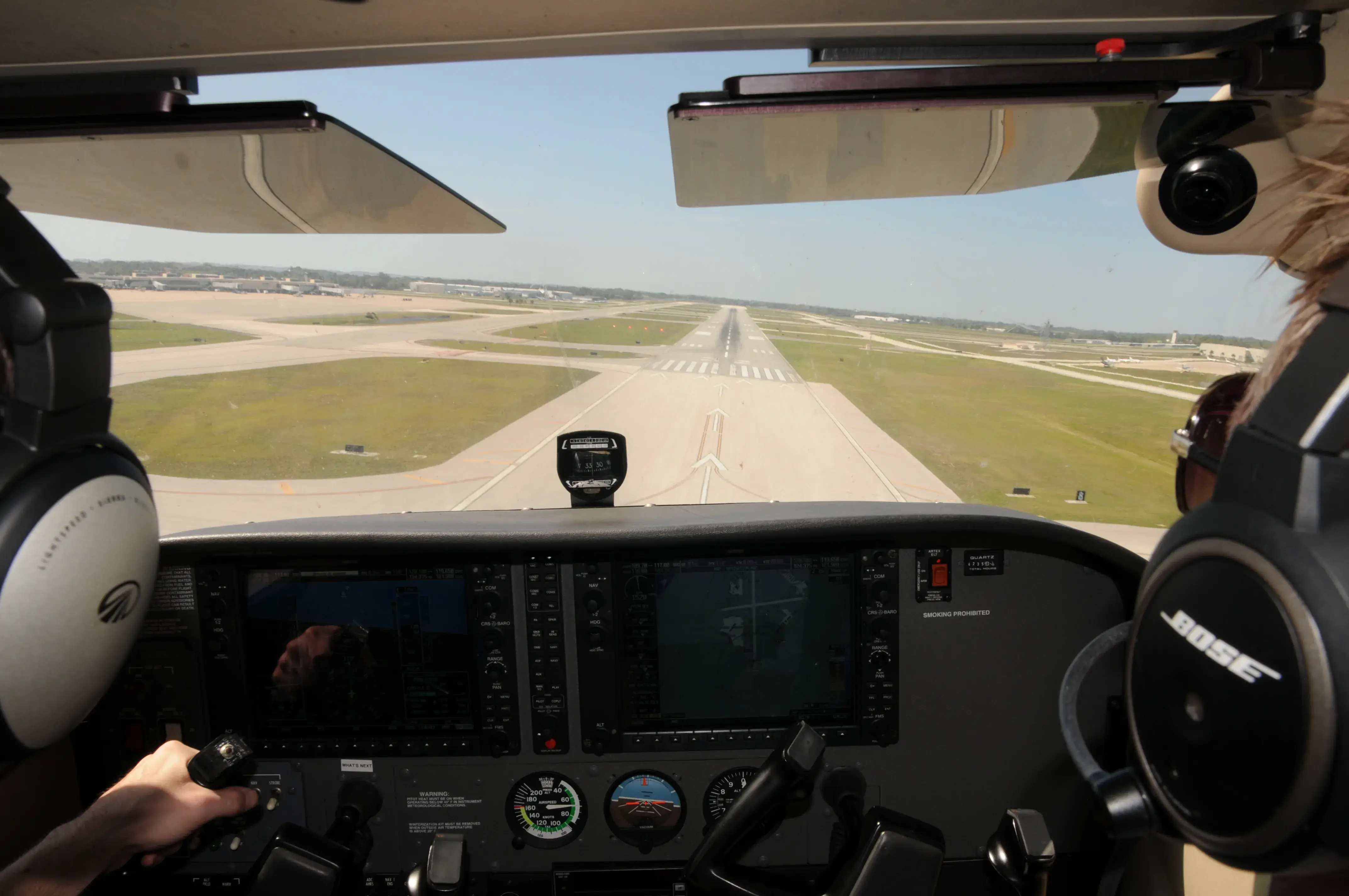
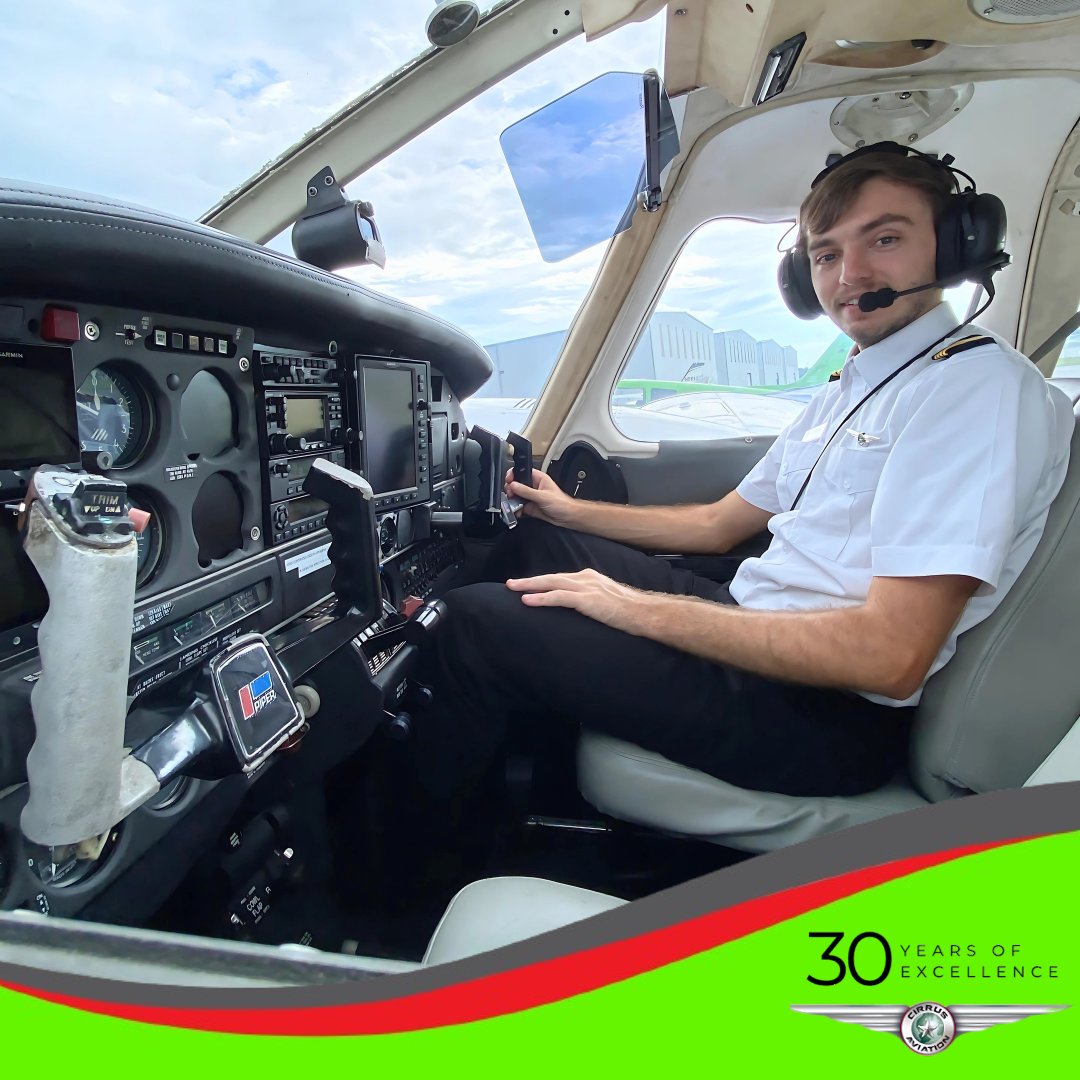
Finishing an approach to landing, the kind of work the final phase polishes.
Questions pilots ask about the IFR rating timeline
How long does an IFR rating take at Cirrus Aviation?
Our course runs from 2 to 4 months, depending on diligence, full-time or part-time flying, aptitude and weather. See our Instrument Rating program for the full course.
Can I finish an IFR rating while working full time?
Yes. Many pilots train part-time on a fixed weekly pattern. Expect the calendar to run longer than a full-time schedule, and plan around your weekly flying hours.
Should I take the knowledge test before I start flying?
You can, once you complete ground training and get your instructor’s endorsement. It stays valid for 24 calendar months toward the checkride. Take it at our airman testing center.
Does simulator time shorten the timeline?
It can make each airplane lesson more productive, because you rehearse first. Credit toward your hours has FAA limits, which our IFR hours breakdown explains.
What usually slows students down the most?
Long gaps between lessons, summer weather and unfinished study. A steady schedule with a buffer day fixes most of it. Our flight simulator lab helps on storm days.
How do I pay for instrument training?
We do not publish course pricing, because the total depends on your logbook and pace. For financing, we are an approved training provider for Sallie Mae’s aviation career training loans. See our pilot financing page or call (941) 360-9074.
Map your instrument calendar with our team
The timeline comes down to paperwork first, the written early, four phases that end at proficiency, a weekly schedule you can keep, and a final phase timed around two checkride windows. What is left is turning that into dates.
Bring your logbook and your calendar to KSRQ, and we will build a week-by-week plan for your rating. Schedule your instrument planning session.