News Oct 16, 2026 • Nayda Cattin
It is the night before your instrument checkride. Your logbook sits on the table with sticky tabs on the endorsement pages, your knowledge test report is clipped to the front, and the weather briefing for tomorrow is printed out. You want to know one thing: is anything missing that could stop the test before the engine starts?
The IFR checkride requirements come down to three groups. First, eligibility: a valid knowledge test, the right instructor endorsements and 3 hours of recent instrument training in the airplane. Second, paperwork: a signed application in IACRA and a folder of pilot and aircraft documents. Third, performance: the tasks in the FAA’s Instrument Rating Airplane standards, flown to set tolerances.
Here at Cirrus Aviation, we go through each group on a checkride prep day, so you arrive with nothing left to chance.
Confirm your eligibility before you book the date
The practical test (pilots call it the checkride) is your final exam for the instrument rating. A Designated Pilot Examiner (DPE), an examiner appointed by the FAA, checks your eligibility before anything else. These are the items they look for.
| Checkride-day item | What the rule asks for |
|---|---|
| Knowledge test report | Passed within 24 calendar months before the month you finish the checkride |
| Aeronautical experience | All required training and hours complete |
| Recent training | 3 hours of instrument flight training with an instructor in an airplane within 2 calendar months before the test |
| Instructor endorsements | Signed in your logbook or training record |
| Application | Completed and signed, with your instructor’s recommendation |
Check the date on your knowledge test report first. If you passed the written early, count the months forward and book the checkride inside that window. The FAA lists these prerequisites in 14 CFR 61.39.
The hour minimums deserve their own worksheet, so we kept them in our IFR hours breakdown. If you are still deciding whether to start, our pre-enrollment checklist covers the earlier steps.
Get the instructor endorsements right
An endorsement is a short signed statement from your instructor in your logbook or training record. For the instrument checkride, your instructor certifies a few things, and the examiner reads every word.
- Prepared for the practical test. The instrument rating rule asks for an endorsement saying you are ready for the checkride.
- Recent training. You received and logged training within 2 calendar months before the month you apply, in preparation for the test.
- Knowledge test gaps. You showed satisfactory knowledge in the subject areas you missed on the written.
That last item ties to your knowledge test results, which list ACS codes for any questions you missed. Your instructor reviews those topics with you, and the examiner can ask about them again during the oral exam. Treat the codes as a study list for your final lessons.
Your instructor also confirms the 3 recent hours in the airplane, flown within 2 calendar months before the test date. Plan your final lessons so this lands close to checkride day. Our Instrument Rating program schedules that review into the last phase.
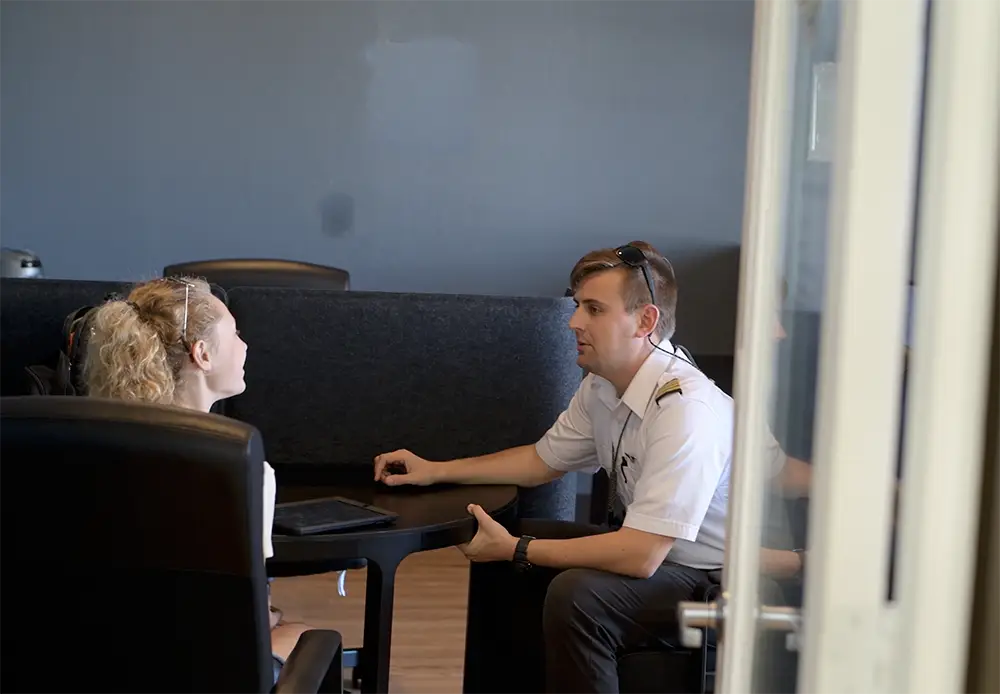
Reviewing knowledge test codes and endorsements before the checkride.
Complete IACRA and pack the right folder
Your application lives in IACRA, the FAA’s online system for pilot certificate and rating applications. You fill in your section, your instructor adds the recommendation, and the examiner opens it on test day. The application is FAA Form 8710-1, and it must be complete and signed.
Then build your folder in two piles.
| Your documents | Aircraft documents |
|---|---|
| Pilot certificate and medical certificate | Registration certificate |
| Logbook with endorsements tabbed | Airworthiness certificate |
| Airman Knowledge Test Report | Operating limitations or flight manual |
| Part 141 graduation certificate, if it applies | Equipment list |
| Your view-limiting device (foggles or a hood) | Aircraft and engine logbooks or maintenance records, plus any applicable airworthiness directives |
You furnish the airplane, and it must have the equipment for each task on the test. You also bring a view-limiting device that blocks your outside view without blocking the examiner’s. Brief with the examiner when you will put it on and take it off.
If you train under Part 141, the timing matters. A graduate is credited with the experience and knowledge requirements when they present the graduation certificate and pass the checkride within 60 days of graduation. Our Part 61 vs Part 141 guide explains how the two paths differ.
When you fly one of our Cessna 172 Skyhawks, we prepare the aircraft records with you. Our own maintenance team keeps those logbooks at KSRQ.
Know what the examiner checks in each area of operation
The examiner tests you against the Instrument Rating Airplane ACS (FAA-S-ACS-8C). ACS stands for Airman Certification Standards, the FAA’s list of what you must know, manage and fly. It has eight areas of operation.
| Area of operation | What it looks like on the test |
|---|---|
| Preflight preparation | Your qualifications, weather and an IFR cross-country plan |
| Preflight procedures | IFR systems, instruments, avionics and the flight deck check |
| ATC clearances and procedures | Copying and following clearances, plus holding |
| Flight by reference to instruments | Attitude flying and unusual attitude recovery |
| Navigation systems | Tracking courses, DME arcs, departures and arrivals |
| Instrument approach procedures | Non-precision, precision, missed, circling and landing |
| Emergency operations | Lost communications and an approach with failed primary instruments |
| Postflight procedures | Checking instruments and equipment |
The test starts on the ground. You must pass the oral portion before the flight portion begins, and the questions continue in the air. The examiner builds a scenario, often a trip you plan and then fly, and adds problems as it unfolds.
The approaches carry a lot of weight. You fly at least two different non-precision approaches and a precision approach. One non-precision approach includes a course reversal, one starts from an initial approach fix without autopilot or radar vectors, and one is flown with backup or partial-panel instruments.
The tolerances are specific. On many tasks you hold altitude within 100 feet, heading within 10 degrees and airspeed within 10 knots. On final, the needles stay within three-quarter scale, and on a non-precision approach you stay no more than 100 feet above the minimum descent altitude, and never below it.
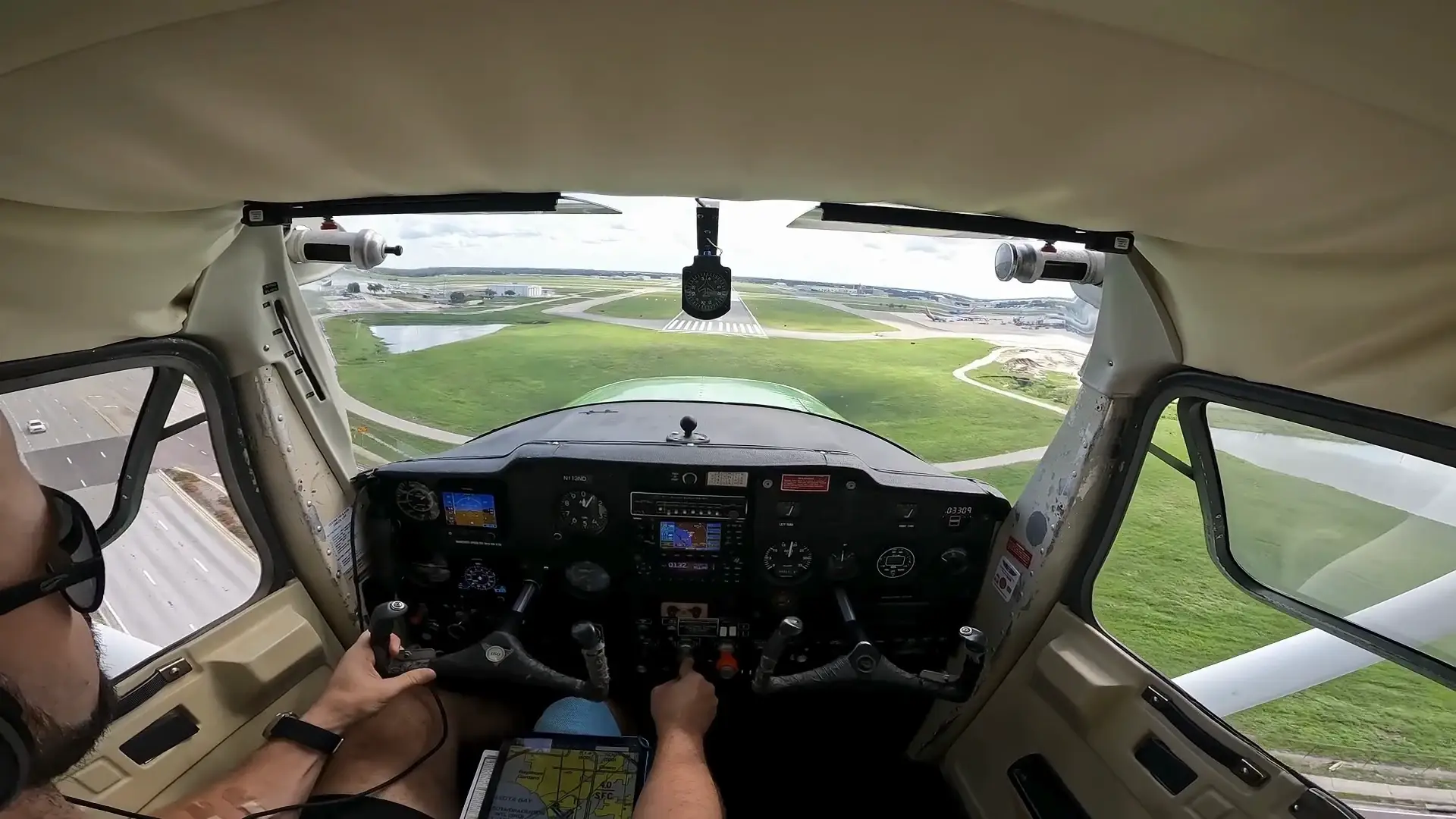
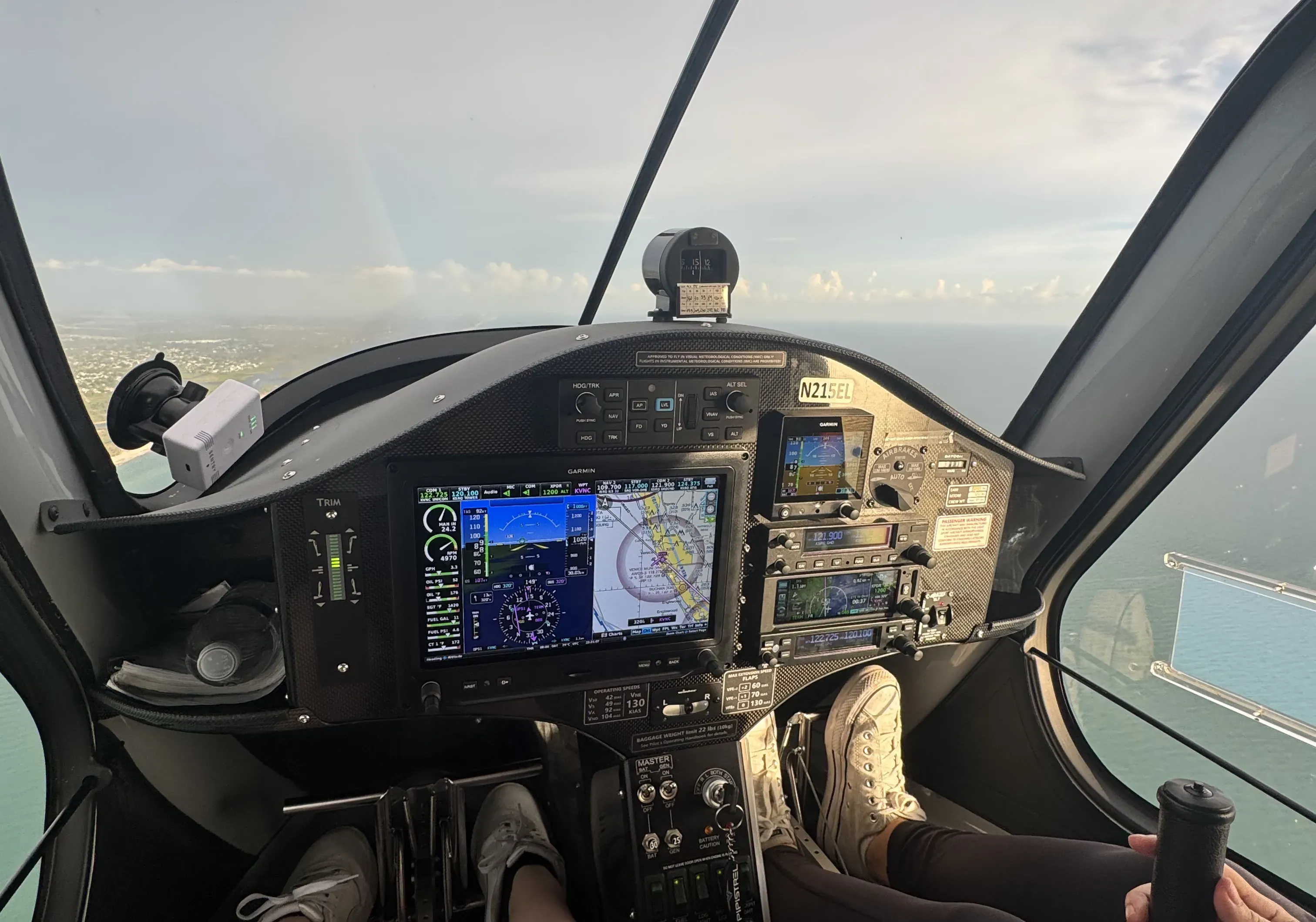
Finishing an approach to landing, one of the tasks the examiner evaluates.
Rehearse it first with stage checks and mock checkrides
A checkride should feel like a flight you have already flown. That is why our instrument course ends with a Cross-Country and Checkride Prep phase, built around targeted review, mock orals and practice checkrides.
Part 141 instrument courses also require stage checks and an end-of-course test, and our course follows them. A stage check is a progress test at the end of a training phase. It covers the same areas of operation the examiner will test, so weak spots show up while there is still time to fix them.
In practice, a mock checkride runs like the real one. You plan the trip, sit the oral, then fly the approaches, the hold and a simulated failure to the ACS tolerances. Afterward, your instructor debriefs each task and you fix what slipped. You can rehearse a weak approach in our flight simulator lab before flying it again. The checkride itself happens in the airplane.
Training at KSRQ helps too. It is a towered Class C airport with published instrument approaches, so copying a clearance and talking to approach control are part of normal lessons long before test day.
Our instrument program runs from 2 to 4 months. Individual results vary with diligence, flying full-time or part-time, aptitude and weather.
Plan for a discontinued test or a retest
In Florida, weather can end a checkride early. The examiner or you can discontinue a test for weather, an aircraft problem or another safety concern. You receive a Letter of Discontinuance, and you keep credit for the areas you passed if you finish the rest within 60 days and bring that letter back.
If you start the test and do not finish every part on the same day, the remaining parts must be done within 2 calendar months after the month you began. Past that, you retake the whole test.
A test has three outcomes: a temporary certificate, a Notice of Disapproval, or a Letter of Discontinuance. If one area of operation goes wrong, the test is a disapproval. You then need more training and a new endorsement from your instructor before the retest. If you retest within 60 days, you keep credit for the areas you passed.
Examiner schedules vary with location, season and demand, so we help you coordinate a date early in your final phase. Keep a backup day in mind in summer storm season.

Rehearsing a weak approach in the simulator before flying it again.
Questions pilots ask about IFR checkride requirements
What endorsements do I need for the instrument checkride?
You need your instructor’s endorsement that you are prepared for the practical test, plus the recent-training and knowledge-gap items. They can be separate entries in your logbook. Your Instrument Rating instructor checks them with you before booking.
How long is my knowledge test good for?
It must be passed within 24 calendar months before the month you finish the checkride. You can take the test at our airman testing center at KSRQ.
What happens if the weather cancels part of my checkride?
The test can be discontinued and finished later, with credit for the areas you passed, if you complete the rest within 60 days. Our Part 61 vs Part 141 guide also covers how the two paths handle progress checks.
Can I take the instrument checkride in a simulator?
No. An aviation training device such as an AATD cannot be used for the practical test. Our flight simulator lab is where you rehearse before flying it for real.
Does the examiner test everything in the ACS?
The examiner tests every skill element in each required task and samples the knowledge and risk management items, including topics you missed on the written. Our IFR ground school helps you prepare for the oral.
How do I pay for checkride preparation?
We do not publish course pricing, because the total depends on your logbook and pace. For financing, we are an approved training provider for Sallie Mae’s aviation career training loans. See our pilot financing page or call (941) 360-9074.
Walk into your checkride with nothing left to chance
Now you know the full list: a valid knowledge test, the right endorsements, 3 recent hours, a signed IACRA application, a complete folder, and the eight ACS areas flown to standard. The step that ties it together is a mock checkride with your instructor.
Talk to our team about your instrument plan, and we will map your path from your current logbook to checkride day. Contact us to plan your instrument checkride.