News Sep 28, 2026 • Nayda Cattin
Your first lesson starts on the ramp, not in the air. Before you climb into the airplane, you will walk around it with a checklist, looking at tires, oil, fuel, control surfaces, and a dozen small things you did not know existed a week ago. That walkaround is the first place maintenance touches your training, and it will not be the last.
Every hour you fly at Cirrus Aviation happens in an airplane that our own maintenance department inspects, repairs, and signs back to service on the same field where you train. Understanding how that system works helps you choose a school, plan your schedule, and fly with confidence. Here is what the rules require, what your role is as a student, and why having the shop across the ramp at Sarasota-Bradenton International Airport (KSRQ) changes your week.
The Airplane Has to Be Airworthy Before You Ever Turn the Key
The word you will hear most is airworthy. In plain terms, an airworthy airplane conforms to its FAA-approved design and is in a condition for safe operation. 14 CFR 91.7 says no one may operate a civil aircraft unless it is airworthy, and it puts the final call on the pilot in command. As a student, your instructor is pilot in command until you solo, and after that the call becomes yours.
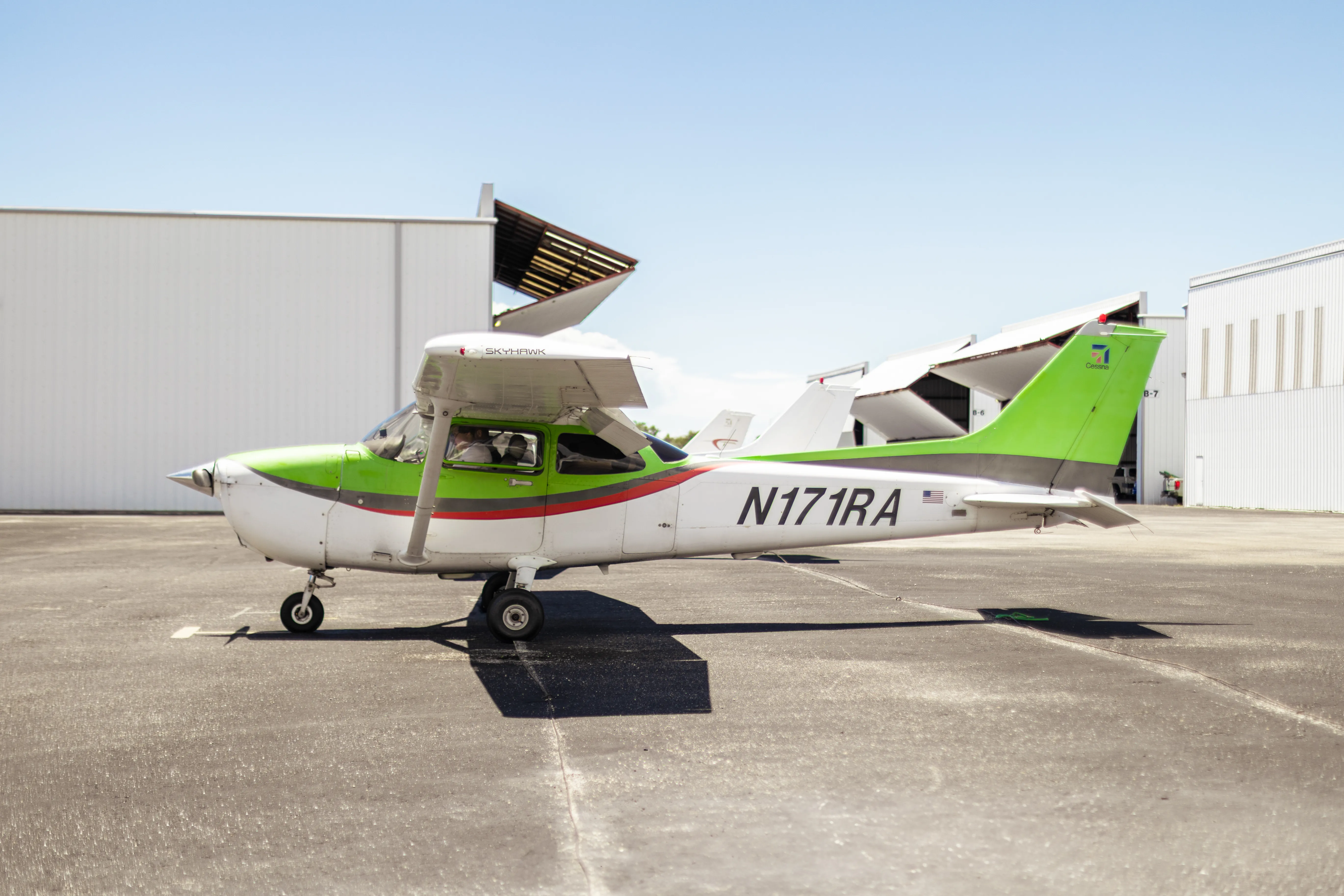
Responsibility for keeping the airplane airworthy sits with the owner or operator. At Cirrus Aviation, that is us. Our maintenance department tracks required inspections, airworthiness directives, and every reported discrepancy, and our FAA-certificated mechanics document each repair before an airplane returns to the line. You inherit the benefit of that system every time you sign out a Skyhawk from our fleet.
What a 100-Hour Inspection Means for Your Training Calendar
Training airplanes live by two inspection clocks. Every airplane needs an annual inspection, a complete look at the aircraft once every 12 calendar months. Airplanes provided for flight instruction for hire, which describes our training fleet, also need a 100-hour inspection every 100 hours of operation under 14 CFR 91.409. A busy trainer reaches that number in a matter of weeks.
For you, those clocks show up as airplanes rotating in and out of the schedule. A Skyhawk that flew all month comes off the line, goes into the hangar, and comes back with fresh oil, inspected cylinders, and a signed logbook entry. That rhythm is normal and healthy. A school where airplanes never seem to come off the line for inspection is not doing you a favor.
Between inspections, pilots and instructors write up anything that is not right. Aviation calls these discrepancies, or squawks: a radio that cuts out, a brake that feels soft, a light that will not test. Some ground the airplane until fixed. Others can be deferred under specific rules. Learning which is which is part of becoming a pilot, and our Private Pilot program builds that judgment from the first lessons.
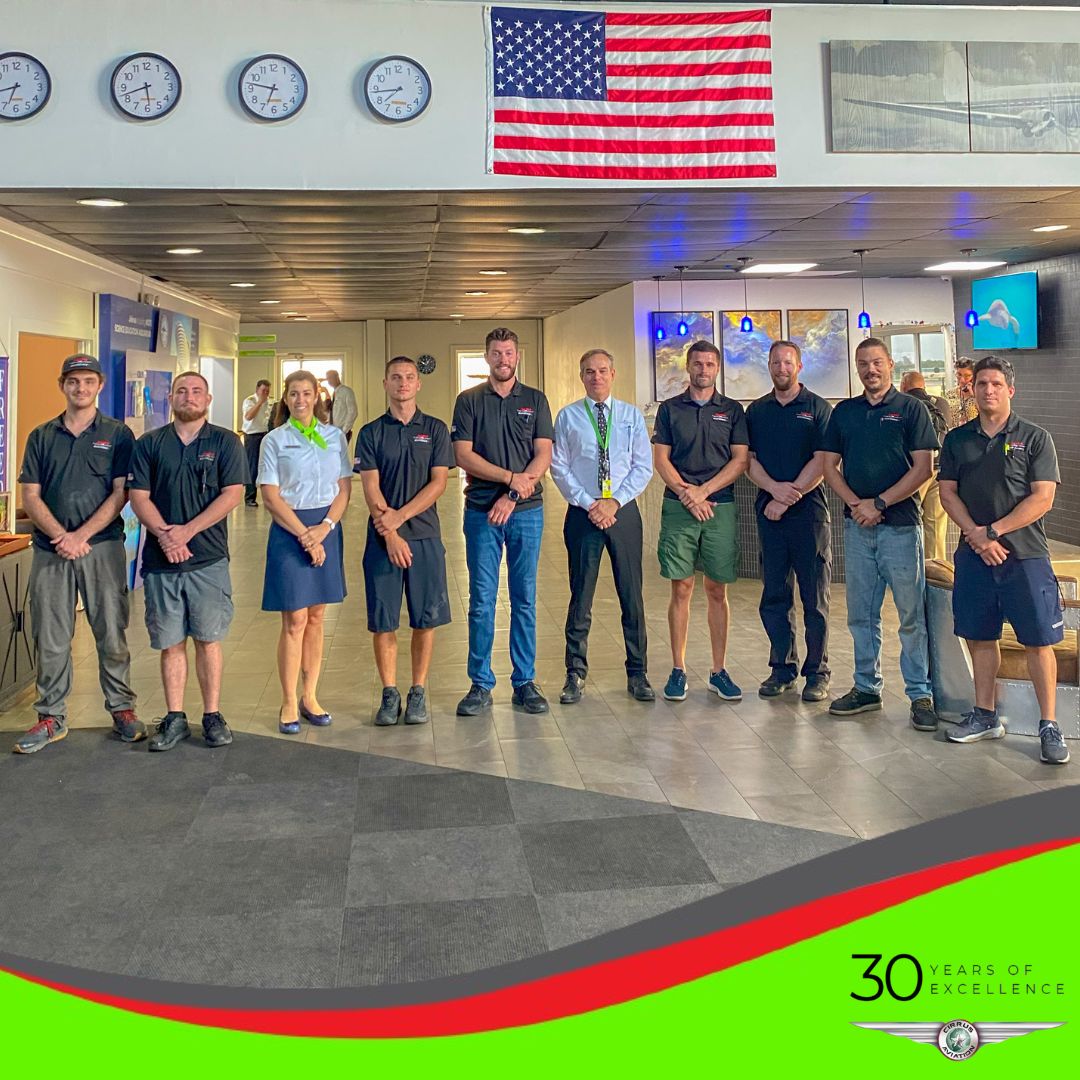
The technicians who inspect and sign off our training fleet work on the same field where you fly.
Your First Maintenance Job Is the Preflight Walkaround
Your instructor will hand you a checklist and walk you around the airplane on your first flight. The preflight inspection is the one piece of the maintenance system that belongs to you. You check fuel quantity and quality, oil level, tire condition, control surface movement, lights, the pitot tube, and the general condition of the airframe.
The preflight is where you learn to see an airplane the way a mechanic does. A drop of blue fuel on the ramp, a nick in a propeller blade, or a loose inspection panel all tell a story, and catching it on the ground beats discovering it at 2,000 feet over Longboat Key. Our instructors treat this as a skill to build rather than a box to tick, which is why it appears in every lesson from your Discovery Flight through your checkride.
When you find something, you report it. Writing a clear squawk is a professional habit, and at a school with an on-site shop the person who reads it is a few steps away. Our post on aviation safety standards at Cirrus Aviation explains how that habit fits with personal minimums and risk management.
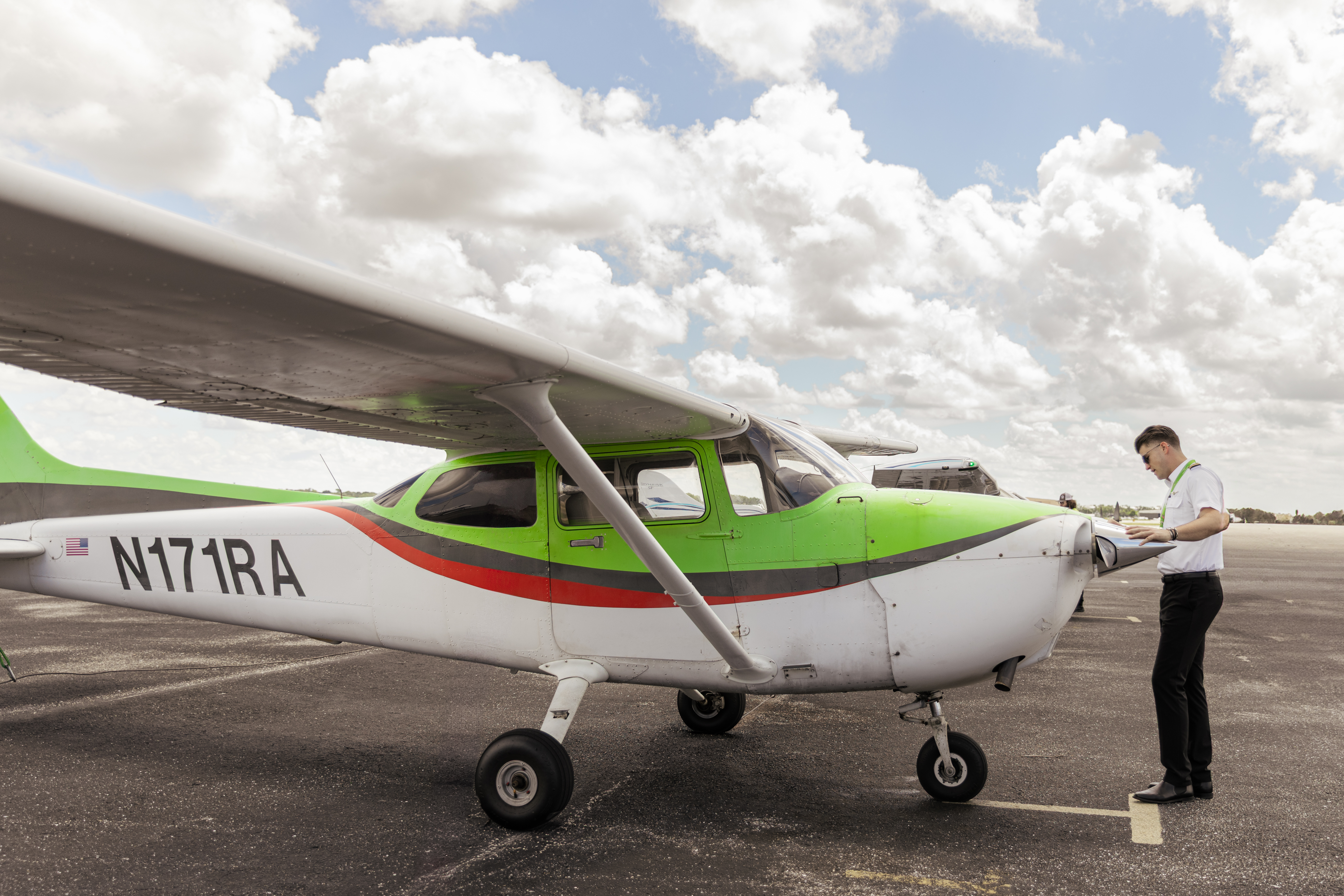
The preflight walkaround is the part of the maintenance system you own from your very first lesson.
Why an On-Site Shop at KSRQ Changes Your Week
Many flight schools send their airplanes to an outside shop. That is a legitimate way to run a fleet, and good schools do it well. We chose to own and operate our own maintenance department at KSRQ, with technicians on the field every day handling annual inspections, 100-hour inspections, oil changes, component installs, and general repairs.
The difference you feel is coordination. Our instructors, dispatch, and technicians talk to each other directly, so a squawk written up after a morning flight can be evaluated the same day instead of waiting on another company’s calendar. Fleet condition is monitored daily, and the same team sees the same airplanes week after week, which is how small problems get caught before they become expensive ones.
An on-site shop helps us keep aircraft available for your lessons, though weather, scheduling, and required inspections still shape any training calendar. What we can promise is a process built around flight training: documented maintenance records, standardized procedures across the fleet, and a shop that answers to the same people who schedule your flights. You can read more about the department on our aircraft maintenance page.
There is one more layer. Our Part 141 approval covers more than the syllabus. The FAA inspects and approves our instructors, aircraft, simulators, and in-house maintenance facility as separate elements of that certificate. Our Part 61 versus Part 141 comparison explains what that oversight means for how your training is tracked.
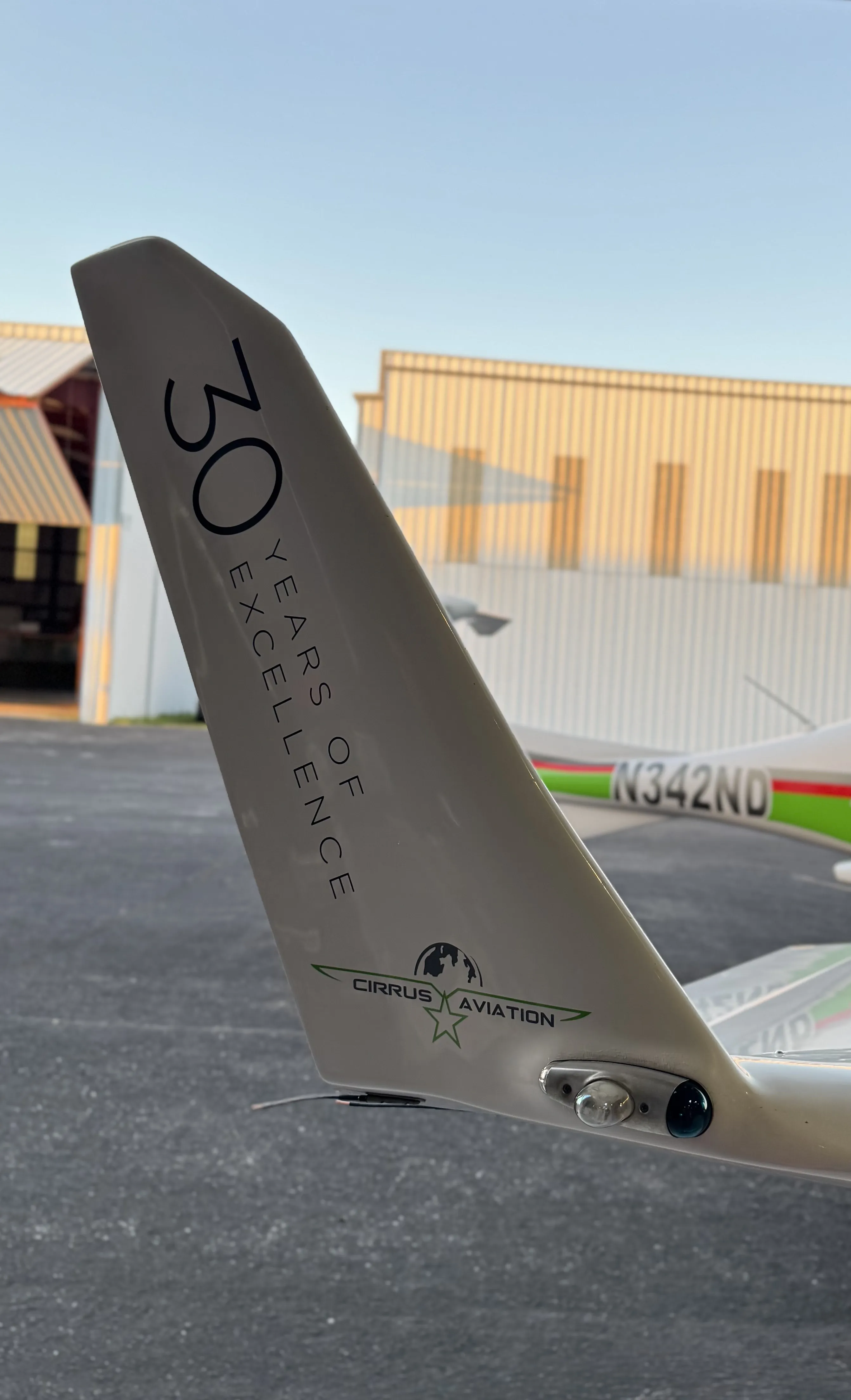
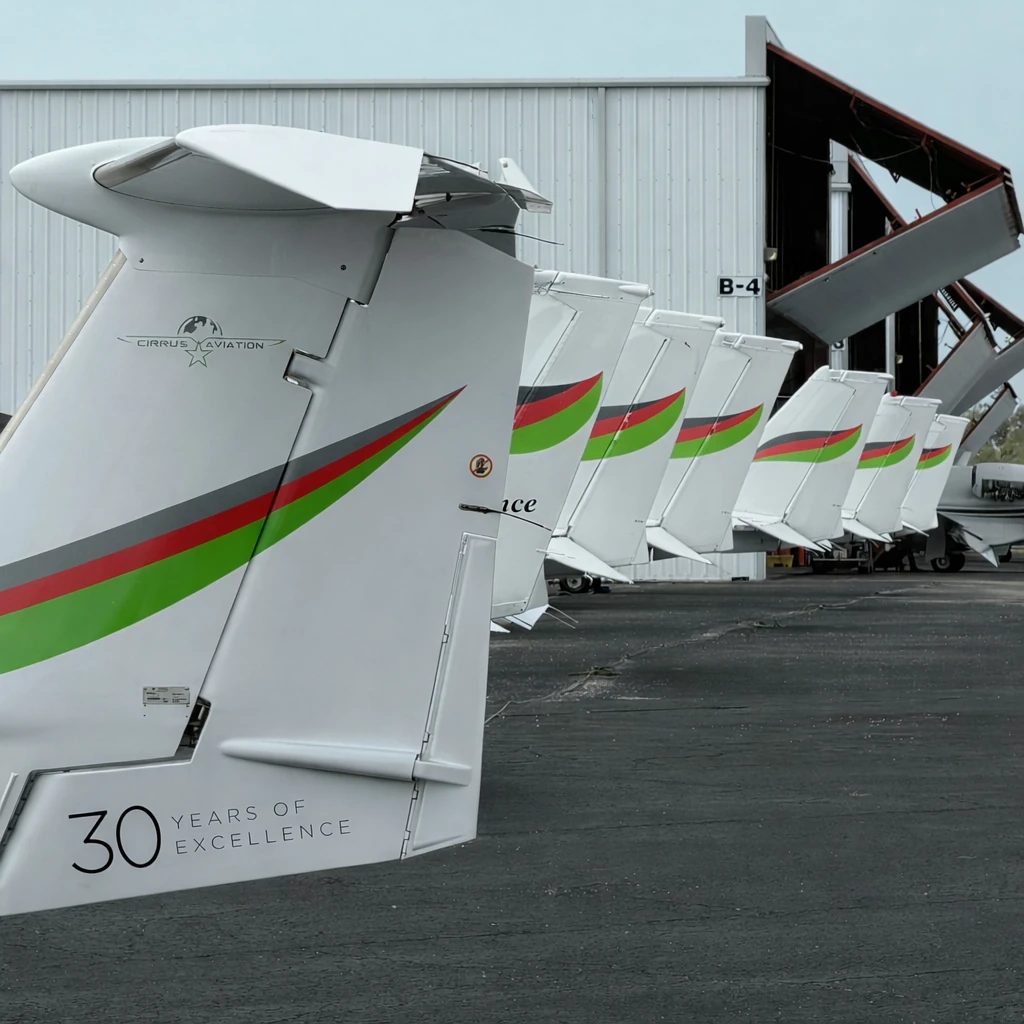
Three decades of operating and maintaining a training fleet at one airport shapes how we run the shop today.
What We Show You on a Ramp Tour
Maintenance is easier to judge in person than on a screen. When you visit us at KSRQ, we walk you through the hangar and the flight line, and here is what we point out:
- Inspection status. Which airplanes are due, which are in the shop, and how the schedule works around them.
- Squawk sheets. How a pilot reports a problem and how a technician closes it.
- The logbooks. Signed entries for each inspection and repair, kept for every aircraft.
- The people. Our mechanics work alongside our instructors, and you will meet both.
Bring the same questions to any school you are considering. Training is a significant investment, and our pilot financing options can help qualified students plan for it, but the airplane you sit in is where that money actually goes. You can learn more about how we operate on our about page.
FAQ
How often are flight school airplanes inspected?
Training airplanes provided for instruction for hire get a 100-hour inspection every 100 hours of flight time plus an annual inspection every 12 months, along with any airworthiness directives and repairs in between. We perform those inspections in-house at KSRQ, and you can read about the department on our aircraft maintenance page.
Who is responsible if something is wrong with the airplane?
The owner or operator is responsible for keeping the aircraft airworthy, and the pilot in command is responsible for deciding it is safe for that flight. As a student you learn both sides: our shop handles the first, and your preflight and squawk reporting train you for the second.
Will maintenance cancel my lessons?
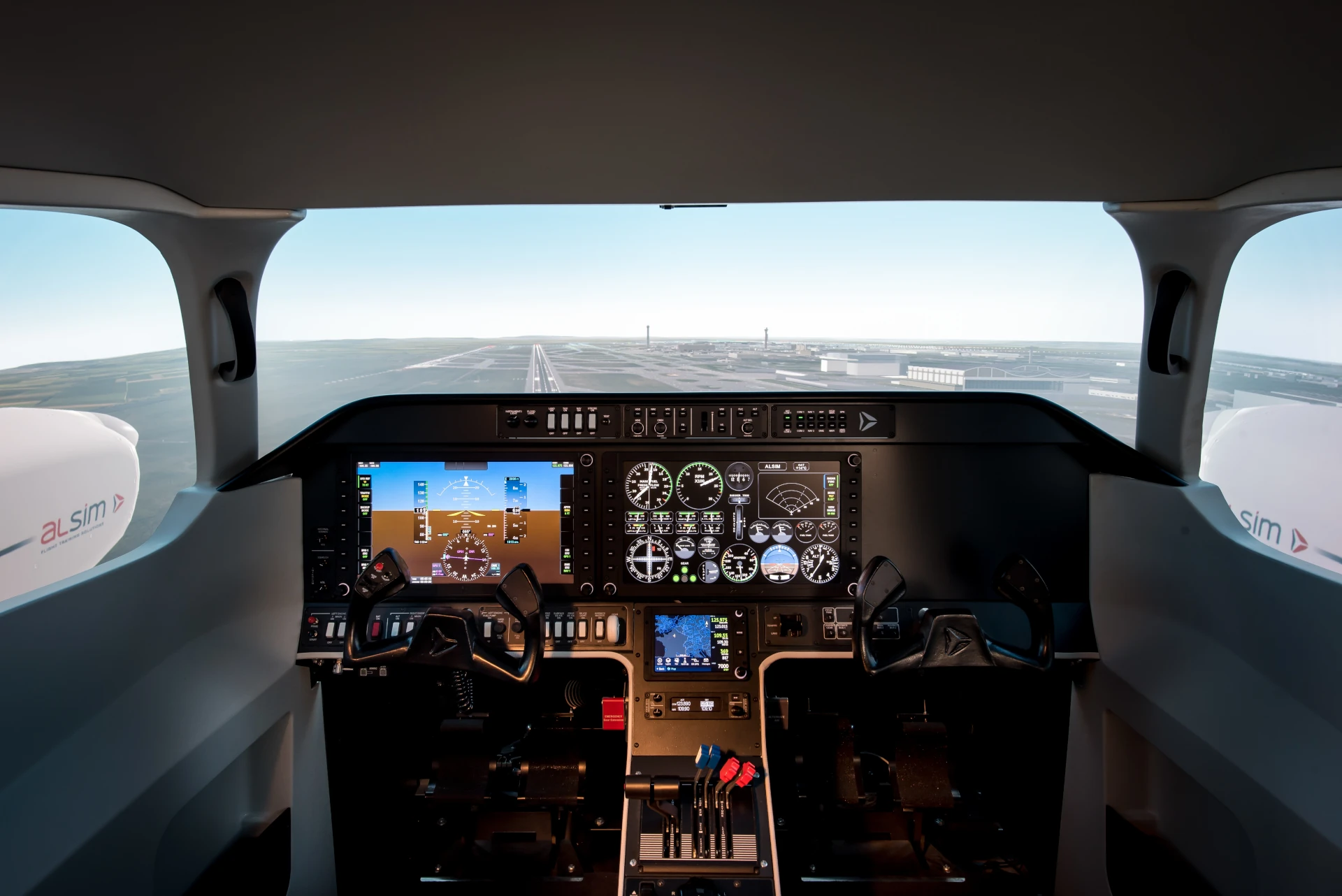
Sometimes an airplane comes off the line for a scheduled inspection or a squawk, and we reschedule you into another aircraft or a simulator session when we can. Having technicians on-site shortens most of those interruptions, though weather and inspection timing still shape every calendar.
Does Part 141 apply to maintenance?
Yes. Our Part 141 certificate covers the in-house maintenance facility as well as instructors, aircraft, and simulators, each inspected and approved individually by the FAA. You can compare the two training paths on our flight training page.
Can I watch maintenance being done on the airplane I fly?
Ask your instructor. Seeing a 100-hour inspection in progress is one of the best ways to understand the airplane’s systems, and our technicians are used to student questions.
Come See the Hangar Before You Choose a School
The airplane you learn in is the most expensive tool in your training, and the people who maintain it decide how well it serves you. Visit us at KSRQ, walk the ramp, meet the technicians, and see how the shop and the schedule work together. Then decide whether this is the place to start.
Schedule a visit with our team and we will show you the hangar, the fleet, and the flight line in one stop.