IFR Flight Requirements FAQ (2026)
What you need to fly IFR legally once you hold the rating, and how to stay current at KSRQ.
IFR Flight Requirements FAQ (2026)
What do I need to legally fly IFR once I'm instrument rated?
You need four things: the instrument rating on your certificate, current instrument experience, an IFR flight plan with an ATC clearance in controlled airspace, and an airplane that is equipped and inspected for IFR. Your usual private pilot items, such as a current medical and flight review, still apply.
The rating itself never expires. Currency is the part that comes and goes. We help rated pilots set up a routine of sim sessions and flights so the list stays green. If you are still earning the rating, our IFR rating timeline shows the path from private pilot.
What counts toward instrument currency?
Under 14 CFR 61.57(c), you must have flown and logged six instrument approaches, holding procedures and tasks, and intercepting and tracking courses with your navigation systems. All of it must fall within the 6 calendar months before the month of your flight.
You can fly them in actual weather or under a view-limiting device. If you wear the hood in the airplane, you need a safety pilot with at least a private pilot certificate for that category and class. You can split the tasks between the airplane and our simulators to keep the window fresh.
What happens if my instrument currency lapses?
You cannot act as pilot in command under IFR until you are current again. For the next 6 calendar months, you can catch up by flying the same tasks with a safety pilot, an instructor, or in an approved training device.
Once you have been out of currency for more than six calendar months, only an instrument proficiency check (IPC) restores it. An examiner or an authorized instrument instructor gives the IPC, using the areas of operation in the instrument Airman Certification Standards. The IPC is flown in an aircraft or in a full flight simulator or flight training device. Catching a lapse early saves you that extra step.
Can I log instrument currency in a simulator?
Yes. 61.57(c)(2) lets you complete the currency tasks in a full flight simulator, a flight training device or an aviation training device, as long as it represents the airplane category. You can mix device time and airplane time in any combination.
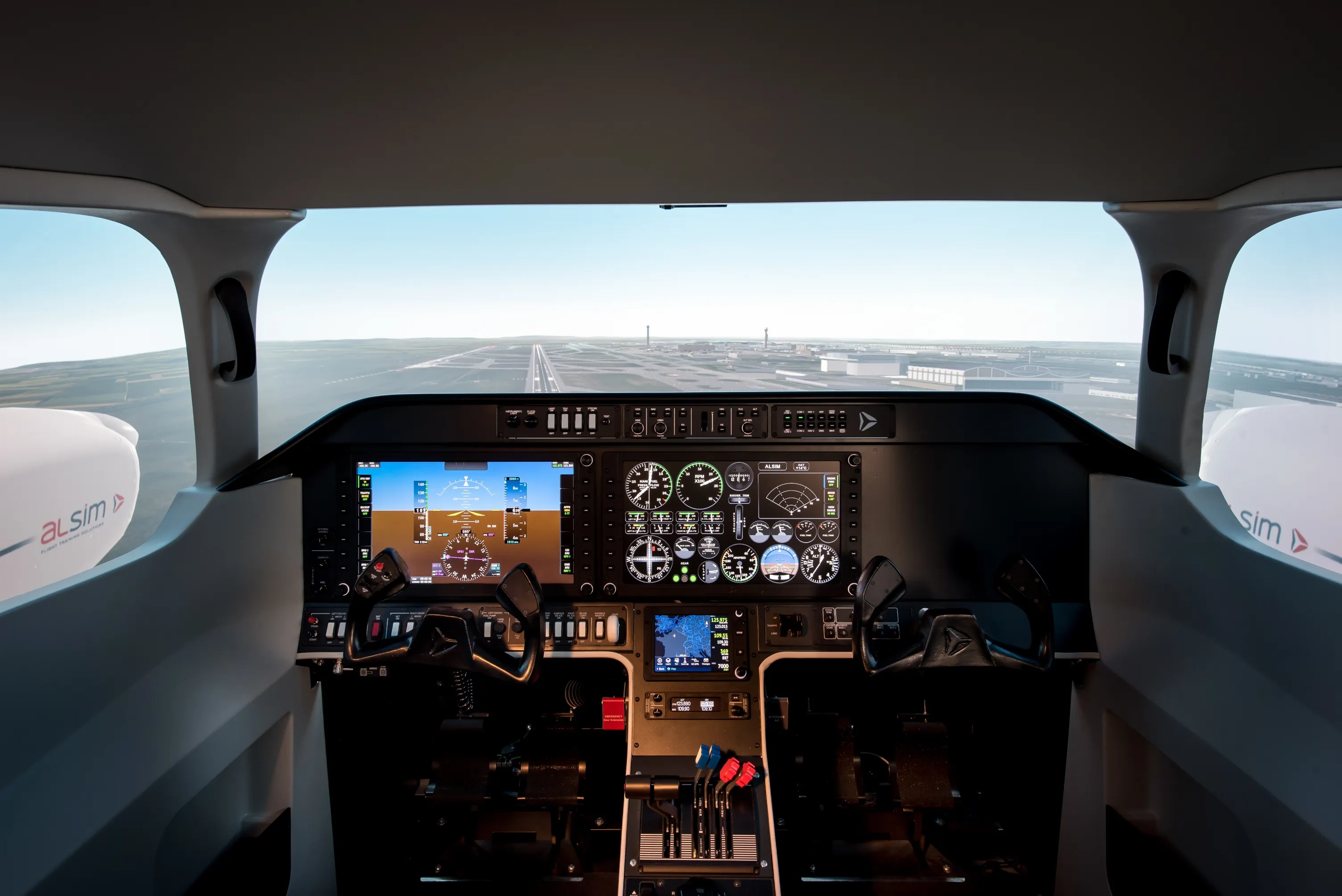
Our flight lab uses Alsim AL250 and AL172 advanced aviation training devices. With a Sim Lab Membership, licensed pilots get recurring simulator time to fly approaches, holds and course intercepts between trips. Membership starts with a checkout in both simulators with a flight instructor.
Do I need an IFR flight plan and a clearance for every IFR flight?
In controlled airspace, yes. 14 CFR 91.173 requires a filed IFR flight plan and an ATC clearance before you operate under IFR there. Before departure, 91.103 also asks you to review the weather reports and forecasts, fuel requirements, alternatives and any known ATC delays.
When you finish or cancel an active IFR flight plan, tell ATC or Flight Service. In our course, you practice IFR flight planning and clearance copying until the readback feels routine.
When do I need an alternate airport, and how much fuel do I carry?
You must list an alternate unless your destination has a published instrument approach and the forecast shows at least a 2,000-foot ceiling and 3 miles visibility from 1 hour before to 1 hour after your arrival. Pilots call this the 1-2-3 rule (14 CFR 91.169).
The alternate itself needs a forecast at or above its published alternate minimums. If none are published, use 600 feet and 2 miles for a precision approach or 800 feet and 2 miles for a nonprecision approach. For fuel, 91.167 requires enough to reach your destination, then the alternate when one is required, and then 45 more minutes at normal cruising speed. You work through these numbers on the IFR cross-countries in our course.
What equipment does an airplane need for IFR flight?
14 CFR 91.205(d) adds IFR items to the day and night VFR lists. These include two-way radio and navigation equipment suitable for the route, a rate-of-turn indicator, a slip-skid indicator, and a sensitive altimeter you can set to the current pressure.
The list also requires a clock showing hours, minutes and seconds, a generator or alternator with enough capacity, an attitude indicator and a heading indicator. During training, we check this list with you before IFR flights, so the habit carries into every airplane you fly.
Which inspections and checks keep an airplane legal for IFR?
Three items come up on every IFR flight. The altimeter, static system and altitude encoder must have been tested within the preceding 24 calendar months for IFR in controlled airspace (91.411). The transponder must also have been tested within 24 calendar months (91.413).
If you navigate with VOR, the receiver needs an operational check within the last 30 days (91.171). The limit is plus or minus 4 degrees on a test signal or ground checkpoint and 6 degrees on an airborne check. With two VORs, they must agree within 4 degrees. Log the date, place and bearing error, and sign the entry. Our in-house maintenance team keeps the inspection records for the aircraft we fly, and we show students where to find them.
What are the IFR takeoff and approach minimums under Part 91?
The takeoff minimums in 14 CFR 91.175(f) apply to commercial operators under Parts 121, 125, 129 and 135. A pilot flying under Part 91 has no legal takeoff minimum, so you need personal minimums that match your experience.
For approaches, you fly the published procedure and use the highest of the procedure, aircraft equipment and pilot minimums. You may go below the decision altitude or minimum descent altitude only with the required flight visibility and the runway environment in sight. Our instructors can help you set personal minimums, and raise them after a long break from flying in the clouds.
What is it like to fly IFR out of KSRQ's Class C airspace?
Sarasota-Bradenton International (KSRQ) is a towered Class C airport next to Tampa's Class B, with several published instrument approaches. You get your clearance from ATC before departure and talk to controllers for the whole flight. Class C also requires two-way radio contact and the transponder and ADS-B equipment the FAA lists for that airspace.
Airline, private jet and military traffic share the field every day. That makes clear readbacks and precise altitude and heading control part of every lesson. Pilots who train here get used to busy frequencies early, which helps on any IFR trip.
Can I rent an airplane from Cirrus Aviation for IFR flights?
Our aircraft rental program is open to pilots with a private pilot certificate or higher, a current FAA medical as applicable, a one-hour checkout with an instructor and renter's insurance. Our standardized fleet is set up for time building, IFR proficiency and cross-country flying.
Additional requirements may apply based on your experience and the recency of your flight time. Contact us before you plan an IFR trip, and we will match you with an aircraft and a checkout that fits your plan.
Where can I get an IPC or recurrent instrument training near Sarasota?
Right here at KSRQ. Our instrument instructors teach our Instrument Rating course, and they can build a refresher around the tasks you need, in our simulators and in the airplane.
A good plan starts in the flight simulator lab, where you can pause and repeat an approach until it feels smooth again, then moves to the airplane. Call us at (941) 360-9074 or send a message, and we will talk through your logbook and your IPC.
More Pilot FAQs
Explore answers on other flight training topics
Flight Training FAQs
Requirements, programs, testing, rentals and student resources, all searchable in one place.
Browse All FAQs
Keep your instrument rating ready to use
Tell us when you last flew an approach and what trips you have coming up. We will build a refresher plan with sim time and flights at KSRQ so you stay current and confident in the clouds.