News Oct 16, 2026 • Nayda Cattin
Our students and instructors flew twelve Cirrus Aviation aircraft from Sarasota-Bradenton International Airport (KSRQ) to Mobile, Alabama, for a day at Flight Works Alabama. The group landed at Mobile International Airport at Brookley (KBFM), explored the Flight Works aviation museum, toured the Airbus U.S. Final Assembly Line, and sat down for a private Q&A with Airbus Test Pilot Gary and a test engineer before flying home along the coast at sunset.
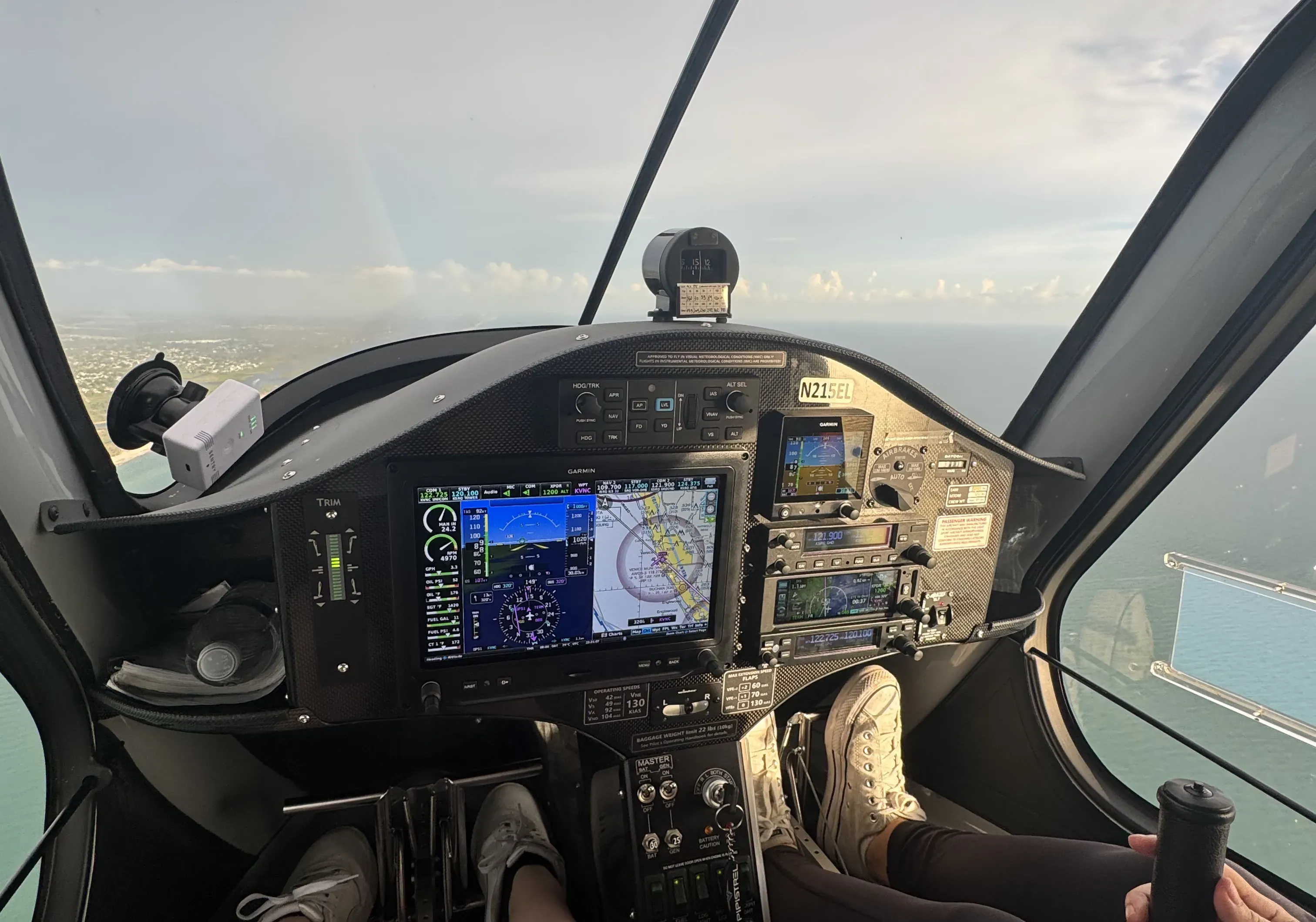
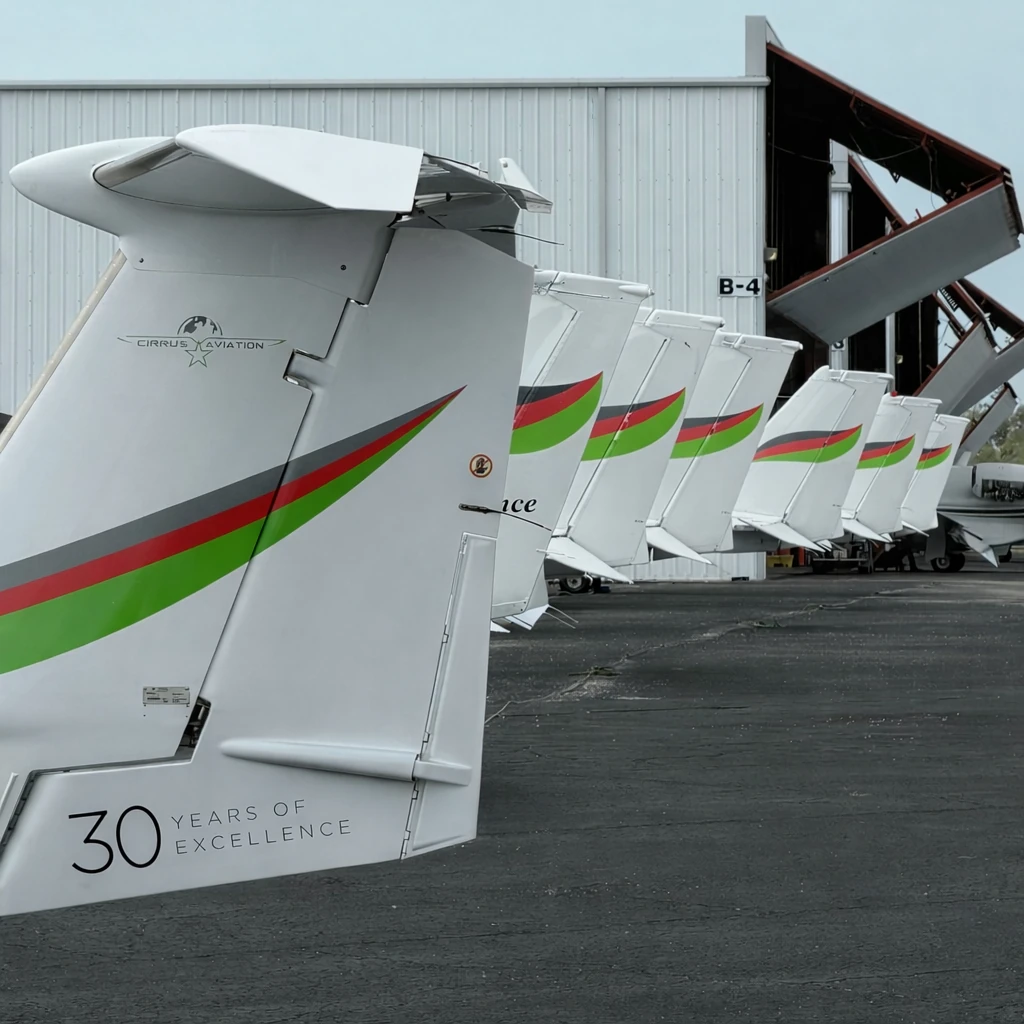
The fleet made the trip in formation. Three Pipistrel Alpha Trainers, three Cessna 172s, three Elixirs, two Piper Warriors, and our Diamond DA42 flew north together on a route that ran KSRQ to KBFM and back to KSRQ. For everyone on board, it was a day of flight training beyond the pattern: a long cross-country flown as one operation, and a close look at how the airliners that share our home airport are built.
Twelve Aircraft and Five Types Made the Flight North
The trip brought together every type in the Cirrus Aviation fleet. Each one plays a different part in day-to-day training at KSRQ, from first lessons to multi-engine work.
| Aircraft | On the trip | Role in our fleet |
|---|---|---|
| Pipistrel Alpha Trainer | 3 | A purpose-built primary trainer used for Private Pilot training and time building |
| Cessna 172 Skyhawk | 3 | A long-serving trainer used for instruction and aircraft rental |
| Elixir | 3 | Our newest aircraft, a carbon-fiber trainer built for efficiency and cross-country capability |
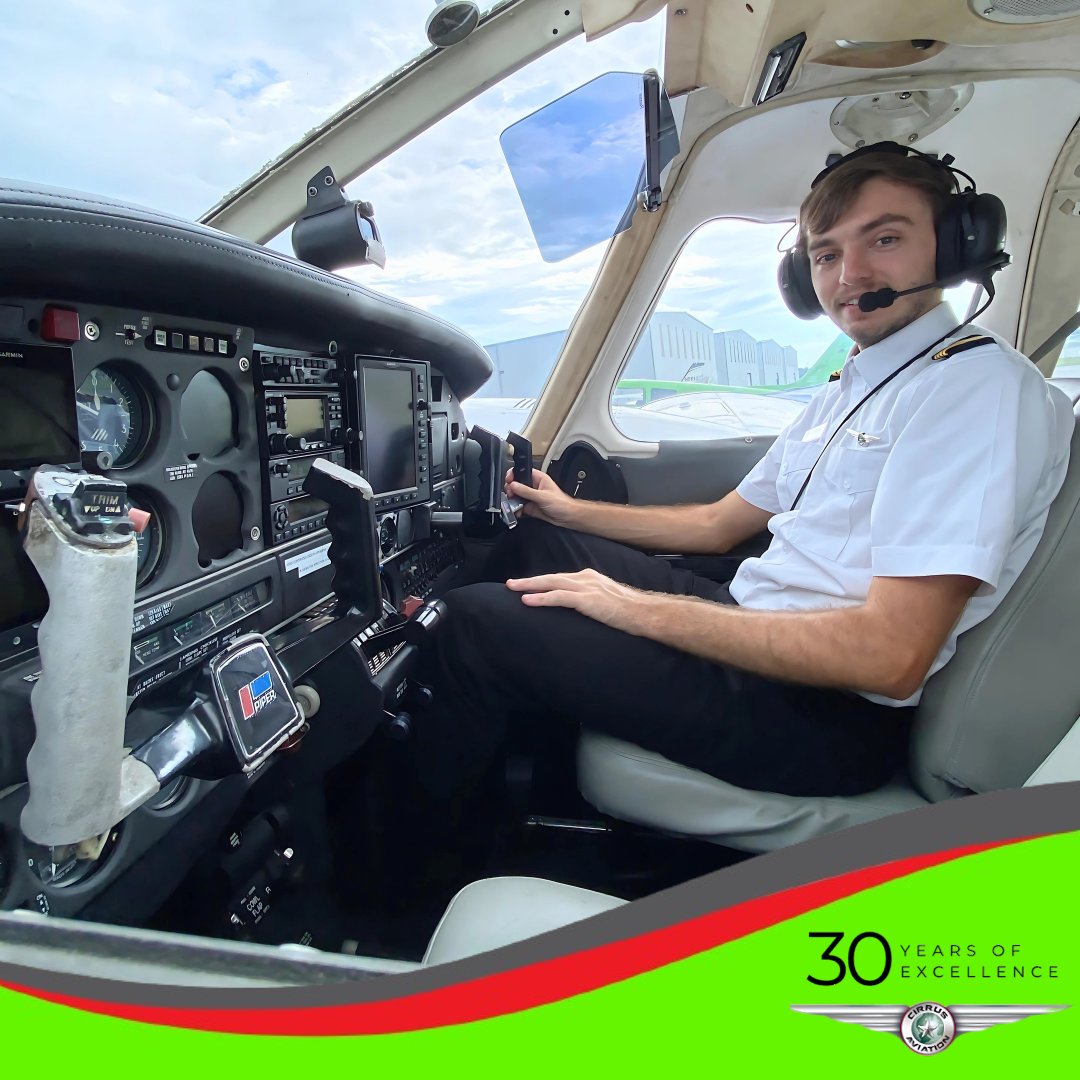
| Piper Warrior | 2 | A low-wing trainer flown by many of our students on their first solos |
| Diamond DA42 | 1 | Our twin-engine aircraft for Multi-Engine Rating training |
Moving that many aircraft together started on the ground. Each airplane needed its own preflight inspection, fuel plan, and weight and balance check before departure. Our in-house aircraft maintenance team works on these aircraft every day at KSRQ, so the fleet was prepared by the same mechanics who know it best.
The distance added to the planning. The flight from Sarasota to Mobile covers well over 300 nautical miles each way along the Gulf Coast, and the whole round trip fit into a single day. Every crew had to plan the route, check the weather along it, and know the options if conditions changed on the way out or on the way home.
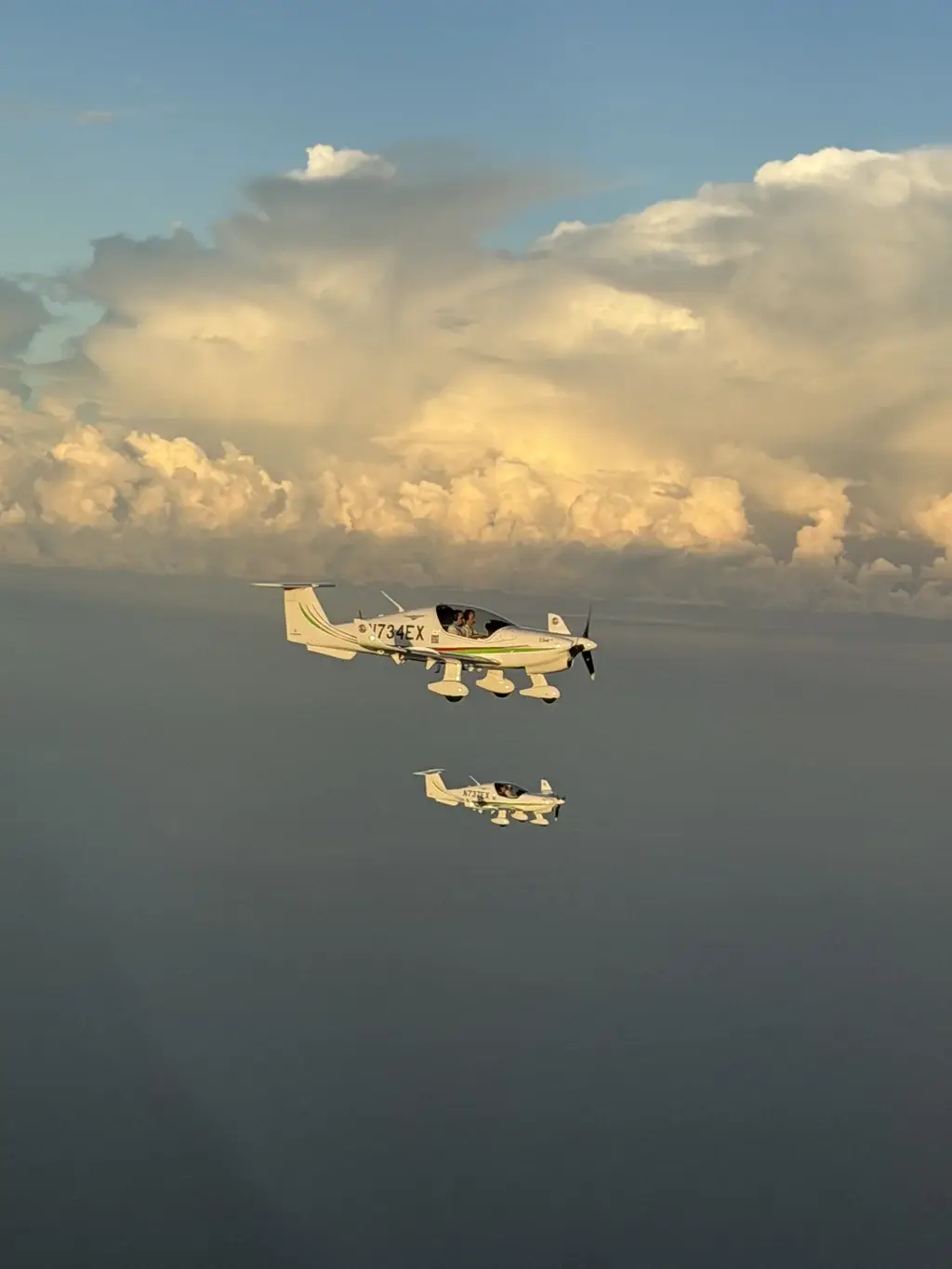
Two of our Elixirs flying in formation.
How the Formation Flight Was Organized
On the way to Mobile, each aircraft type flew in its own formation group. The Pipistrels flew together, as did the Cessnas, the Elixirs, and the Warriors, with the DA42 completing the twelve. Grouping by type kept aircraft with similar cruise speeds and climb performance side by side.
Once airborne, each pilot holds a set position relative to the lead aircraft, keeps the nearby aircraft in sight, and keeps radio calls short and clear. The lead handles navigation and communication for the group, which lets the other pilots concentrate on keeping their position. Spacing, power changes, and turns are covered in the briefing, so every pilot in the group knows what the lead aircraft will do before it happens.
Formation flight is not part of the requirements for a pilot certificate. The skills behind it come straight from everyday training, through: careful preflight planning, clear communication, and steady aircraft control.
First Stop: The Flight Works Alabama Aviation Museum
Flight Works Alabama is an aerospace education center in Mobile created through a partnership between the Airbus Foundation and the State of Alabama. Its interactive aviation museum covers how aircraft are designed and built, and it runs the tours that take visitors to the nearby Airbus final assembly line.
Our group started the day in the museum. The hands-on exhibits include an opened-up airliner fuselage section, built so visitors can see the wiring, structure, and systems that sit behind the overhead bins and cabin panels. For students who spend their lessons in two-seat and four-seat trainers, it was a chance to compare the systems they know with the ones inside a jet.
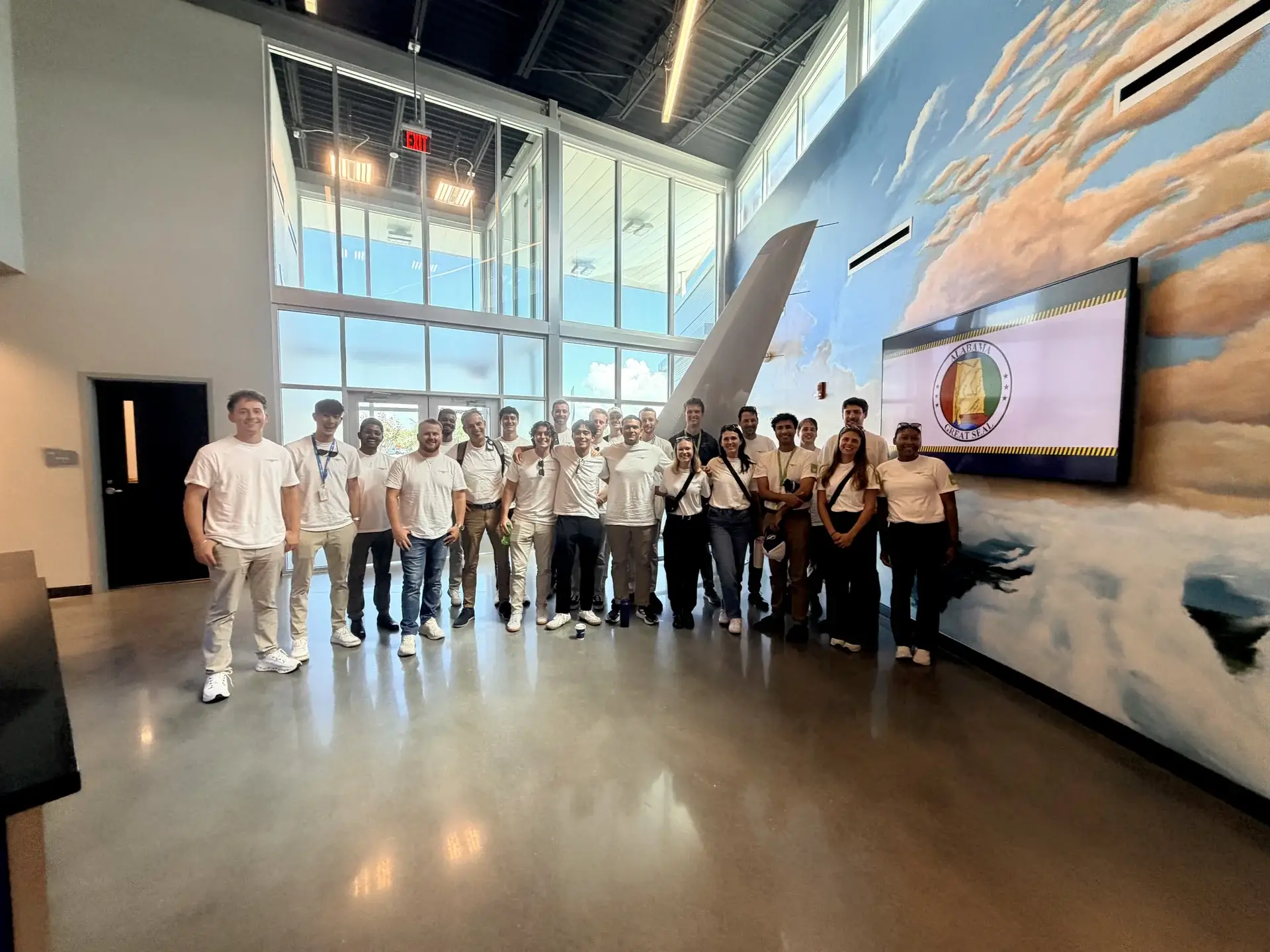
Our students and instructors at Flight Works Alabama in Mobile.
After the museum, the group broke for an excellent lunch from Moe’s Original BBQ before heading over to the factory. A long day of flying runs on good planning and good food, and Mobile delivered both.
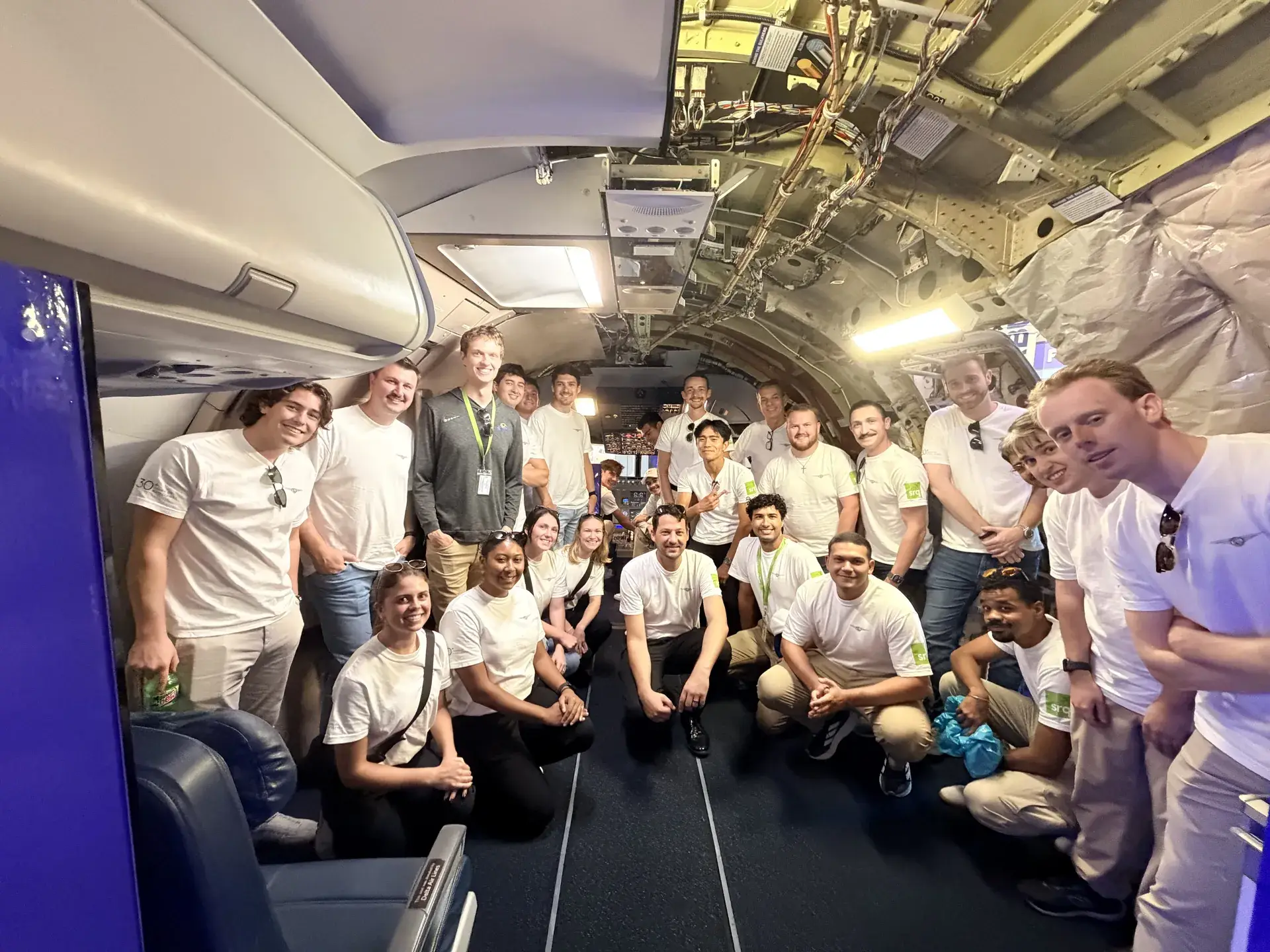
Our crew inside the airliner cabin exhibit at Flight Works Alabama.
Behind the Scenes at the Airbus U.S. Final Assembly Line
Mobile is home to Airbus’s final assembly line in the United States, located at the Mobile Aeroplex at Brookley, the same airfield where our fleet parked for the day. The plant opened in 2015 to assemble A320 family aircraft. Airbus later added a second product line, and its A220 final assembly line officially opened in 2020.
The Mobile site receives major aircraft sections, such as fuselage sections and wings, and joins them into finished airliners. Many of the parts arrive by ship from Airbus sites in Europe. In July 2025, Airbus delivered the 100th A220 built in Mobile, an aircraft that went to Breeze Airways.
The two lines build two different families of single-aisle jets. The A320 family is one of the most widely flown airliner families in the world and includes the larger A321. The A220 is a smaller jet that began life as the Bombardier C Series before Airbus took over the program. Airbus assembles the A220 both in Mobile and in Mirabel, Canada, and the Alabama line has taken on a growing share of aircraft for US airlines.
Seeing the line in person gave our group a behind-the-scenes look at where these aircraft come together. Airline traffic is part of daily life at KSRQ, a Class C airport where our students share the airspace with jets from several carriers. You can read more about the airport’s growth in our post on Sarasota aviation growth and what SRQ means for pilots.
Hearing Firsthand From Airbus Test Pilot Gary
One of the highlights of the day was a private Q&A with Airbus Test Pilot Gary, joined by an Airbus test engineer. Each finished aircraft goes through systems checks, ground tests, and flight testing before it is handed to an airline, and that last stage is where test pilots and test engineers do their work.
Test pilots fly new aircraft through a series of checks before delivery, and test engineers plan those flights, measure how each aircraft performs, and study the results. Our students got to hear firsthand about a side of aviation most people never get to experience, from the people who do it every day.
Flight testing brings together piloting skill, engineering knowledge, and careful documentation, the same mix of preparation and precision that underpins flight training at every level. Our students rehearse procedures in our flight simulator lab before flying them, an approach we call Say It, Sim It, Fly It, so they understand the reason behind each step and not only the step itself.
A Sunset Flight Home Along the Gulf Coast
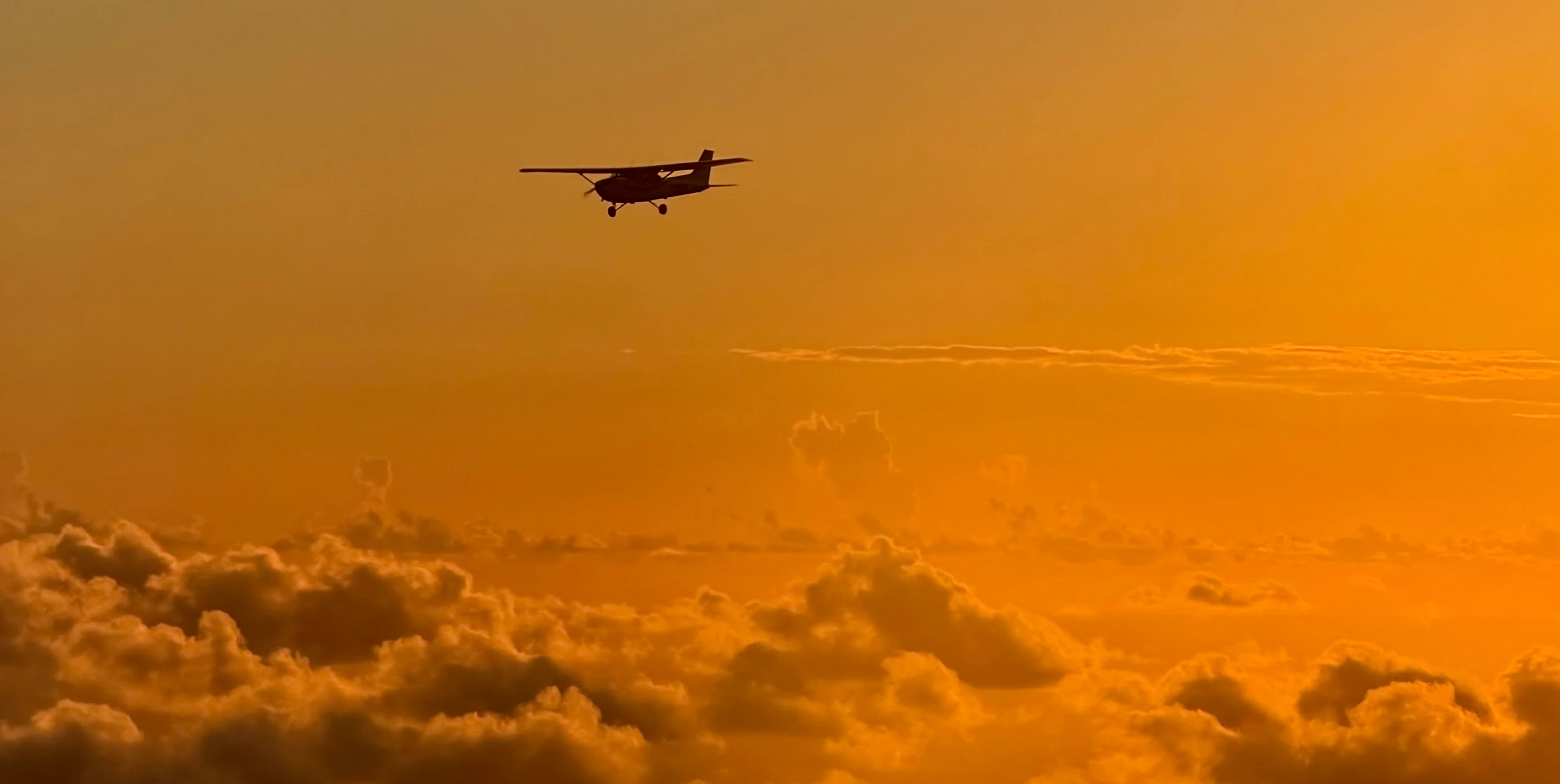
The day ended the best way it could: twelve aircraft flying home along the coast with the sunset out the window. The return leg to KSRQ put the same planning, communication, and aircraft control back to work after a full day on the ground.
Cross-country flying is a core part of pilot training. For Private Pilot training, a cross-country flight includes a landing at an airport more than 50 nautical miles from the departure point. Students plan the route, choose checkpoints, review weather, and identify alternate airports before they go. The trip to Mobile used those same steps on a larger scale, with twelve sets of performance numbers and twelve crews working from a shared plan.
Trips like this one reflect values our team has held since the very beginning. We have always treated aviation as a community, from local partners at KSRQ to industry events like EAA AirVenture Oshkosh, where we joined Alsim and King Schools in 2024. Great flying, great food, and even better memories with our crew carried that tradition all the way to Alabama.
A huge thank you to the Flight Works Alabama team for making this a memorable day for Cirrus Aviation, and to Airbus for opening its doors to our group. We will be back soon. You can learn more about the aircraft that made the flight on our fleet page and about the school’s history on our About Us page.