News Oct 15, 2026 • Nayda Cattin
You already earned your private pilot certificate. Now the clouds over the Gulf keep cancelling your Saturday flights, and the instrument rating is the obvious next step. Before you sign up, it helps to know what you need in hand.
The requirements for IFR training start with five items: a private pilot certificate, English proficiency, a current FAA medical certificate, proof of U.S. citizenship or TSA approval, and a plan for the knowledge test. Then comes the logbook work. You will need 50 hours of cross-country time as pilot in command and 40 hours of instrument time before the checkride, so you should know your numbers on day one.
At Cirrus Aviation, we train instrument pilots under both Part 61 and Part 141 at Sarasota-Bradenton International Airport (KSRQ). This is the checklist we would hand you before your first lesson.
Check your eligibility before you pay a deposit
The FAA sets the baseline in 14 CFR 61.65, the regulation for instrument rating requirements. These items decide whether you can start at all, so check them first.
| Requirement | What to bring | How we help |
|---|---|---|
| Private pilot certificate, airplane rating | Your pilot certificate | If you are still working on it, our Private Pilot program comes first |
| English proficiency | Nothing extra; you show it in training | We confirm it at your Student Services meeting |
| Current FAA medical certificate | Your medical certificate | We check its class and dates against your plan |
| U.S. citizenship or TSA approval | U.S. passport or birth certificate, or your TSA clearance | We verify documents before your first Instrument Rating flight |
Under Part 61 you need at least a private pilot certificate with an airplane rating. Our Part 141 instrument course requires it before you enroll in the flight portion.
The FAA also requires instrument applicants to read, speak, write and understand English. On an IFR flight you copy clearances, read back changes and brief approaches in English, often while the airplane keeps you busy.
Get your medical and citizenship papers in order early
These two items cause the most avoidable delays, and you can sort out both weeks before you start.
To act as pilot in command under your private pilot privileges, you need at least a third-class medical certificate, and our instrument program asks you to hold a current FAA medical certificate. Check the expiration date now. Third-class privileges generally last 60 calendar months if you were under 40 at the exam and 24 calendar months if you were 40 or older. If you want to fly for pay later, plan on a second-class medical, because commercial pilot privileges require one. For any question about medications or conditions, talk to an Aviation Medical Examiner (AME) before you book.
Federal security rules require every flight school to verify U.S. citizenship before flight training, using a government-issued document such as a U.S. passport or birth certificate. If you are not a U.S. citizen, TSA must clear you through its Flight Training Security Program first, and that applies to instrument training as well. Our international students team can walk you through the TSA steps.
Audit your logbook so you know where you stand
A little homework here saves real money. Before your first lesson, sit down with your logbook and a pencil and add up two columns.
The first column is cross-country time as pilot in command. Part 61 requires 50 hours, and at least 10 of them must be in an airplane. For the instrument rating, a flight counts as cross-country when it lands at a point more than 50 nautical miles in a straight line from where it started. Many new private pilots have far fewer than 50 hours, which is normal. You can keep building that time while you train.
The second column is instrument time. Part 61 requires 40 hours of actual or simulated instrument time, with 15 of those from an instrument-rated authorized instructor. Hood time from your private pilot training may already count, since you can log instrument time only when you flew solely by reference to instruments.
Part 61 and Part 141 count these hours differently, and our Part 61 vs Part 141 guide explains the two paths. Bring your totals to us and we will show you which one fits your logbook.
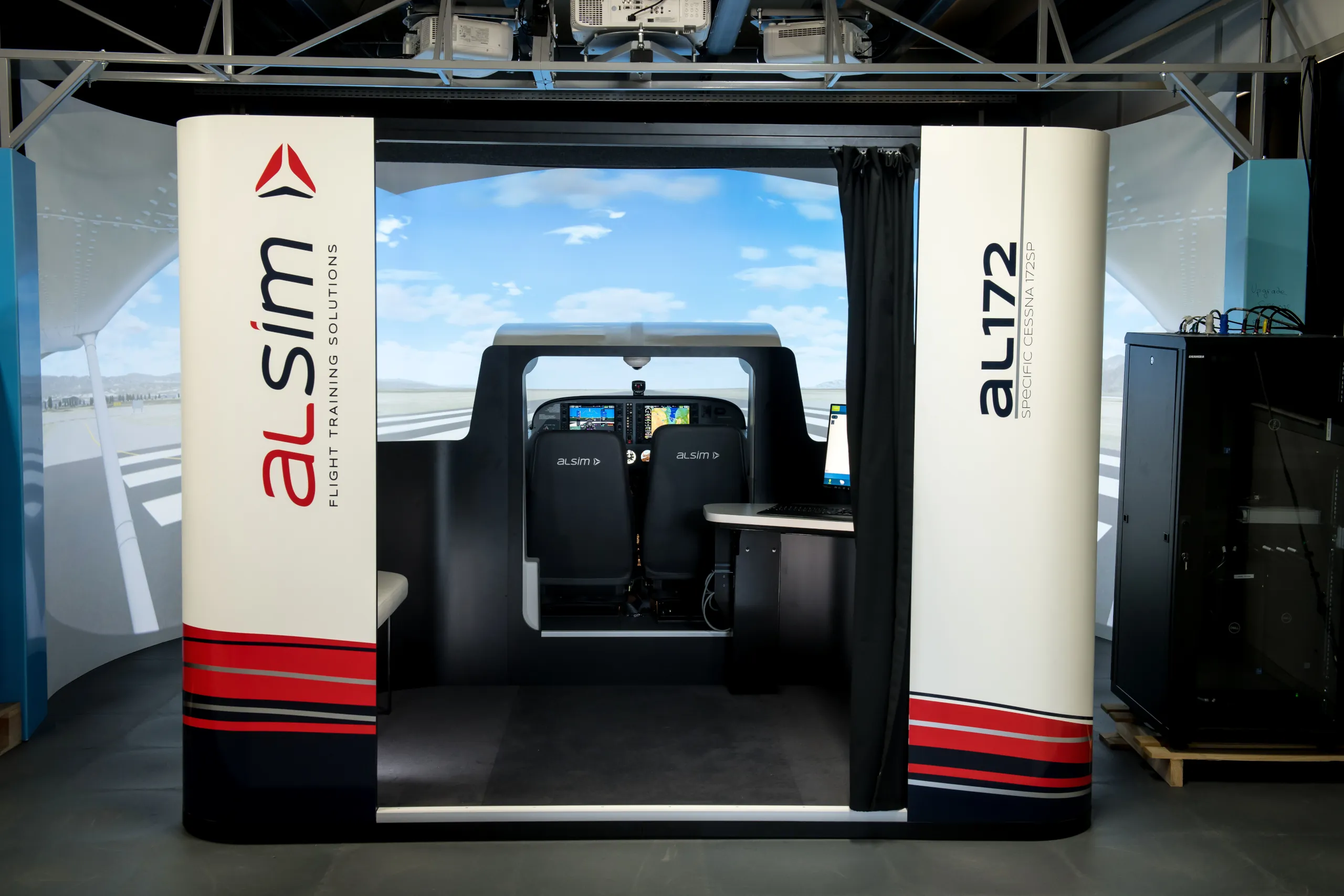
Some instrument time in approved training devices with an instructor can count toward the 40 hours, within FAA limits. Exact credit depends on the device and the path, so we work it out with you. Either way, you will rehearse holds and approaches in our flight simulator lab before you fly them, which makes your airplane hours count for more.
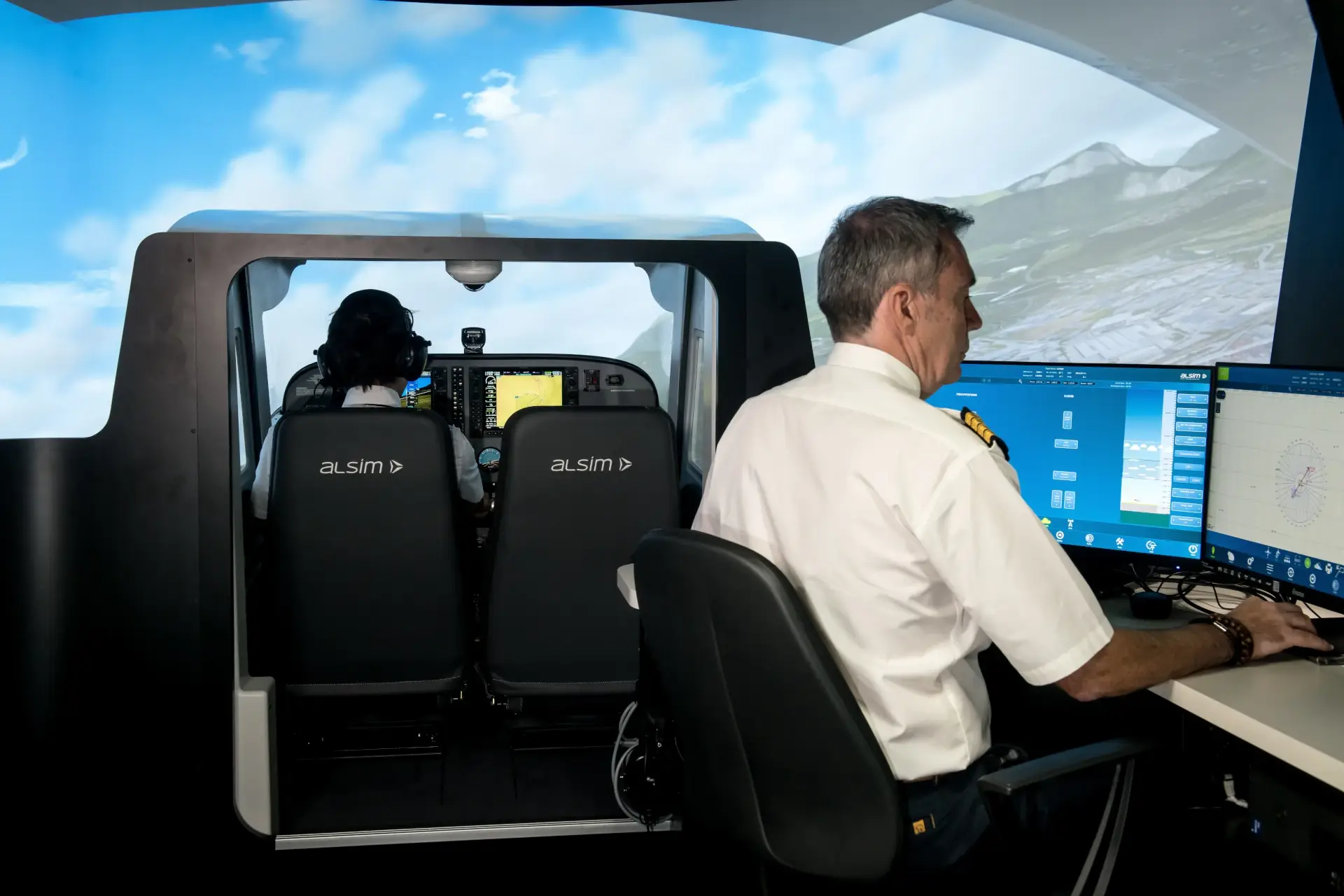
Rehearsing procedures in the simulator before flying them in the airplane.
Start the knowledge test prep before your first lesson
The instrument knowledge test (pilots often call it the written) is a computer-based FAA exam. Before you can sit for it, you need ground training or a home-study course on the instrument knowledge areas, plus an endorsement from an authorized instructor saying you are ready.
The knowledge areas cover a lot of ground:
- IFR regulations and the Aeronautical Information Manual
- The air traffic control system and IFR procedures
- IFR navigation, approaches and charts
- Aviation weather reports, forecasts and critical weather
- Aeronautical decision making and crew resource management
A passed knowledge test stays valid toward your checkride for 24 calendar months. If you start studying early, the regulations, charts and weather already make sense when your instructor briefs them in the airplane. Our IFR ground school is built for this stage.
When you are ready, you can take the test right here at KSRQ. Our airman testing center runs regular sessions for our students and outside applicants. On test day, bring a government-issued photo ID with your signature and date of birth, plus your instructor’s endorsement.
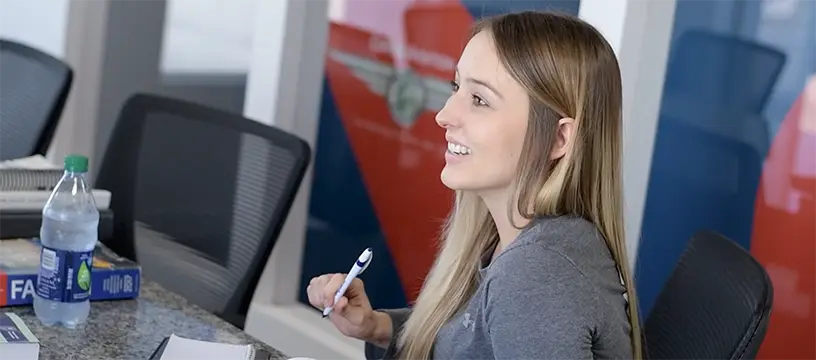
Ground study makes the knowledge test and your first IFR briefings easier.
Show up ready for your first instrument lesson
With the paperwork done, you can spend your first meeting with us planning your training. Our instrument enrollment follows four steps:
- Schedule a tour. Come see the fleet and meet the team. If you are out of town, call us at (941) 360-9074.
- Verify documents. Bring your pilot certificate, medical certificate, logbook and your passport or citizenship documents.
- Schedule your program. We assign your primary instructor and set your start date.
- Secure financing. You can pay out of pocket or apply for a loan through our partner, Sallie Mae.
On financing, we are an approved training provider for Sallie Mae’s aviation career training loans, and our admissions team can walk you through the application. Our pilot financing page covers the options. We do not publish course pricing, because cost depends on your logbook and your pace. Call us and we will give you current numbers for your plan.
Once you start, you will train in our Cessna 172 Skyhawk aircraft and Alsim simulators, flying mostly with one primary instructor who knows your strengths. The program runs from 2 to 4 months, and your timeline depends on how often you fly, your study habits, aptitude and Gulf Coast weather.
Keep flying while you wait to start. A few cross-country flights to fields more than 50 nautical miles away build PIC time and keep your VFR skills sharp. If you need an airplane, our aircraft rental options are open to private pilots after a checkout.
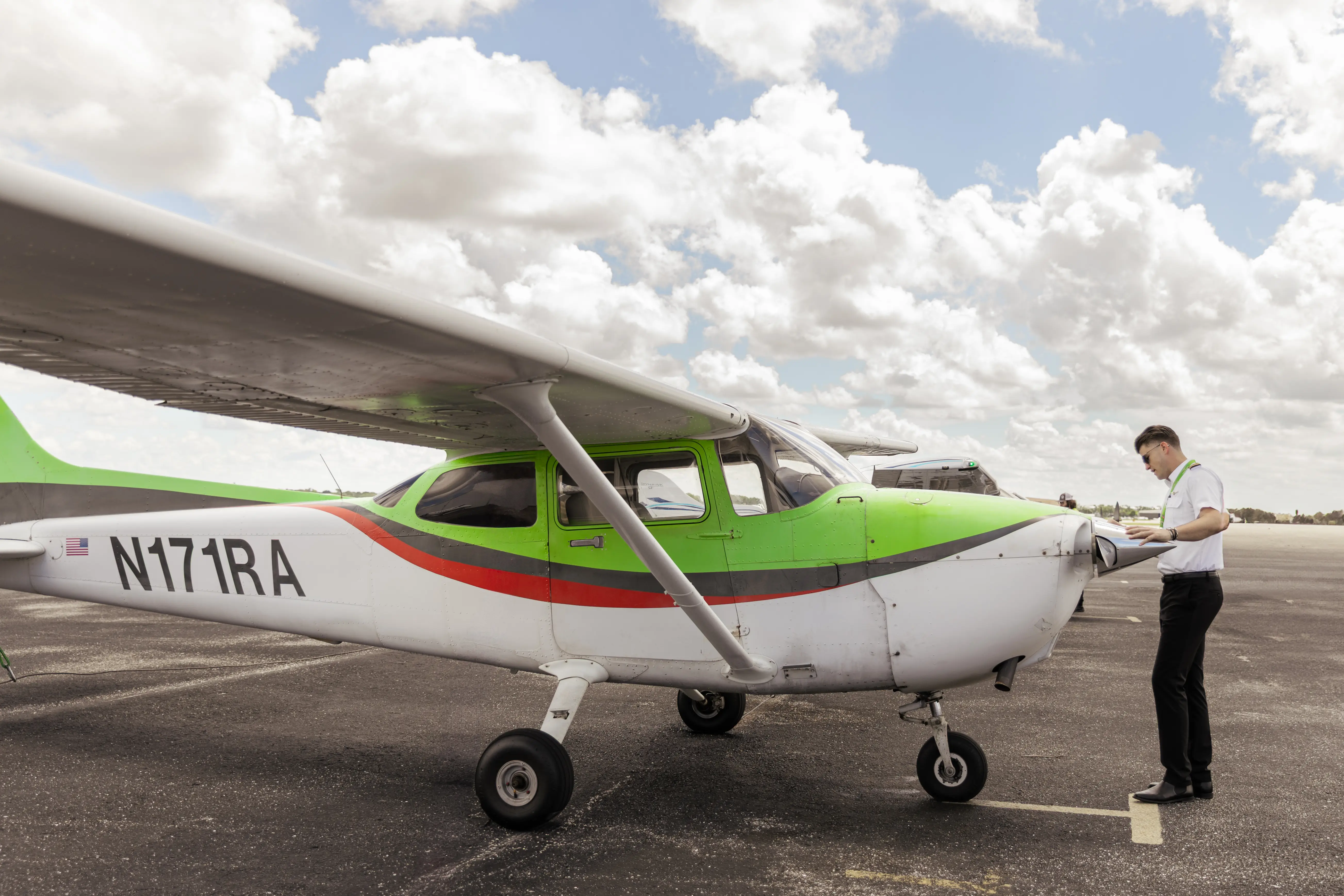
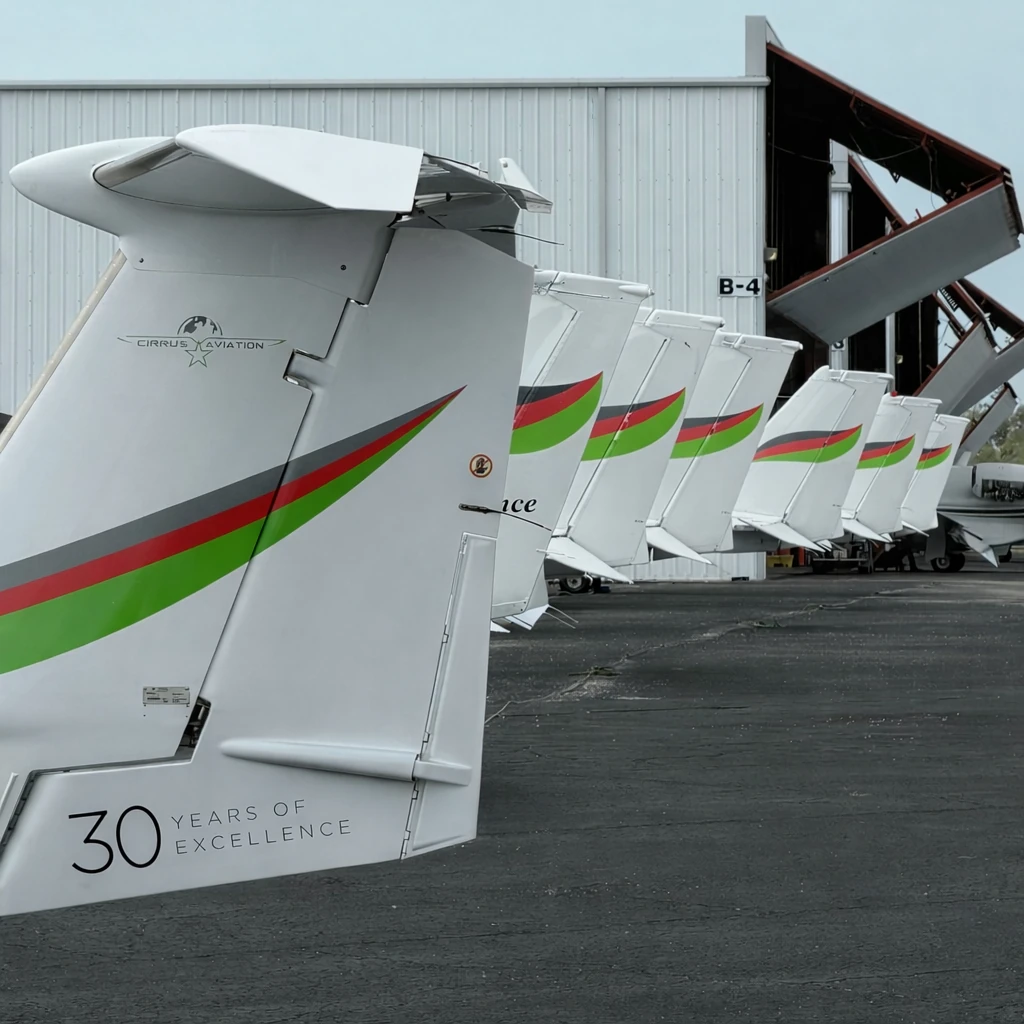
Instrument students train in our Cessna 172 Skyhawk aircraft.
Questions pilots ask before they enroll in IFR training
Do I need my private pilot certificate before I start?
Yes, for our instrument programs. Part 141 requires it before the flight portion, and our instrument students come in as certificated private pilots. Our Instrument Rating page covers what the course includes.
Can I start with fewer than 50 hours of cross-country PIC time?
Yes. Many pilots build that time during training. Under Part 61 you need it before the checkride, not before your first lesson. We help you plan cross-country flights that also build skill.
Which medical class do I need for an instrument rating?
A third-class medical covers flying under private pilot privileges. If you plan a career pilot path, get a second-class medical early so any issue comes up before you invest in training.
Should I pass the written before I enroll?
You can, but you still need an instructor endorsement or a home-study course endorsement first. Many pilots study alongside their early lessons and test once the material clicks. Our airman testing center at KSRQ keeps scheduling simple.
Does my old hood time count?
Often, yes, if you logged it as simulated instrument time while flying solely by reference to instruments. Bring your logbook and we will review it with you during your tour.
How long does the instrument rating take at Cirrus Aviation?
Our program runs from 2 to 4 months. Your pace, schedule and the weather all shape the timeline. Read how sim rehearsal fits each lesson in our Say It, Sim It, Fly It post.
Bring your logbook and let’s map your instrument rating
You now have the full list: your private pilot certificate, English proficiency, a current medical, your citizenship or TSA documents, a logbook total for cross-country and instrument time, and a plan for the written. Pull those together and your first meeting with us turns into a training plan.
Schedule a tour at KSRQ, bring your logbook, and we will help you map the Part 61 or Part 141 path that fits. Schedule your tour today.