News Oct 15, 2026 • Nayda Cattin
Picture a Sunday afternoon with your logbook open and a pencil in hand. You earned your private pilot certificate, the Gulf Coast clouds keep scrubbing your plans, and you want to know one thing: how many hours for an IFR rating stand between you and flying through that layer?
The short answer under Part 61 is two big numbers. You need 50 hours of cross-country time as pilot in command (PIC) and 40 hours of actual or simulated instrument time, with 15 of those 40 from an instrument instructor. Inside the 40 sit a few smaller lines, including one long IFR cross-country. A Part 141 course counts differently, with a 35-hour instrument training minimum in an approved syllabus.
Below, we walk through each line the way we would at a logbook review here at Cirrus Aviation, including how much simulator time can count and why your final total can land above the minimums.
Read the Part 61 hour requirements line by line
The FAA lists the instrument-airplane experience rules in 14 CFR 61.65. Laid out as a logbook worksheet, they look like this.
| Logbook line | Part 61 minimum | What counts |
|---|---|---|
| Cross-country time as PIC | 50 hours | At least 10 hours in an airplane |
| Instrument time, actual or simulated | 40 hours | Flown solely by reference to instruments |
| Training from an instrument instructor | 15 of the 40 | From an authorized instructor with an instrument-airplane rating (a CFII) |
| Recent training in the airplane | 3 hours | Instrument training within 2 calendar months before the checkride |
| Long IFR cross-country | 1 flight | 250 nautical miles on an IFR flight plan, with an approach at each airport and three different kinds of approaches |
All of these lines apply to the Instrument Rating under Part 61, and they overlap: the 15 instructor hours, the 3 recent hours and the long cross-country all sit inside the 40 hours of instrument time.
Close the 50-hour cross-country gap early
For most new instrument students, the PIC cross-country line is the biggest gap. Private pilot training only requires 5 hours of solo cross-country time, so a fresh private pilot usually has a long way to go to 50.
For the instrument rating, a flight counts as cross-country when it lands more than 50 nautical miles in a straight line from where it started. Our pre-enrollment checklist shows you how to total that column before your first lesson.
You can build this time in a few ways. You can fly yourself to fields more than 50 miles out, alone or with friends. You can also fly with a safety pilot, which is how many pilots build cross-country and instrument time together. When you fly under a view-limiting device, the FAA requires a safety pilot in the other seat with at least a private pilot certificate for that airplane. You log the instrument time, and as the pilot flying you log PIC time as well.
If you need an airplane for these flights, our aircraft rental program is open to private pilots after a one-hour checkout. Plan your time-building flights so they also practice the skills you will need on the instrument checkride, such as copying clearances and flying published routes.
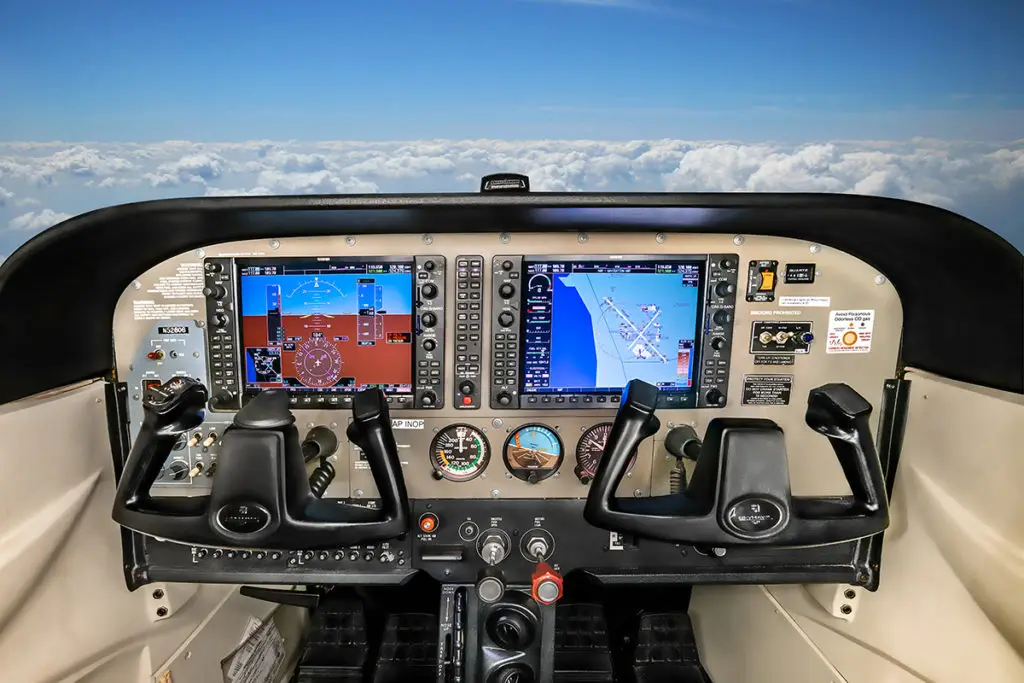
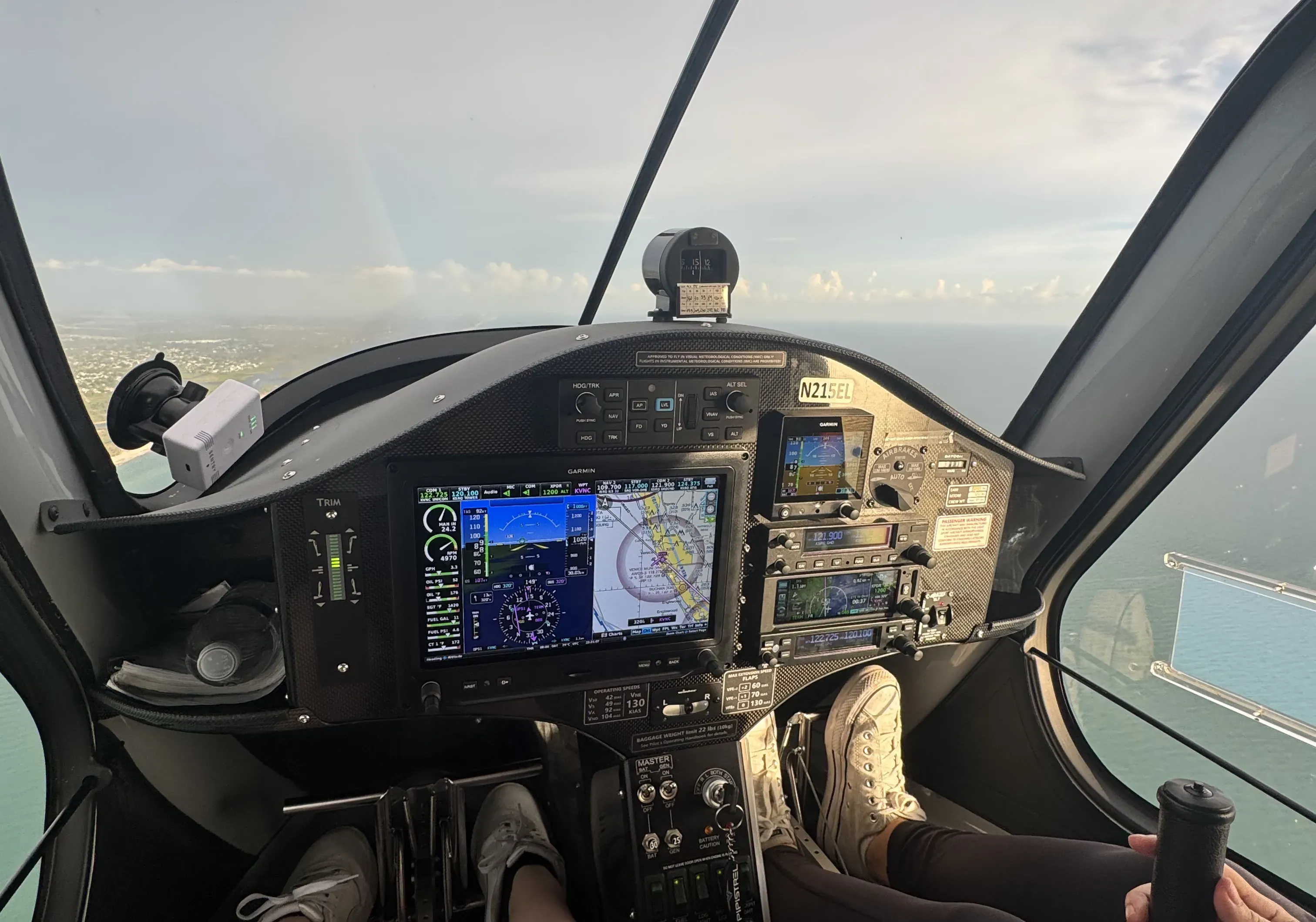
The Cessna 172 panel where instrument time gets logged.
Fill the 40 instrument hours with the right kind of time
Instrument time is time you fly solely by reference to the instruments. “Actual” means real clouds or low visibility. “Simulated” means a view-limiting device such as a hood or foggles, with a safety pilot or instructor watching outside.
The three hours of hood work from your private pilot training count as simulated instrument time, so you already have a small head start. The rest comes from training with your instructor, safety pilot flights and approved simulator sessions.
Of the 40 hours, 15 must come from a CFII. Most of your structured lessons happen with your instructor anyway, so this line usually fills in as you train. The flights with a safety pilot then add practice and fill in the remaining hours.
Two smaller lines matter near the end. You need 3 hours of instrument training in an airplane within the 2 calendar months before your practical test, so plan your final weeks with your instructor. You also need the long IFR cross-country: 250 nautical miles along airways or ATC routing, on an IFR flight plan, with an instrument approach at each airport and three different kinds of approaches. That flight is a full day of real IFR work, from filing to the last approach.
Know exactly how much simulator time can count
Simulator time is where many pilots save money and build skill, but the credit has firm FAA limits. Under Part 61, this is how the numbers break down.
| Device | Part 61 maximum toward the 40 hours |
|---|---|
| Basic aviation training device (BATD) | 10 hours |
| Advanced aviation training device (AATD) | 20 hours |
| Flight simulator or flight training device, outside Part 142 | 20 hours |
| Any combination of devices, outside Part 142 | 20 hours total |
So outside a Part 142 training center, at least 20 of your 40 hours happen in an airplane. Credit also has conditions. The device must be FAA approved and authorized, an authorized instructor must give the training, and the instructor must be present and sign your logbook or training record. Solo sim practice sharpens your scan, but it does not count toward the 40.
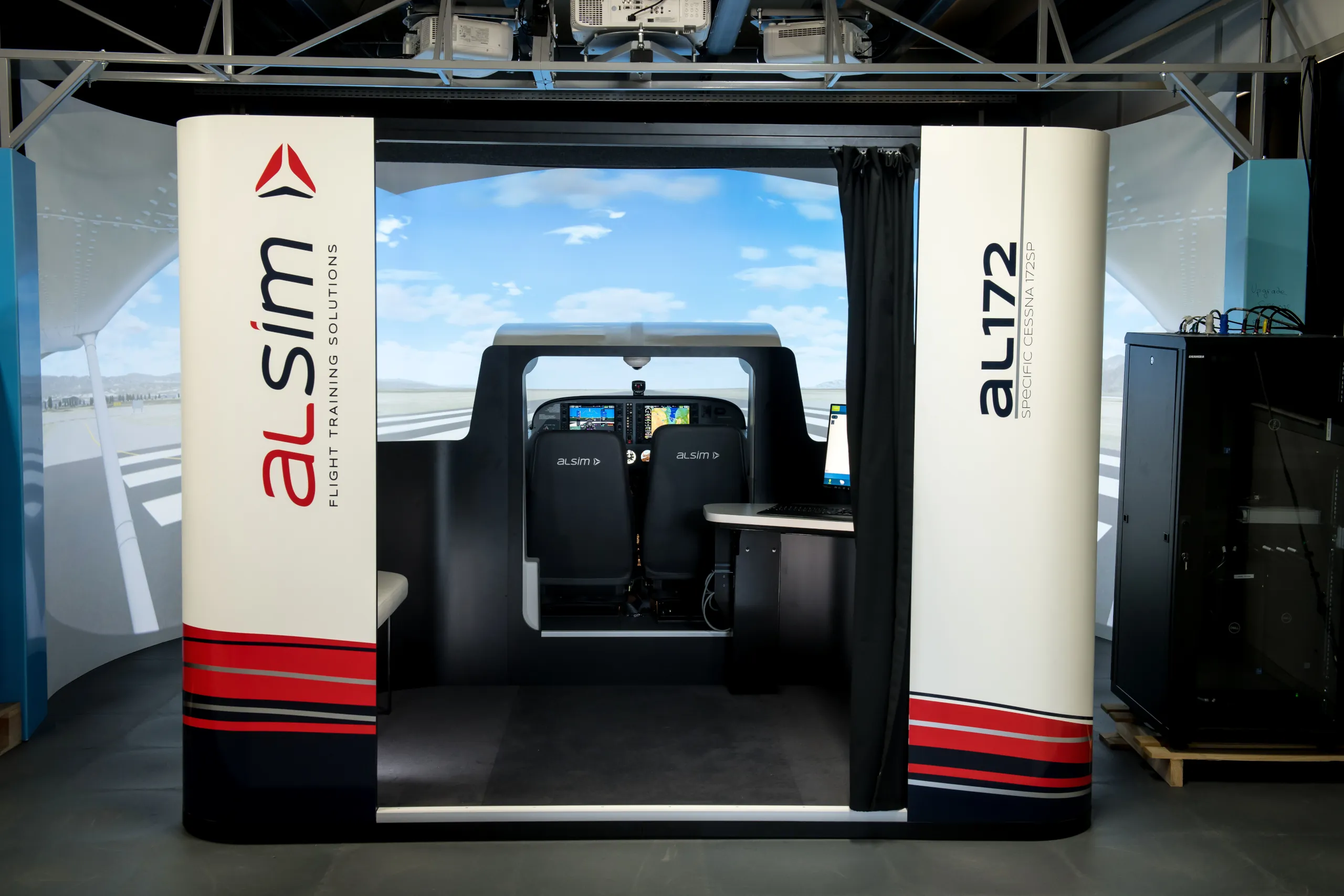
We map how your sim sessions fit inside those limits as part of your training plan. In our flight simulator lab, you rehearse holds, approaches and partial-panel work in the Alsim before you fly them, so in the airplane you are flying a procedure you already know. Our Say It, Sim It, Fly It post shows how a sim session fits a lesson.
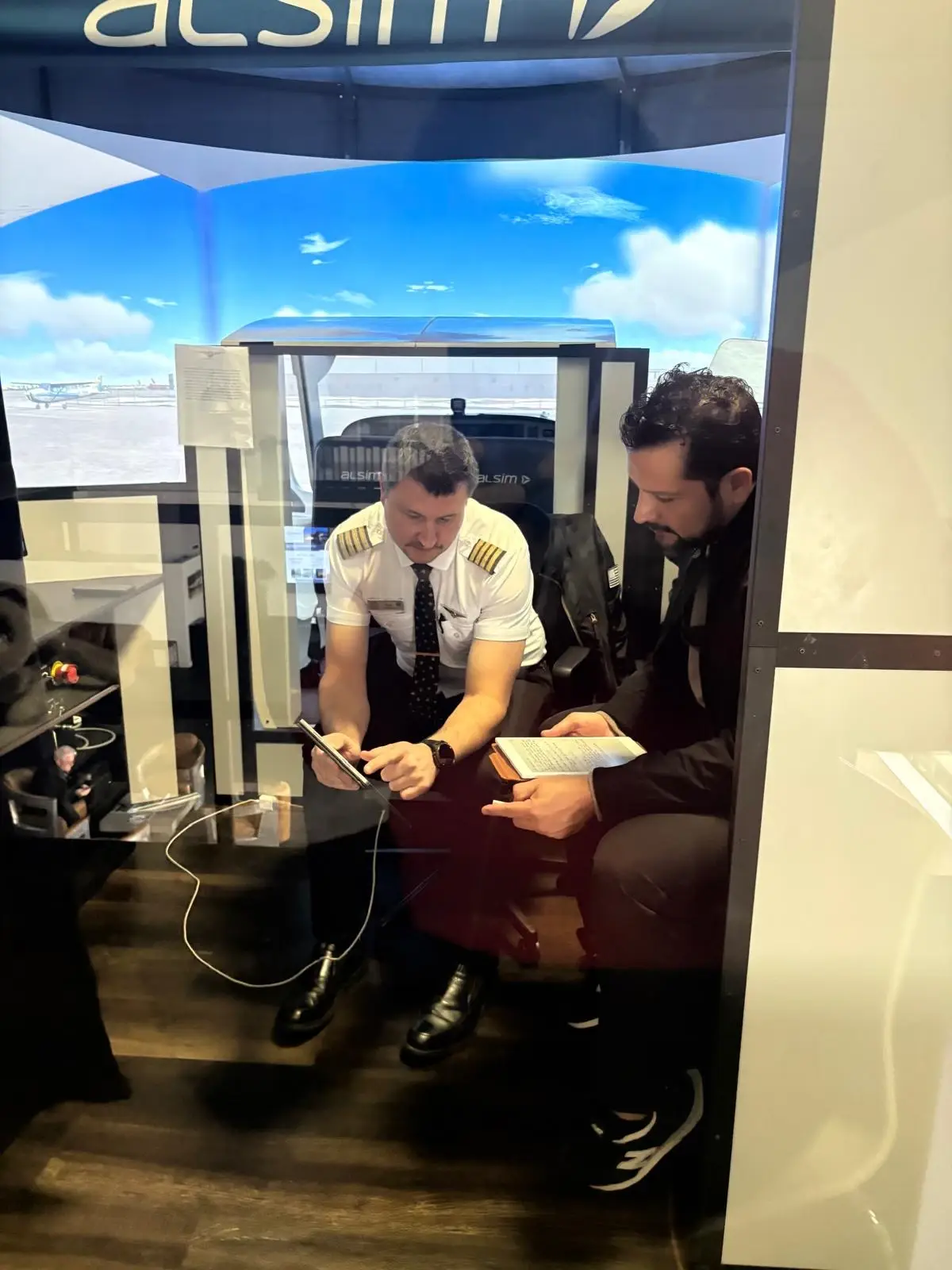
Debriefing a simulator session before the airplane flight.
See how a Part 141 course counts the hours
A Part 141 school trains under an FAA-approved course with a set syllabus and stage checks. The FAA sets the minimum curriculum for instrument courses in Part 141 Appendix C, and it reads differently from Part 61.
| Item | Part 141 initial instrument course minimum |
|---|---|
| Ground training | 30 hours |
| Instrument flight training | 35 hours |
| Simulator credit (AATD or flight training device) | Up to 40 percent of the flight training, so up to 14 of the 35 hours |
| Long IFR cross-country | 250 nautical miles under IFR, with one leg of at least 100 nautical miles straight-line between airports, an approach at each airport and three kinds of approaches |
The biggest difference for your logbook is that Appendix C has no separate 50-hour PIC cross-country line. The course counts the approved training hours instead. Stage checks and an end-of-course test confirm you meet the standard before the checkride.
The 35 hours are a course minimum, and an approved syllabus can call for more. We offer instrument training under both Part 61 and Part 141, and the right fit depends on your logbook and your goals. Our Part 61 vs Part 141 guide explains the two paths in more detail.
Why real totals land above the minimums
The minimums are the legal floor to apply for the checkride. The checkride itself asks a different question: can you fly the tasks to the FAA standard? That gap between “eligible” and “ready” is where extra hours come from. Progression is performance-based, not automatic.
These are the drivers we see most often:
- Lesson frequency. Flying two or three times a week keeps your scan fresh. Long gaps mean the first part of each lesson goes to review.
- Your starting logbook. A pilot with 15 hours of PIC cross-country needs more time-building than one with 45.
- Weather. Florida summer storms and low ceilings move flights around. Sometimes they hand you real instrument time, sometimes they cancel the day.
- Study habits. Pilots who arrive knowing the approach plate and the regulations spend more of each hour flying. Our IFR ground school helps here.
- Approach proficiency. Holds, missed approaches and partial-panel work often take extra repetitions before they feel calm.
Our instrument program runs from 2 to 4 months. Individual results vary with diligence, flying full-time or part-time, aptitude and weather.
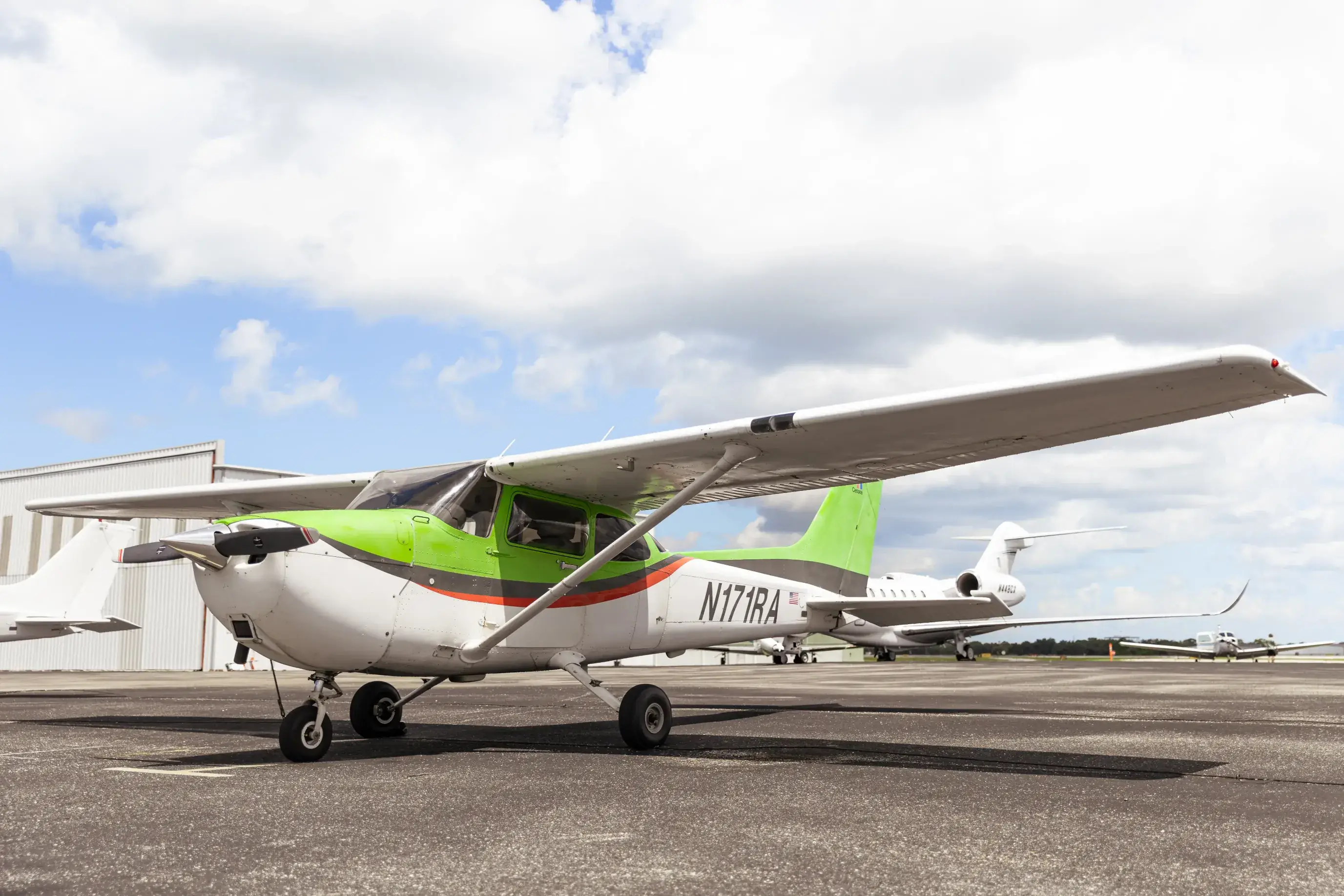
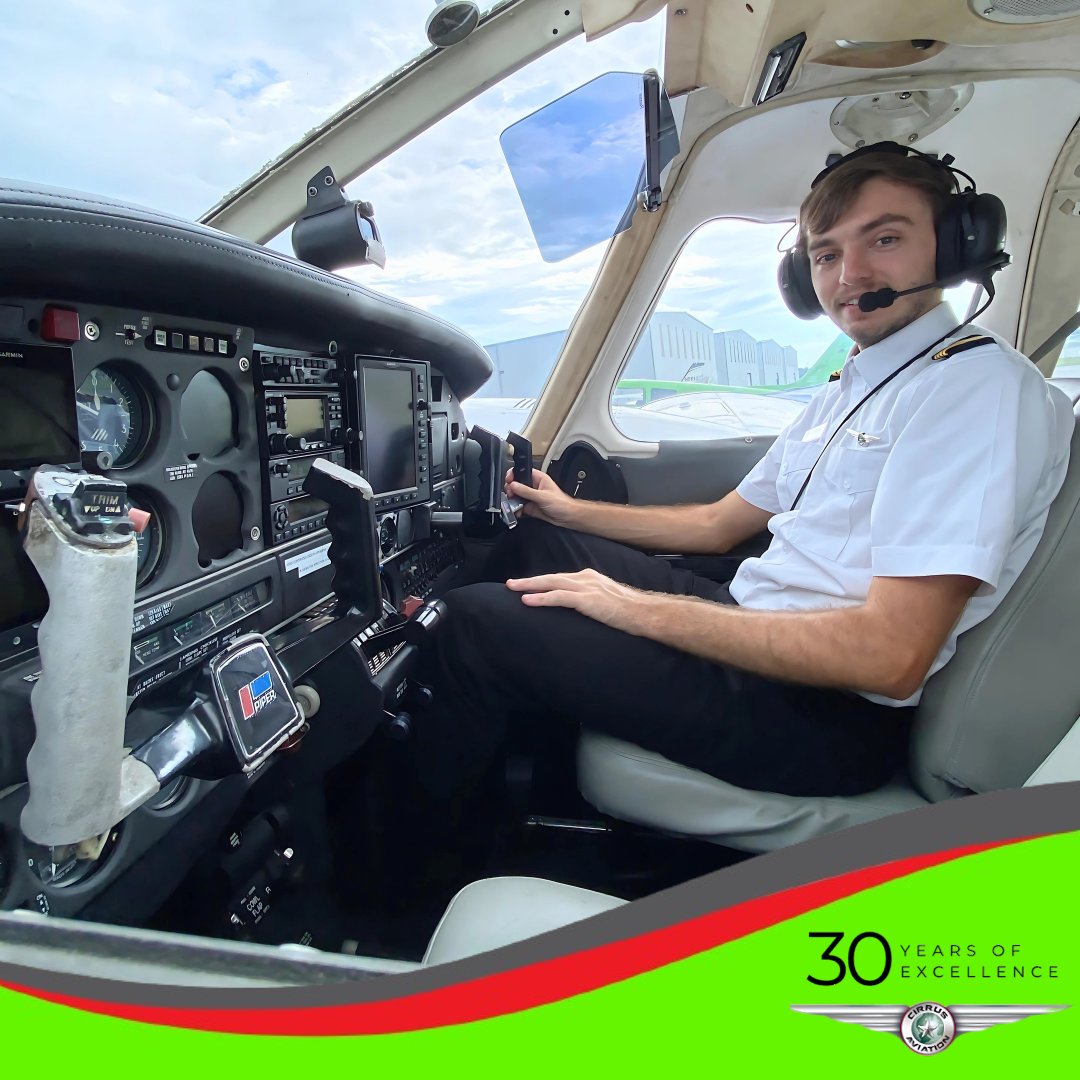
Our instrument students train in Cessna 172 Skyhawk aircraft at KSRQ.
Plan your logbook so no flight is wasted
You can shrink the gap between minimum and actual hours with a little planning. Start with a logbook audit and write down three numbers: PIC cross-country, total instrument time, and instrument time with a CFII.
Then plan so each flight earns more than one line. A cross-country flight with a safety pilot can add PIC cross-country and simulated instrument time in the same afternoon. An approach practiced in the sim the day before makes the airplane flight count for more.
At Cirrus Aviation, you fly mostly with one primary instructor in our Cessna 172 Skyhawk aircraft and Alsim simulators, so the person tracking your hours also knows your strengths. Training at KSRQ, a towered Class C airport with published instrument approaches, also means real ATC work from early in your training.
On cost, we do not publish course pricing, because the total depends on your starting logbook and pace. For financing, we are an approved training provider for Sallie Mae’s aviation career training loans, and our pilot financing page covers the options. Call us at (941) 360-9074 and we will give you current numbers for your plan.
Questions pilots ask about IFR rating hours
How many hours for an IFR rating do I need in total?
Under Part 61, you need 50 hours of PIC cross-country and 40 hours of instrument time, which overlap with each other in many flights. Under our Part 141 course, the minimum is 35 hours of instrument training. Your Instrument Rating plan starts from your logbook.
Does instrument time from my private pilot training count?
Yes, if you logged it as simulated instrument time while flying solely by reference to instruments. Bring your logbook to your tour and we will count it with you.
Can I fly all 40 instrument hours in a simulator?
No. Outside a Part 142 training center, 20 hours is the most you can credit from all devices combined under Part 61, and only with an instructor. Our flight simulator lab is where you rehearse before flying.
Does safety pilot time count toward the 15 instructor hours?
No. The 15 hours must come from an authorized instructor with an instrument rating. Safety pilot flights count toward the 40 hours and your PIC cross-country time.
Do I need the 50 hours of cross-country before I start training?
No. Under Part 61 you need it before the checkride, and many pilots build it during training. Our aircraft rental options help you fit those flights in.
Is the instrument rating a step toward a career?
For many pilots, yes. It is part of our Career Pilot Program, which builds from private pilot through commercial and instructor ratings.
Bring your logbook and we’ll map your hours
Now you know every line: 50 PIC cross-country, 40 instrument, 15 with a CFII, 3 recent hours, the long IFR cross-country, and the limits on simulator credit. The next step is to see where your own logbook stands.
Schedule a tour at KSRQ and bring your logbook. We will total your hours with you and build a plan that makes each flight count. Schedule your logbook review today.