News Sep 28, 2026 • Nayda Cattin
You have probably watched the airplanes. Anyone who lives in Bradenton, Parrish, or Ellenton has seen small trainers turning over the Manatee River on a clear afternoon, and at some point the thought lands: that could be me up there. Most of those airplanes are heading back to Sarasota-Bradenton International Airport (KSRQ), and a good number of them are ours.
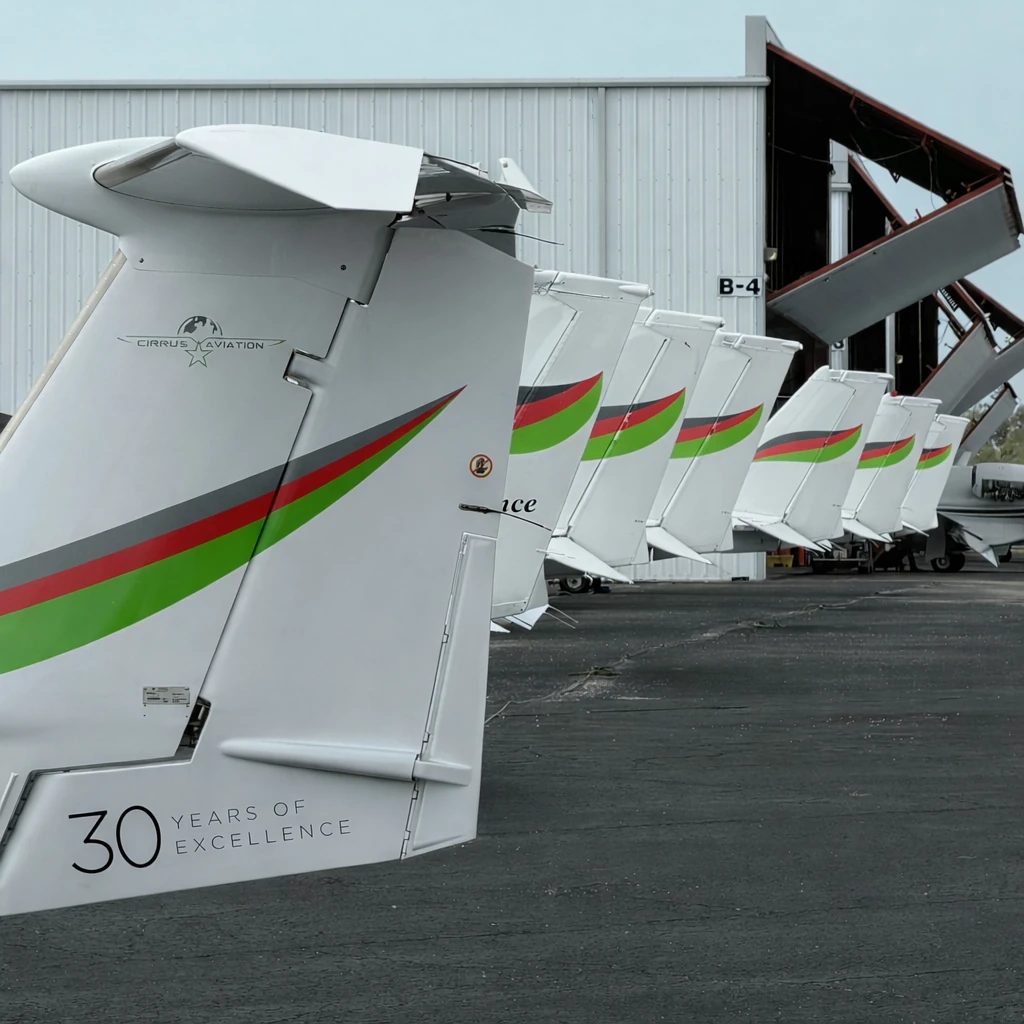
Cirrus Aviation has trained pilots at KSRQ since 1994, from our campus on the field at 8191 N. Tamiami Trail in Sarasota. For a Bradenton beginner, that means the airport with your city’s name on it is also where your first lesson happens, with a full-size simulator before you ever start an engine and a control tower that teaches you the radio from day one. Here is the path from your first Discovery Flight to your Private Pilot Certificate, step by step.
Why Learning at KSRQ Works in a Bradenton Student’s Favor
KSRQ sits in Class C airspace next to Tampa’s Class B. You learn to talk to a control tower on your first lessons, share the pattern with airline and corporate traffic, and fly out to quieter airports and grass strips in the area for soft-field practice. Private pilot training has to include work at a towered airport anyway, and starting there means the radio never becomes a late hurdle.
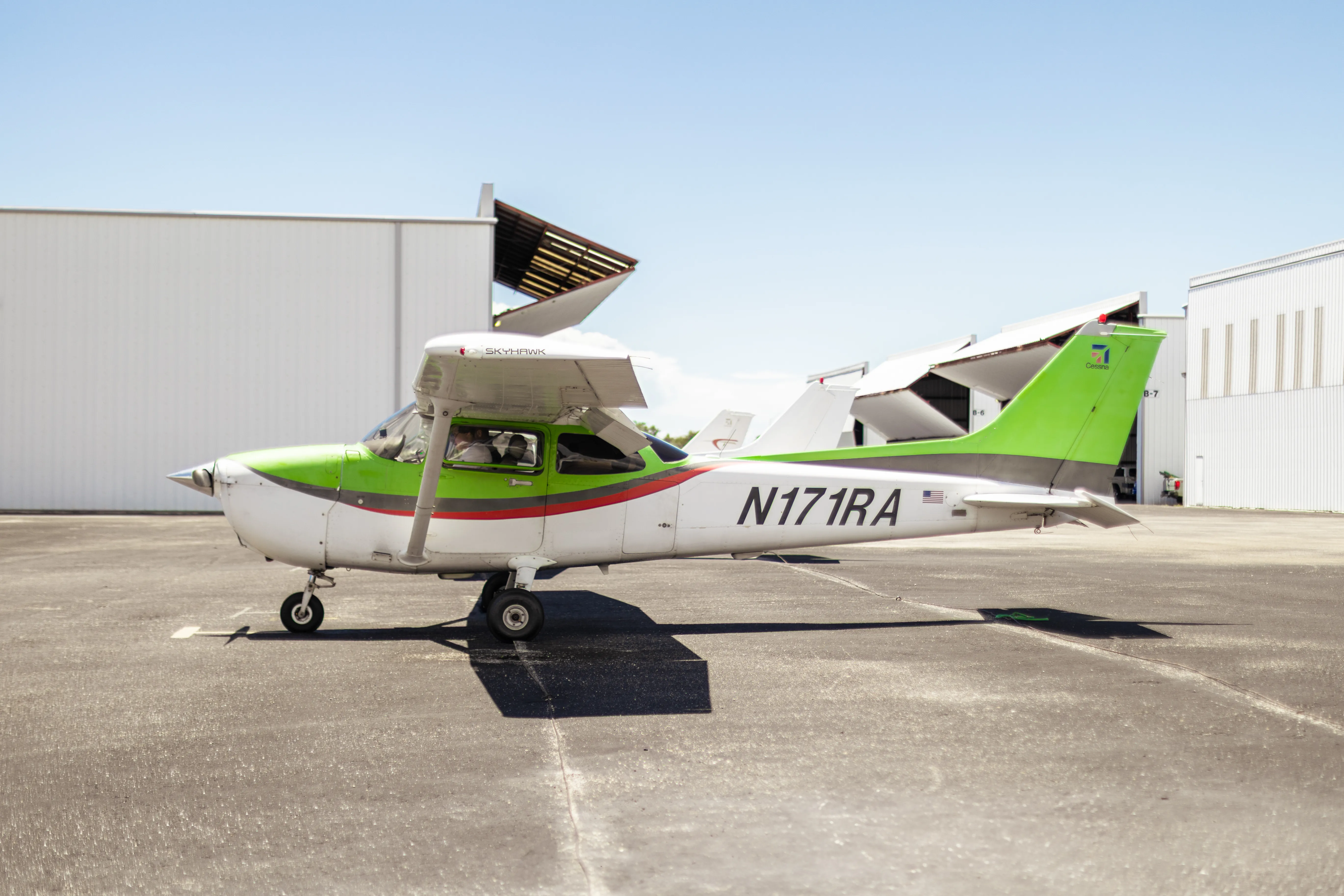
The training environment is one reason people choose us. The other is that everything happens in one place: instructors, aircraft, simulators, the in-house maintenance shop, and even the FAA knowledge test, which you can take on-site through our airman testing services. Local students go home after each lesson, and students relocating for accelerated training can use our accommodations guidance to find nearby housing.
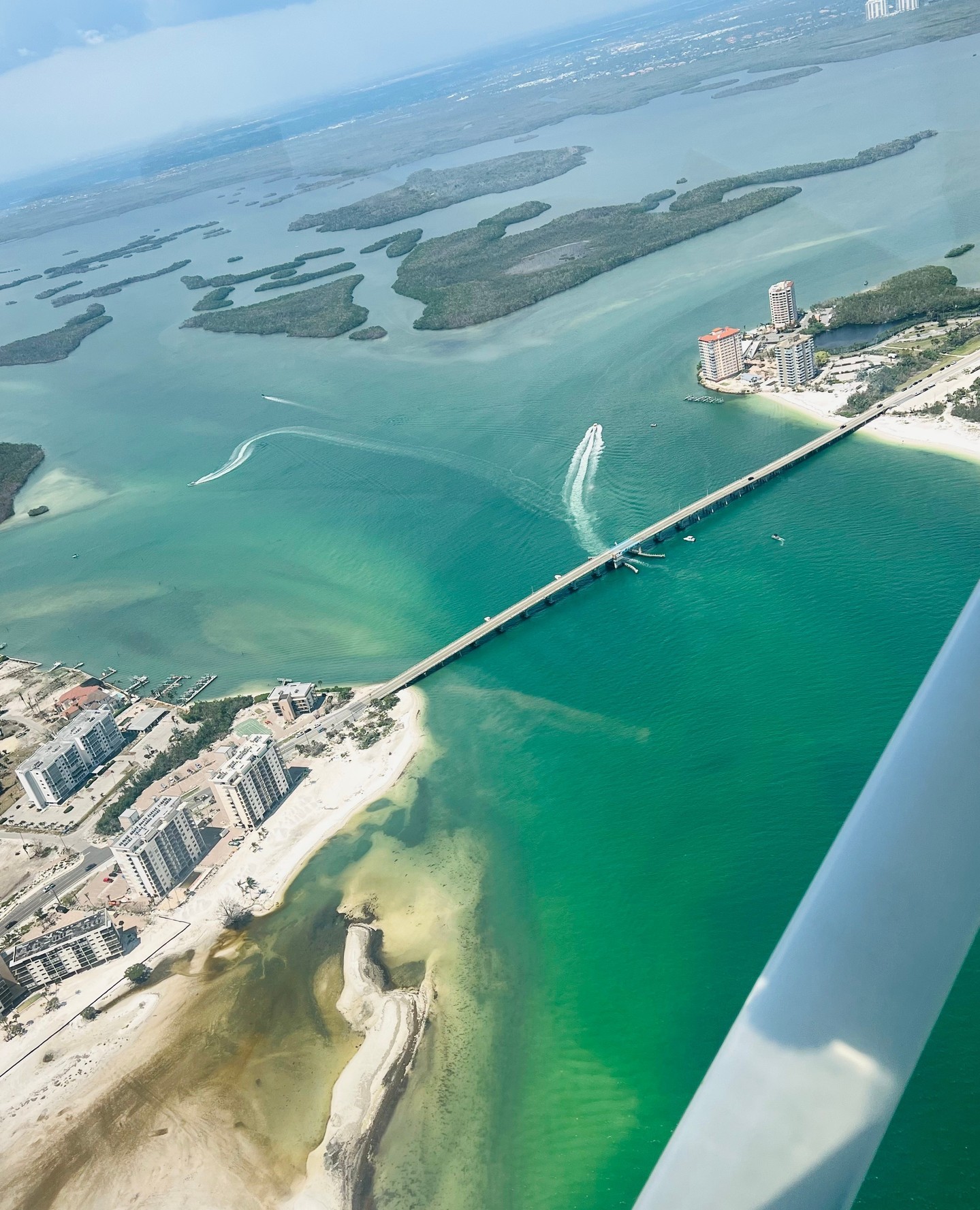
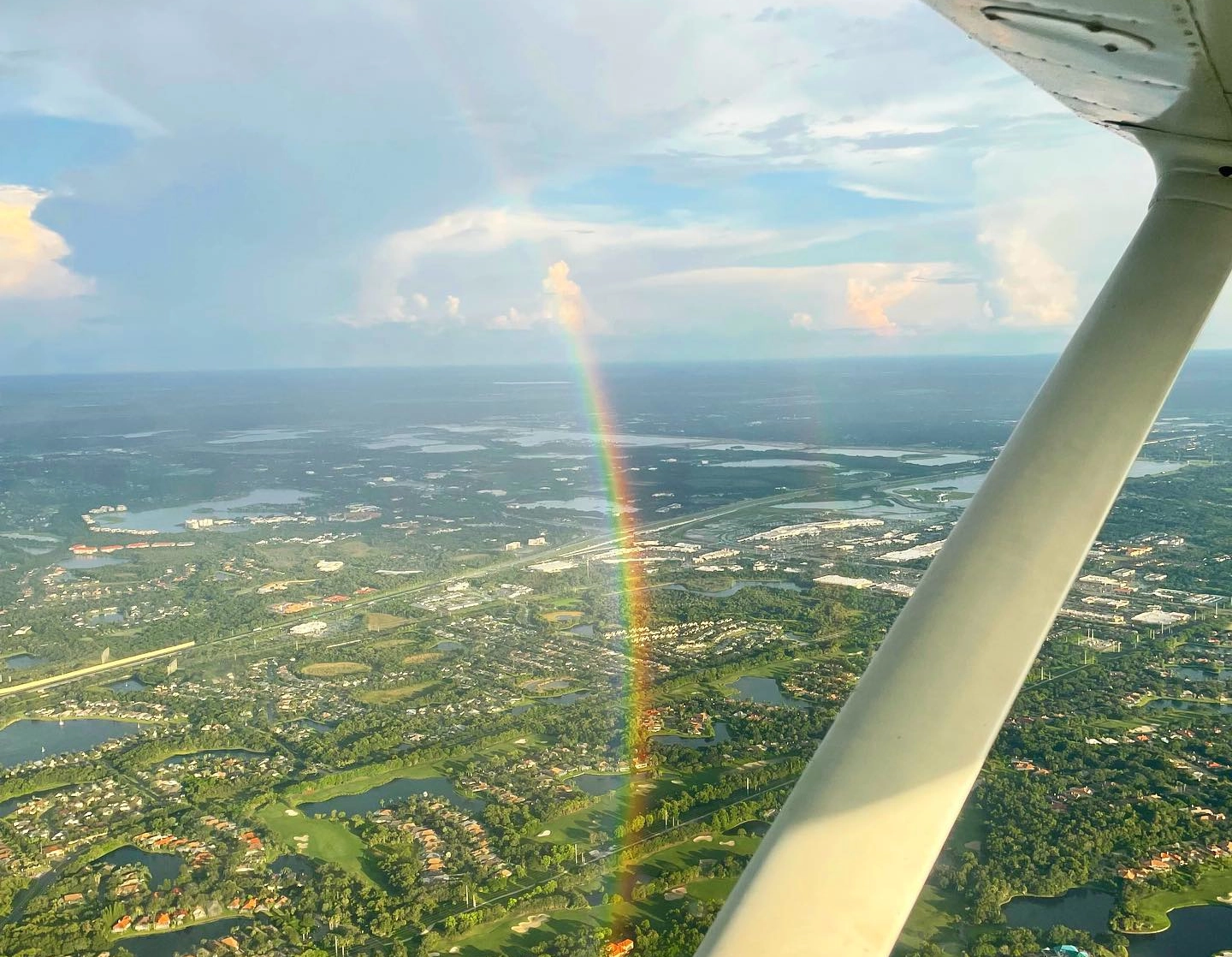
Training on the Gulf Coast means your practice area looks like this on a clear day.
Step One: A Discovery Flight That Starts in the Simulator
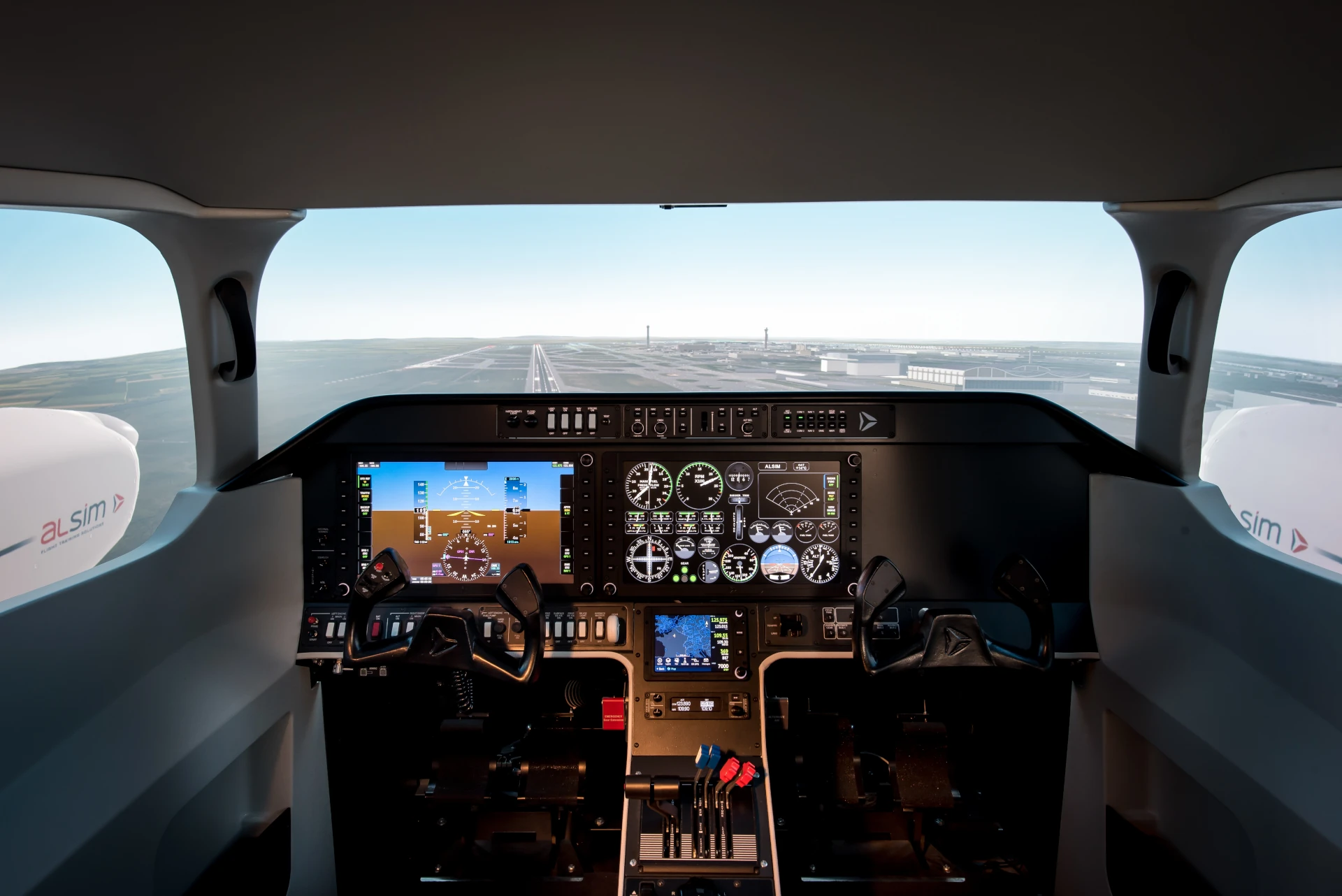
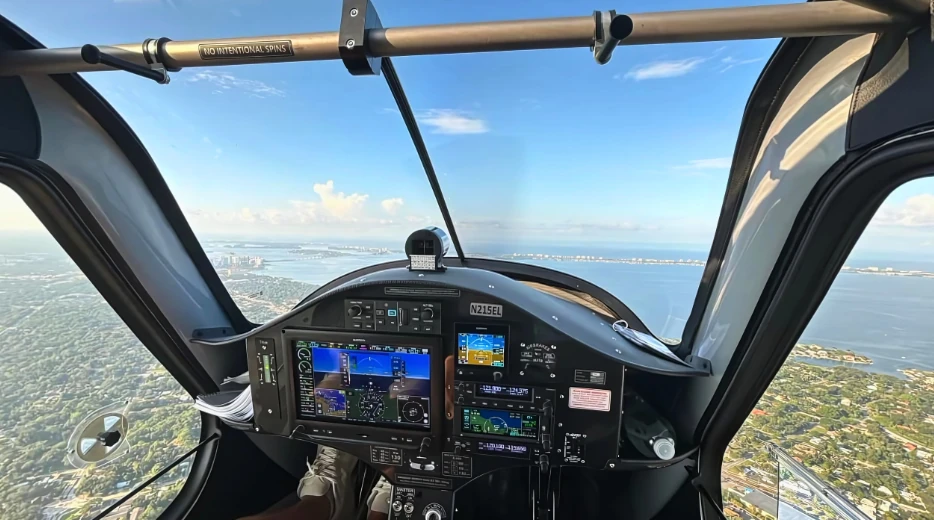
Your first visit is a Discovery Flight, and it starts on the ground. You sit in our full-size AL250 flight simulator with an instructor, learn what the controls do, and fly a short profile before any engine starts. Then you walk to the airplane and fly a similar profile for real, often along Siesta Key, Longboat Key, or with a view of the Sunshine Skyway Bridge, depending on weather and your instructor’s plan.
The point is to answer your own question: do I want to do this? No experience is needed, no student certificate is required for this flight, and the debrief afterward is the natural place to talk about goals, schedule, and cost. We wrote a full walkthrough in what a Discovery Flight is really like.
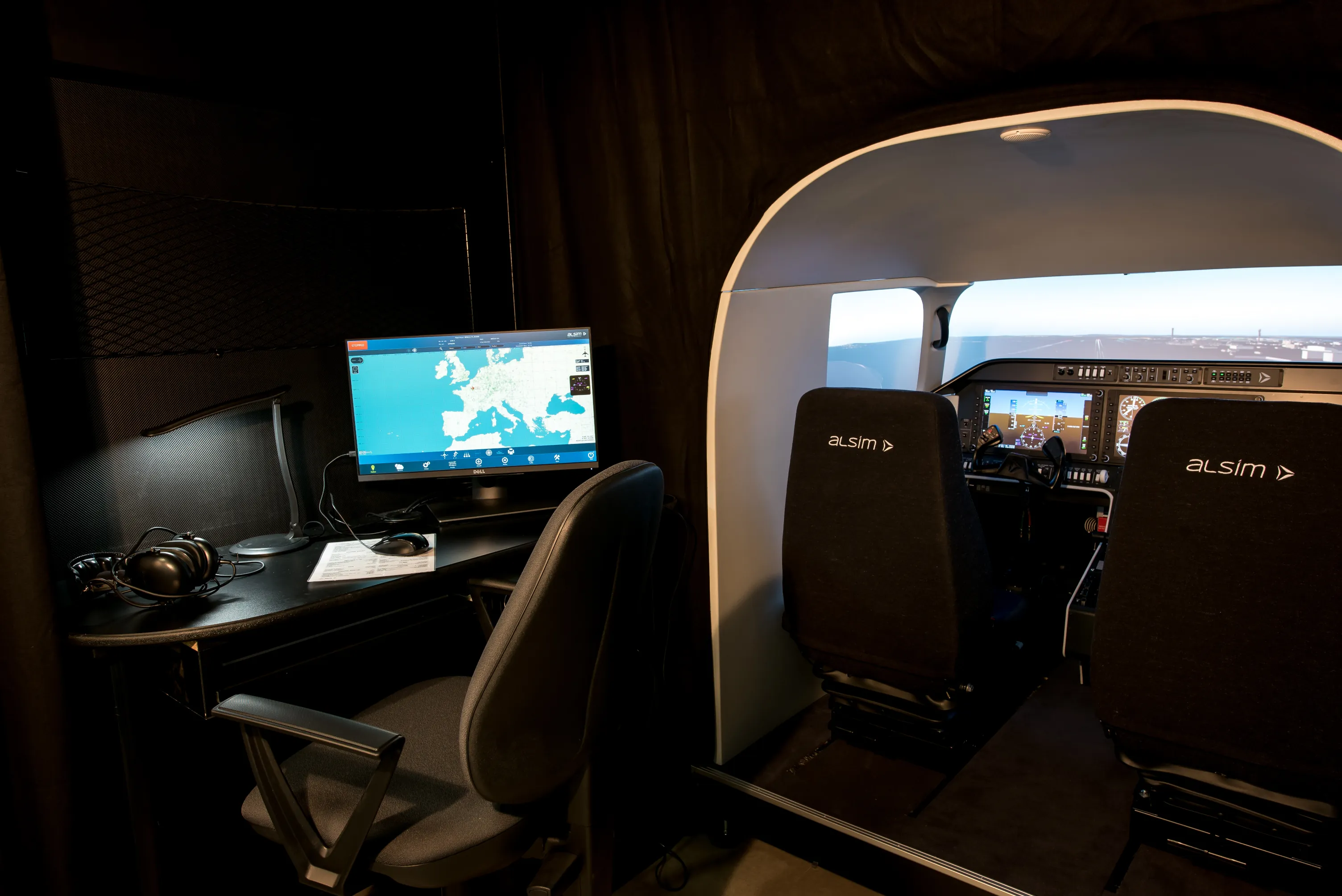
Your Discovery Flight begins in the AL250 simulator so the airplane feels familiar when you climb in.
Step Two: Enroll, Choose Part 61 or Part 141, and Set Your Pace
If the answer is yes, the next step is a conversation with our Student Services team and the enrollment form. Two decisions come first. Part 61 or Part 141: both are available here, and both lead to the same FAA certificate. Part 141 follows an FAA-approved syllabus with tracked progress and oversight of instructors, aircraft, simulators, and records, while Part 61 offers more flexibility in sequencing. Our comparison table lays out the differences.
The second decision is pace. We support part-time schedules built around work and family as well as accelerated training with two flights a day, six days a week. Living close to the airport is a real advantage here: a Bradenton student who flies twice a week on a consistent schedule finishes sooner and spends less than someone who flies in bursts with long gaps, because skills fade between lessons. Our post on how often to fly during private pilot training covers that tradeoff.
Step Three: Your Medical, Student Pilot Certificate, and First Solo
You can begin lessons right away, but two documents must be in hand before you fly alone. An FAA medical certificate, third class or higher, comes from an aviation medical examiner; if you plan a professional career, we recommend a first-class exam early so any issue surfaces before you invest. A student pilot certificate is applied for through the FAA and endorsed by your instructor before solo.
Non-U.S. citizens complete TSA approval before flight training starts, and our international students page explains that process. The Private Pilot Certificate itself requires you to be 17 at the checkride and to read, speak, write, and understand English. Details are on our Private Pilot program page.
Your first solo arrives after your instructor has seen consistent takeoffs, landings, and emergency procedures. It is the milestone students remember longest, and we celebrate every one on the ramp.
Step Four: Knowledge Test, Cross-Countries, and the Checkride
| Stage | What happens | What this helps you plan |
|---|---|---|
| Discovery Flight | Simulator briefing, then a real flight with an instructor | Whether flying is for you, and which path fits |
| Enrollment | Meet Student Services, choose Part 61 or 141, set a schedule | Pace, budget, and start date |
| Pre-solo lessons | Maneuvers, takeoffs, landings, emergencies, radio work at KSRQ | Medical exam and student pilot certificate timing |
| Solo and cross-country | Solo pattern work, then navigation flights to other airports | Weekday availability for longer flights |
| Knowledge test | Ground school with the Cessna and King Schools curriculum, then the FAA exam at our on-site testing center | Study time between flights |
| Checkride | Oral exam and flight test with an FAA designated examiner | Final review lessons and scheduling |
At Cirrus Aviation, Private Pilot training is commonly planned as a 2 to 6 month project. Individual performance varies with diligence, full-time or part-time pace, aptitude, and weather. FAA minimums are 40 flight hours under Part 61 and 35 under Part 141, and most students fly more than the minimum. For the bigger picture beyond the private certificate, see our flight training timeline from Discovery Flight to CFI.
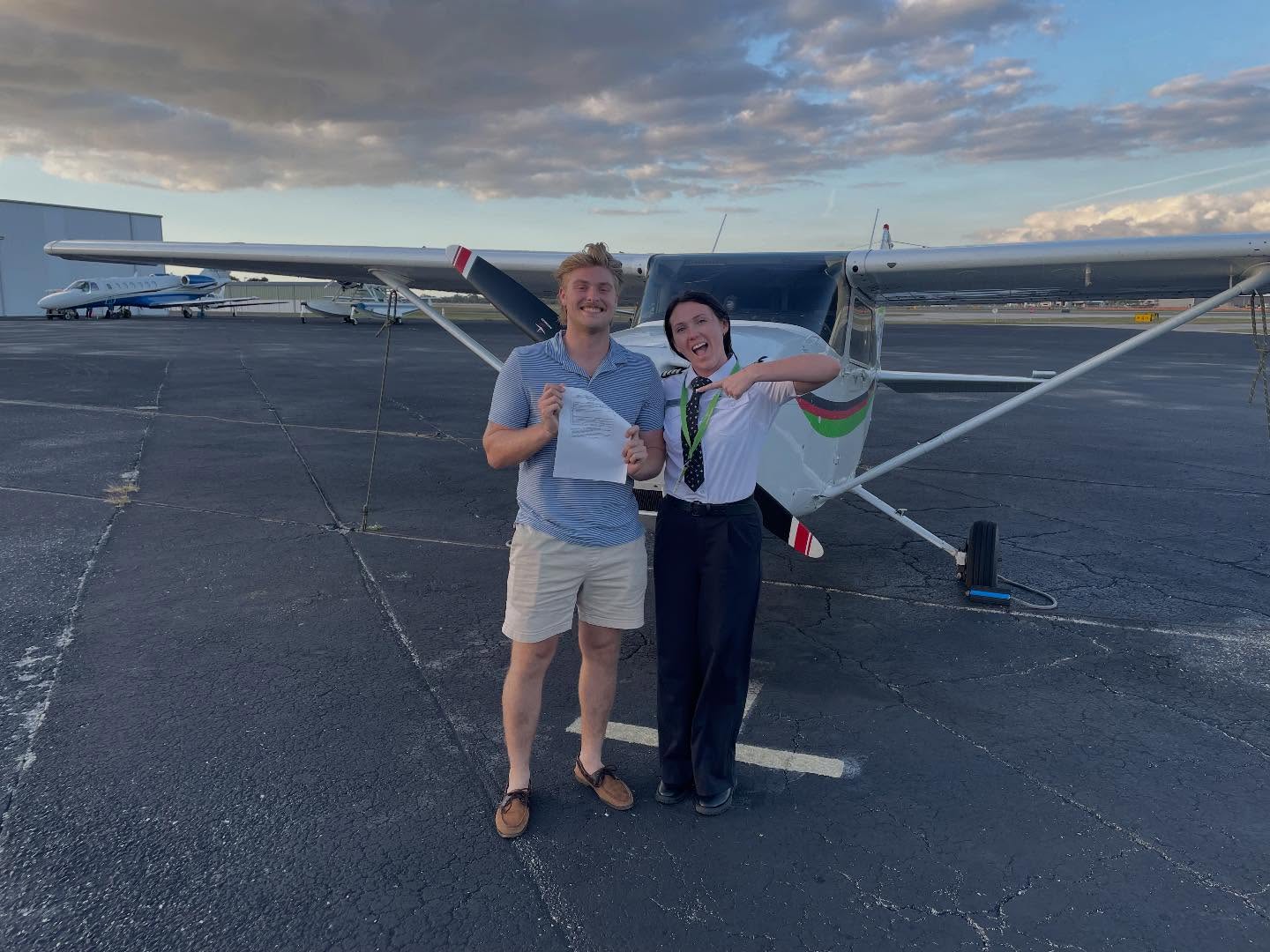
The checkride is the finish line of the private pilot path and the start of flying on your own terms.
Paying for Training and Planning Around Work
Course pricing changes with aircraft, pace, and program choice, so our Student Services team builds a current estimate with you rather than publishing one number. Sallie Mae aviation loans and 529 funds can help qualified students and programs, and the details are on our pilot financing page.
Planning around work is a scheduling question more than a willpower question. Block the same two mornings each week, book the simulator when weather cancels the airplane, and keep ground study moving between flights. Our flight simulator lab makes cancelled days productive, and the Gulf Coast’s short-lived summer storms rarely take out a whole week.
FAQ
Is there a flight school in Bradenton?
Cirrus Aviation trains at Sarasota-Bradenton International Airport (KSRQ), the airport serving both Bradenton and Sarasota. Our campus is on the field at 8191 N. Tamiami Trail, Sarasota, and you can get directions from our contact page map.
Do I need any experience or a license to take a Discovery Flight?
No. The Discovery Flight is designed for first-time flyers, and a student pilot certificate is only required before you solo, not before lessons.
How long does it take to get a private pilot license in Bradenton?
At Cirrus Aviation, private pilot training is commonly planned as 2 to 6 months, with the pace set by how often you fly, weather, aptitude, and study habits. Consistent scheduling is the biggest factor you control, and living close to KSRQ makes consistency easier.
Can I train part-time while working in Bradenton?
Yes. Two consistent lessons a week is a realistic part-time pace that keeps skills fresh, and full-time students can fly up to twice a day. Our FAQs cover part-time training in more detail.
What does private pilot training cost?
Pricing changes with aircraft, pace, and program choice, so contact us for a current estimate built around your plan. Financing options are listed on our pilot financing page.
Is a Class C airport harder to learn at than a small airport?
The radio work is busier at first, and that is the advantage: you build tower communication and traffic awareness early, then fly to quieter fields for pattern and soft-field practice.
Book the First Flight at the Airport Next Door
Everything above starts with one visit. Sit in the simulator, fly the profile for real, and decide from the left seat whether this path is yours. Our team will walk you through Part 61 or 141, pacing, and cost after you land.
Book your Discovery Flight at Cirrus Aviation and make KSRQ your first step toward a private pilot certificate.