News Sep 28, 2026 • Nayda Cattin
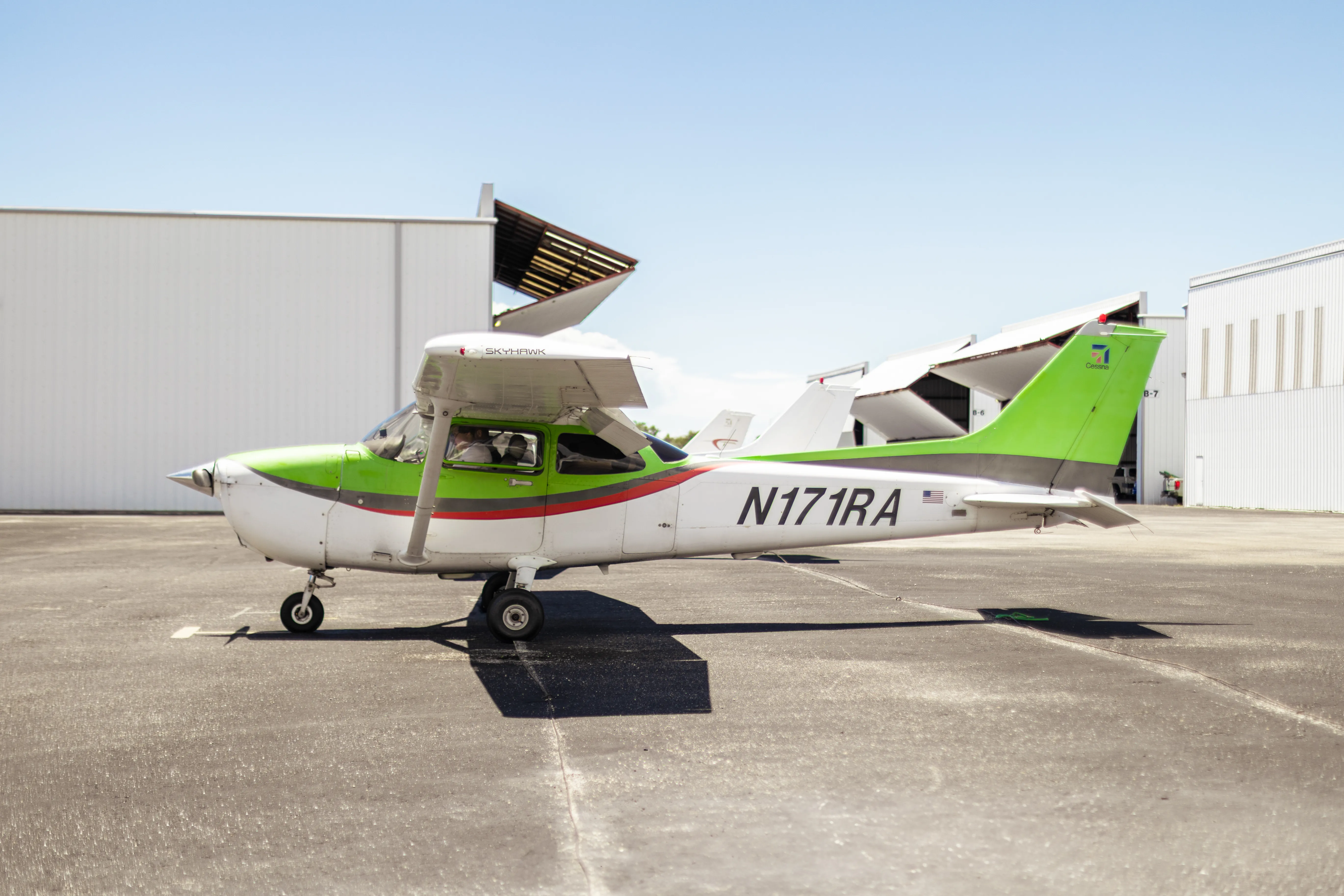
Walk out to the ramp at Cirrus Aviation for your first lesson and there is a good chance your instructor stops beside a white and green high-wing airplane with SKYHAWK lettered above the door. The Cessna 172 Skyhawk is the backbone of our primary training in Sarasota, and it has been the first airplane for generations of pilots on training ramps around the world.
You are about to spend dozens of hours in it, so it is fair to ask why. The short answer is that the Skyhawk is built to make your early mistakes survivable and your early lessons clear. Here is what that looks like from the left seat, how it compares to the other trainers in our fleet, and where it takes you after your checkride.
A High Wing Gives You the View and the Stability a Beginner Needs
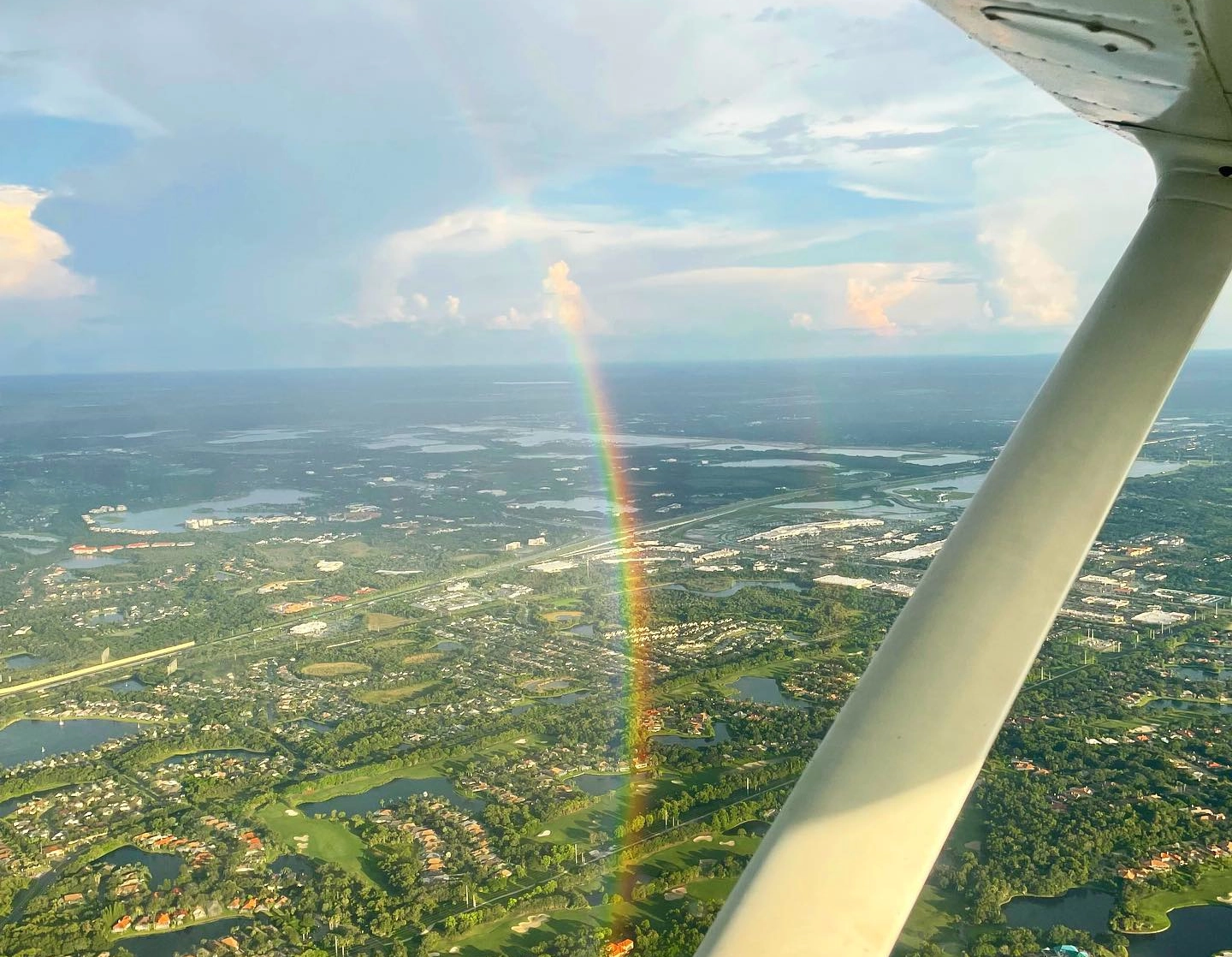
The wing sits above your head. That one design choice shapes most of what you notice on your first flights. Looking down and out is easy, so the Siesta Key coastline, the runway you are turning toward, and the traffic pattern at Sarasota-Bradenton International Airport (KSRQ) are all in view without leaning around a wing root.
A high wing also gives the airplane a natural tendency to return to level flight when you relax your grip. Lift a wing with a gust and the Skyhawk settles back on its own, which buys a new pilot time to think instead of react. Add the fixed tricycle landing gear, with a nose wheel that keeps the airplane tracking straight on the runway, and you have a machine that tolerates the small errors every student makes while learning to land. You can see the full aircraft on our Cessna 172 Skyhawk fleet page.
There are practical benefits too. The wing shades the cabin on a Florida afternoon, the doors open wide, and fuel is checked from steps built into the strut. Four seats and honest cross-country range mean the same airplane carries you from pattern work to your long solo cross-country without a change of type.
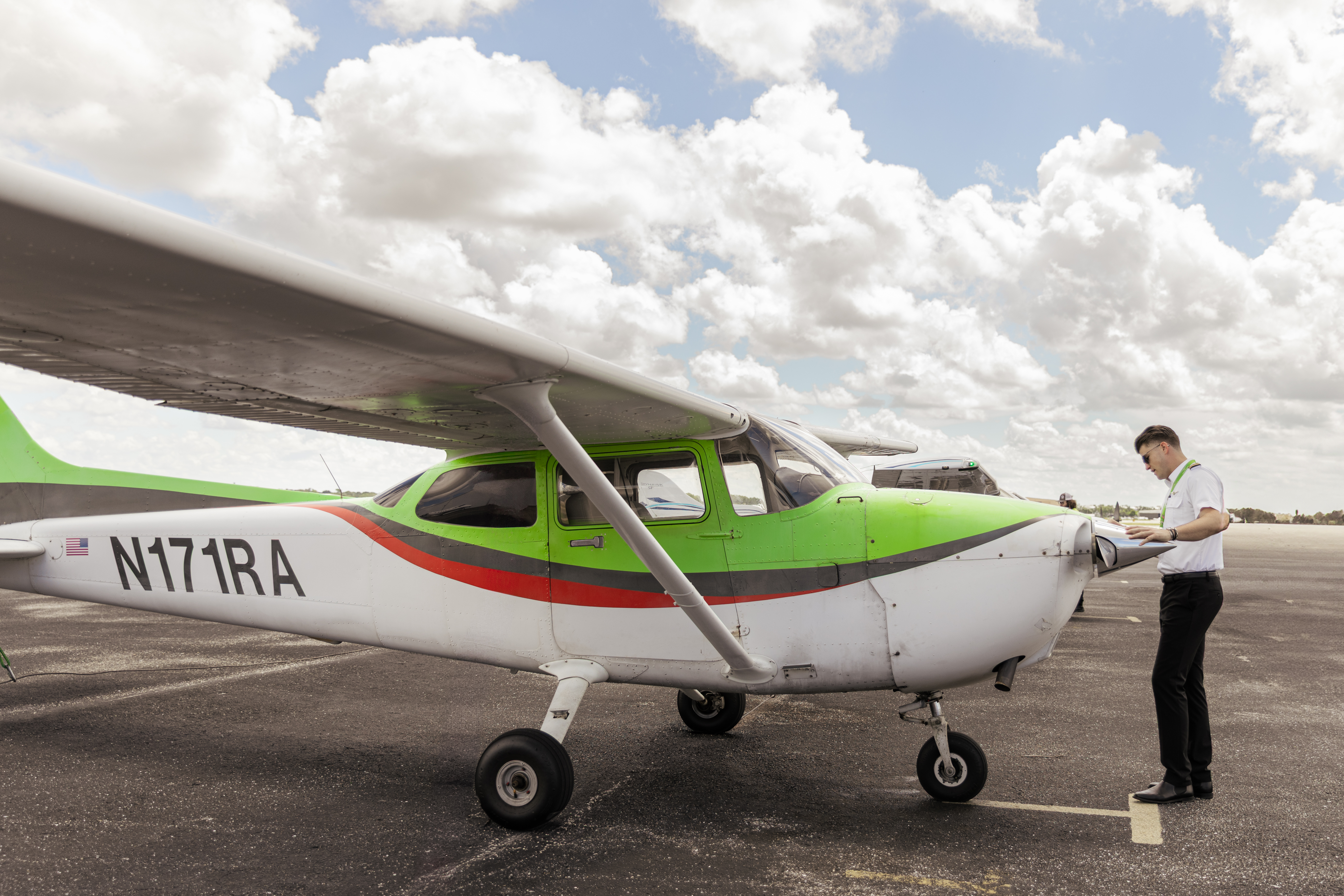
The high wing puts the ground, the runway, and the traffic pattern in plain view from the left seat.
Forgiving Handling Turns Mistakes Into Lessons
Every student stalls the airplane on purpose. In the Skyhawk, a stall is a gentle event: the nose drops, you relax back pressure, add power, and you are flying again. That predictability lets your instructor teach you what a stall feels like instead of only teaching you to fear it.
The controls are balanced and the trim is effective, so you learn to fly with light pressure rather than muscle. Steep turns, slow flight, and ground reference maneuvers over the fields east of KSRQ all reward smooth inputs, and the airplane tells you quickly when you are chasing the nose. Those habits carry straight into our Instrument Rating course, where the Skyhawk stays your platform for approaches at KSRQ and nearby airports.
None of this means the airplane flies itself. Predictable is different from easy. Crosswind landings, energy management on final, and radio work in Class C airspace still demand real skill, and the FAA minimums of 40 flight hours under Part 61 or 35 under Part 141 are only minimums. Most students need more, and the point of a good trainer is to make every one of those hours count.
Round Gauges, Glass Panels, and the Same Airplane
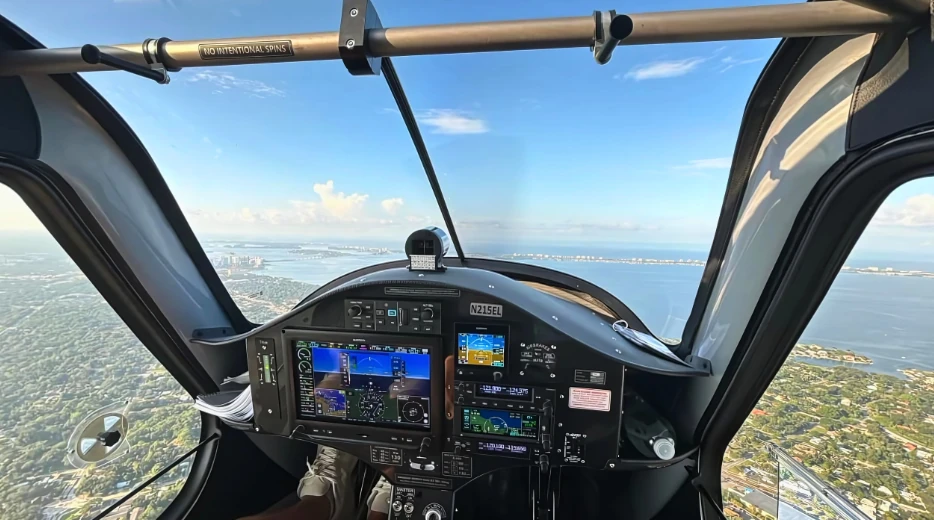
Our Skyhawks are Cessna 172SP models with a Lycoming piston engine, and select aircraft carry the Garmin G1000 glass cockpit while others keep traditional round gauges. That mix is deliberate. Learning to interpret an attitude indicator and a heading indicator on a mechanical panel builds a mental model that no screen replaces.
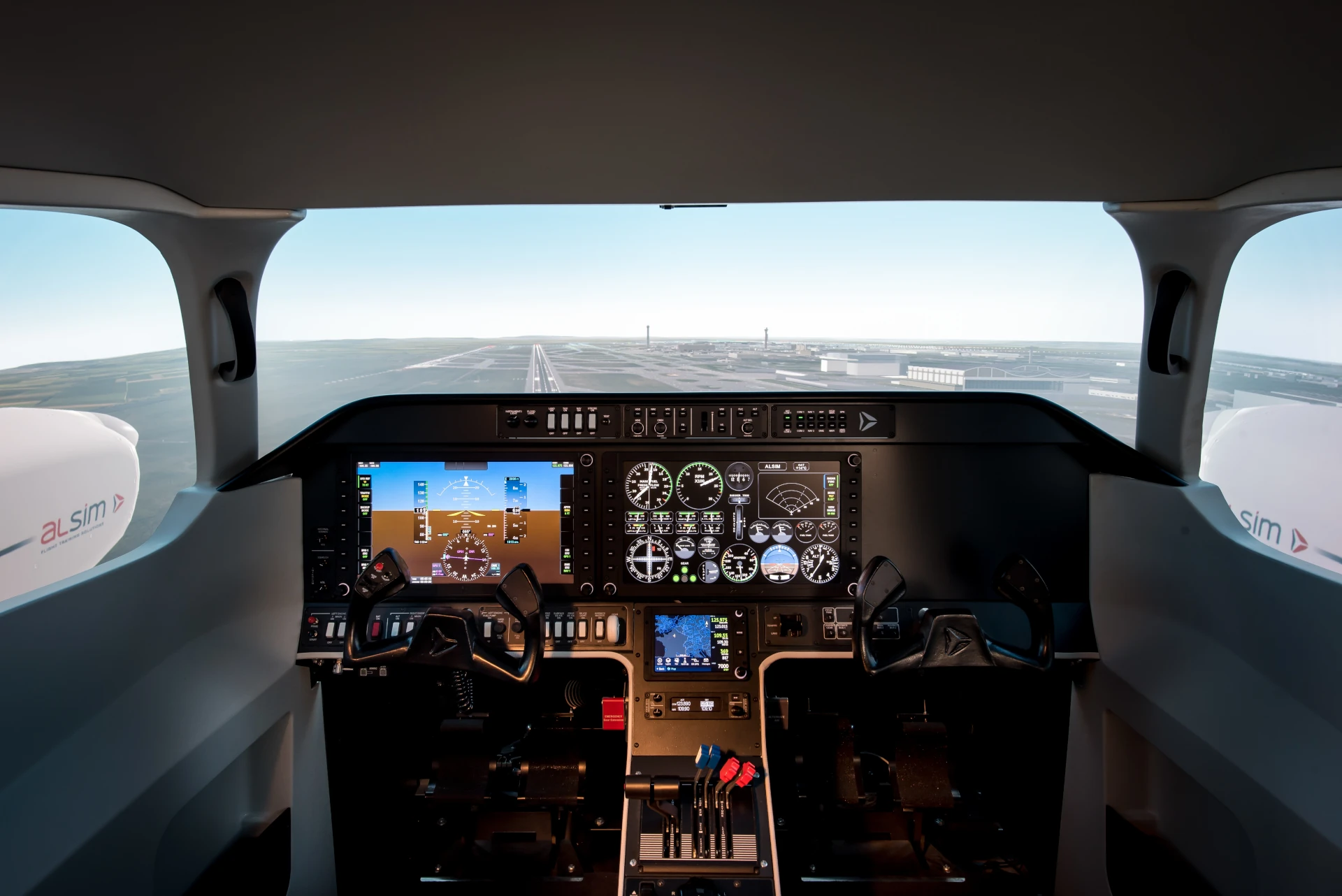
Then you step into a G1000 airplane and the same information appears on two large displays with moving maps, traffic, and engine data. You already know what you are looking at, so the panel becomes a tool rather than a distraction. We were the first school in the region to put the Cessna 172S on the line and the first with G1000-equipped airplanes, and our Alsim simulators let you practice both panel styles before you fly them.
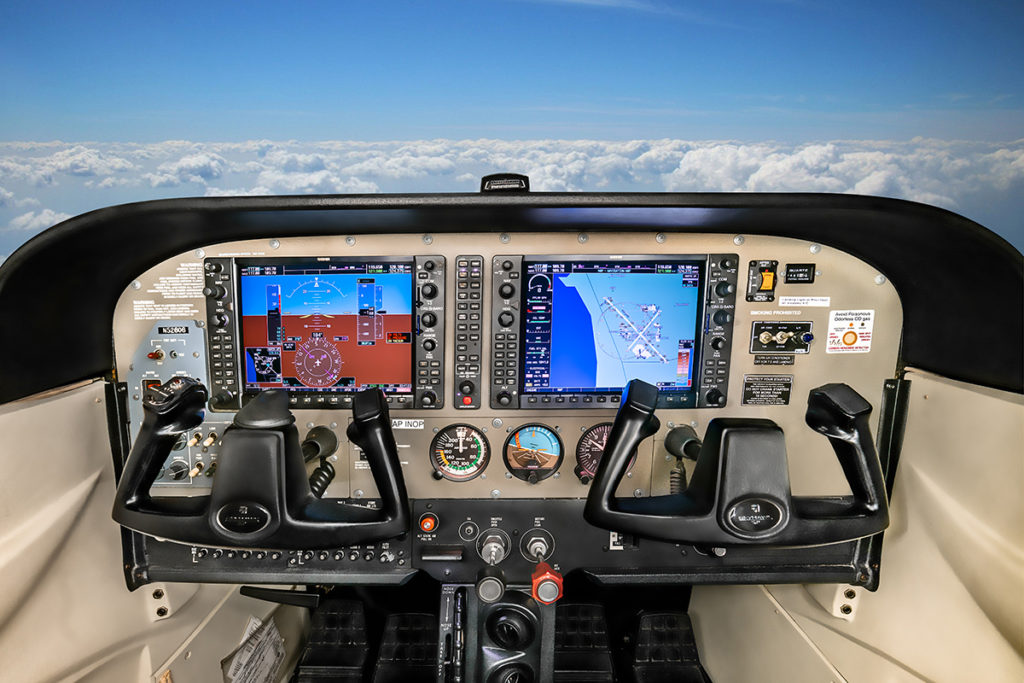
Learning the panel in a Skyhawk builds the scan you will carry into every airplane that follows.
How the Skyhawk Fits Next to the Warrior and the Alpha Trainer
The Skyhawk is the backbone of primary training here, and the Piper Warrior and Pipistrel Alpha Trainer give you low-wing and lightweight experience when it fits your plan. Which airplane you fly on a given lesson is a conversation with your instructor and our Student Services team.
| Aircraft | Wing and layout | Where it fits in training | How this helps you plan |
|---|---|---|---|
| Cessna 172 Skyhawk | High wing, four seats, fixed tricycle gear, Garmin G1000 in select aircraft | Discovery Flights, Private Pilot, Instrument Rating, cross-country and time building | One type from first lesson to first rental |
| Piper Warrior PA-28-151 | Low wing, four seats, forgiving stall behavior | Private Pilot, Instrument Rating progression, proficiency flying | Low-wing experience without leaving the fleet |
| Pipistrel Alpha Trainer | Light and efficient, Garmin G3X touchscreen panel | Private Pilot, time building | Modern avionics at a lower operating cost |
For multi-engine work later in a professional path, our Diamond DA42 takes over. The Skyhawk is where the habits that make that transition smooth get built.
From Your First Lesson to Your First Rental
The Skyhawk you learn in is also the Skyhawk you can rent. After your checkride and a checkout with one of our instructors, you can take the same airplane to a grass strip, down the coast, or to lunch in Venice under our rental and checkout policies. Familiarity with the type is a real advantage for a new private pilot.
For career-track students, hours in the 172 count toward the commercial certificate and instructor ratings that follow in our Career Pilot Program. Sallie Mae aviation loans and 529 funds can help qualified students and programs cover training, and our team walks you through those options during enrollment. The pilot financing page is the place to start.
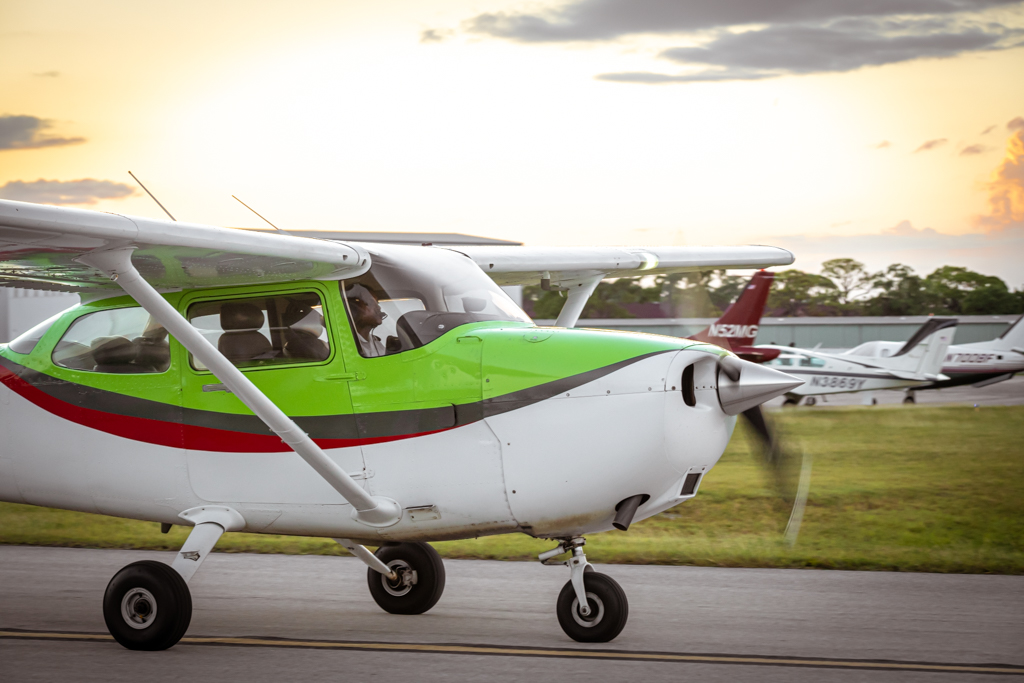
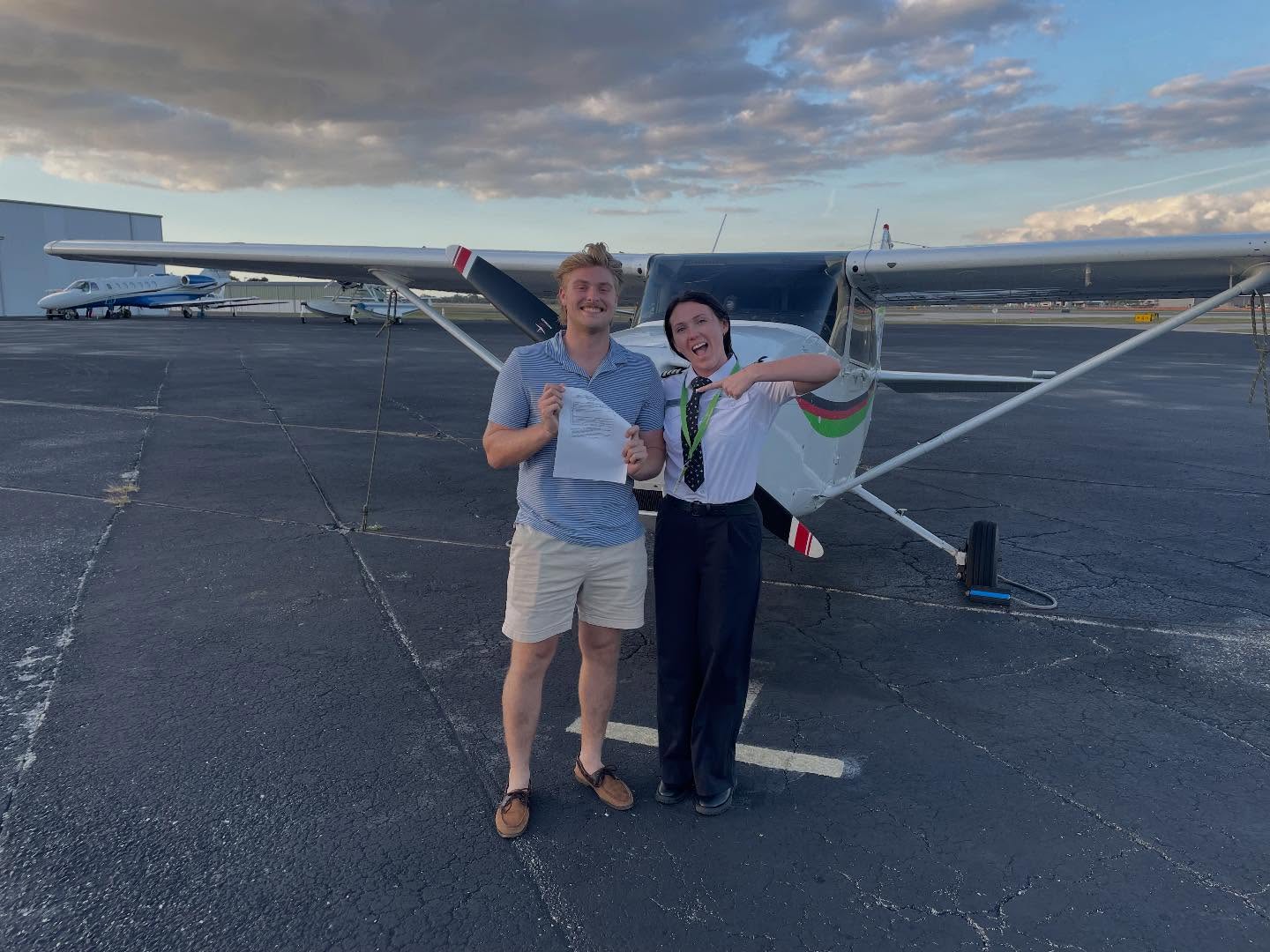
The same Skyhawk that teaches you to land is the one you can rent for your first trips as a private pilot.
FAQ
Is the Cessna 172 a good airplane to learn in?
For most new pilots, yes. Its high wing, stable handling, gentle stall, and tricycle gear give you room to make and correct the errors every student makes. It also supports everything from a Discovery Flight to instrument training, so you are not switching airplanes as you progress.
Will I fly a G1000 Skyhawk or a round-gauge Skyhawk?
Both are in our fleet. Your instructor decides which fits each lesson, and many students learn the mechanical panel first, then move to the glass cockpit once the scan is solid. Our flight simulator lab lets you practice either panel before you fly it.
How many hours will I fly in the 172 before my checkride?
The FAA minimum is 40 hours under Part 61 or 35 under Part 141. Most students fly more than the minimum, and consistency in your schedule affects the total more than the airplane does. Our Private Pilot program page explains the course structure.
Can I rent a Cessna 172 after I get my certificate?
Yes. After a checkout flight with one of our instructors, private pilots rent our Skyhawks for personal trips and time building under our rental and checkout policies.
Do I get to choose the Skyhawk for my Discovery Flight?
Tell us when you book. Aircraft assignment follows the schedule and your instructor’s plan for the day, and the Skyhawk is a common choice for a first flight over Siesta Key and Longboat Key.
Take Your First Flight in the Skyhawk
You do not need to understand any of this before you sit in the airplane. The best way to learn why the Skyhawk works is to fly it once with an instructor beside you, after a short session in our simulator to make the cockpit familiar.
Book your Discovery Flight at Cirrus Aviation and meet the airplane most of our pilots learned in.